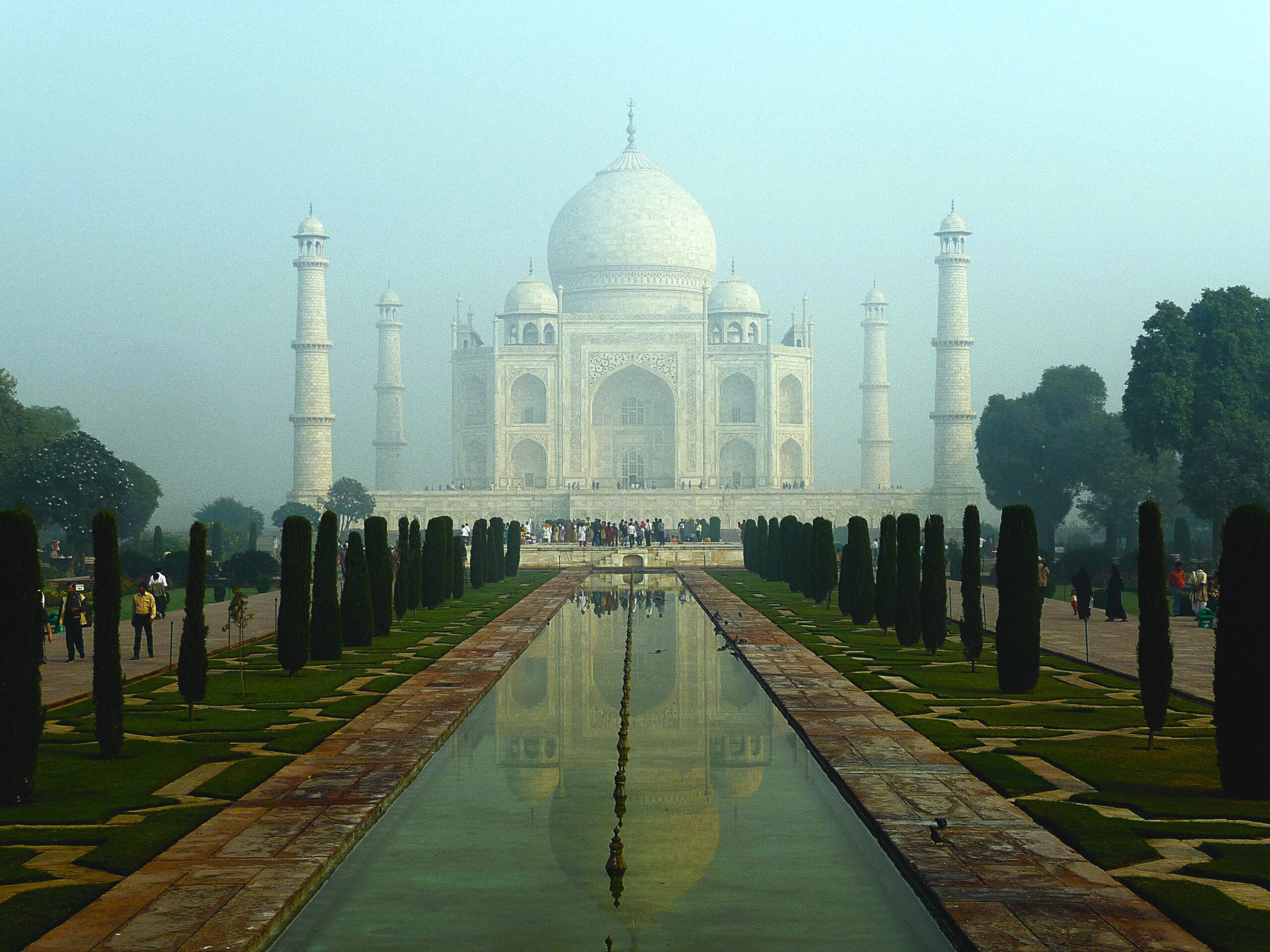
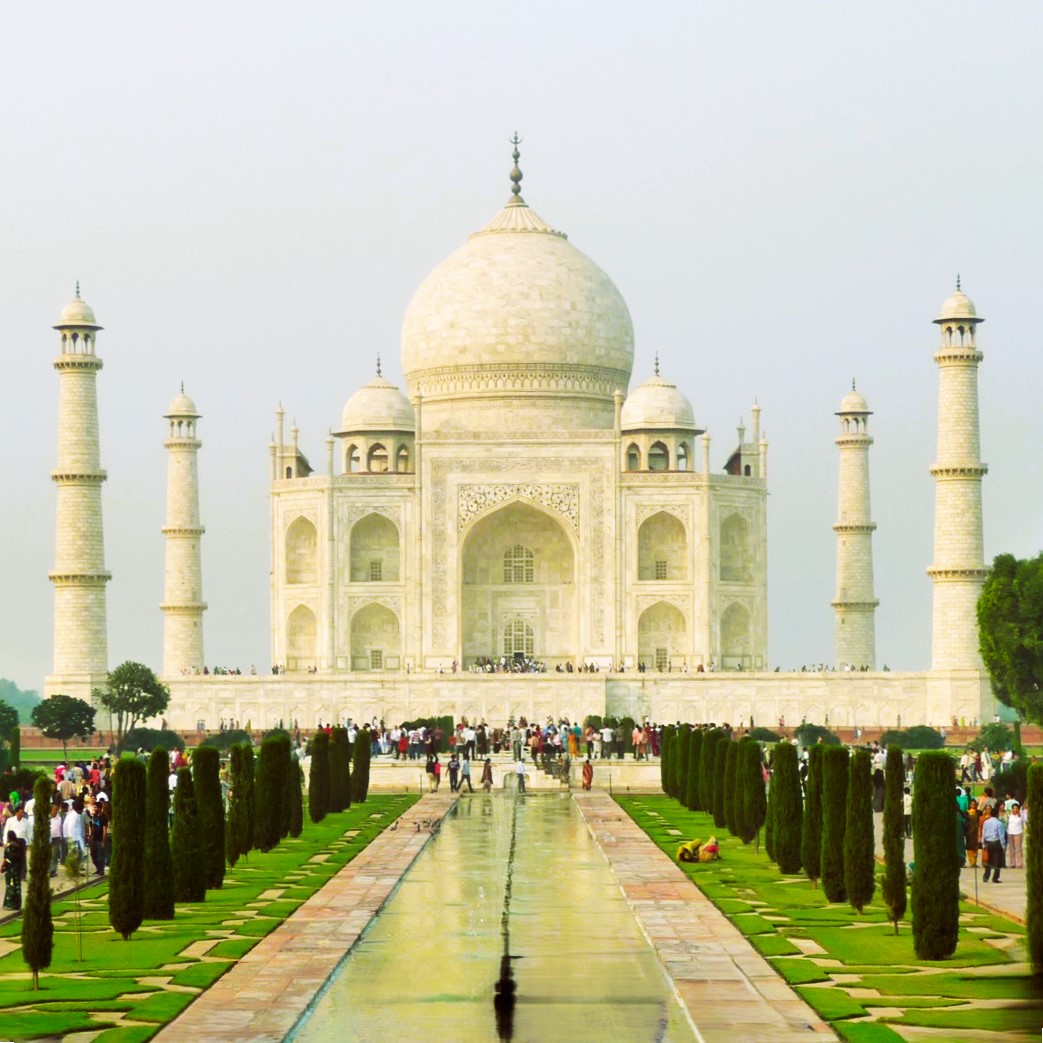
| Location: Taj Mahal, Agra, India Height: 240 feet Built for: Mumtaz Mahal Architectural Style: Mughal architecture Architect: Ustad Ahmad Lahori Materials: Marble and semiprecious stones Built: 1653 |
Most people build monuments to recognize victories, display wealth, honor deities, entertain masses, or defend against invaders. Only one person built a wonder of the world for a loved one. The Mughal emperor, Shah Jahan, built the Taj Mahal to house the tomb of his beloved wife, Mumtaz Mahal. It is an architectural masterpiece of white marble, semiprecious stones, and spectacular symmetry.
| Monument to Love | Architectural Stunner | Eight-Sided Chamber |
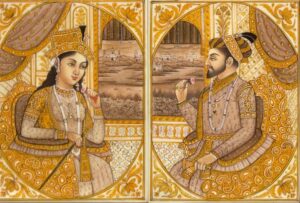
Monument to Love
The Taj Mahal is a place of exquisite beauty. It is also a story of love between the fifth Mughal emperor, Shah Jahan, and the empress Mumtaz Mahal. She was “the exalted one of the palace,” a talented poet who wrote poems in Arabic and Persian. Mumtaz was deeply compassionate and she donated money to the poor and funded poets and scholars. As empress, she consulted her husband on all critical state affairs.
Tragically, she died while giving birth to their 14th child. Shah Jahan was so inconsolable that his hair turned white and he mourned for one year. He then spent the next 22 years building a timeless monument in memory of his beautiful wife. A total of 20,000 masons, inlayers, carvers, painters, calligraphers, dome builders, and other artisans constructed the Taj Mahal. Shah Jahan said that the Taj Mahal made “the sun and the moon shed tears from their eyes.”
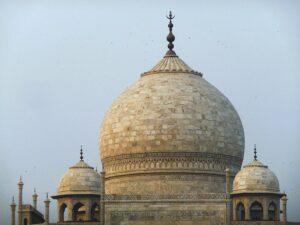
Architectural Stunner
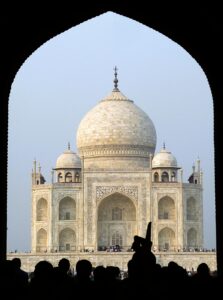
The white mausoleum is at the heart of a 42-acre garden space on the riverbank of the Yamuna in Agra. After entering the south gate, there is a giant courtyard with a long reflecting pool in front of the Taj. Minarets at each corner of the main building lean outwards so they collapse away from the Taj in a disaster. To the west of the Taj, there is a mosque. In support of symmetry, there is an identical red sandstone building to the east.
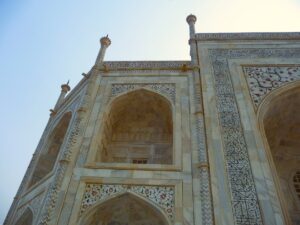
The white marble walls are inlaid with green jade, red garnet, blue turquoise, agate, blue lapis lazuli, and orange cornelian. There are 46 different species of plants and flowers carved and placed as inlays of precious and semiprecious gems. The marble wall is smooth in some places and in others, rough and crystallized.
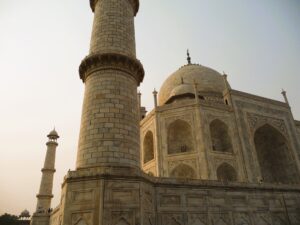
Eight-Sided Chamber
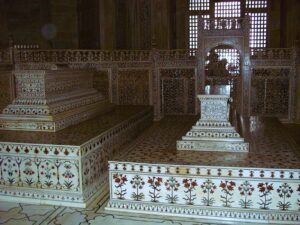
The central octagonal domed chamber contains the cenotaphs. These empty tombs memorializing Mumtaz Mahal and Shah Jahan are replicas. The true tombs are locked away in a lower chamber.
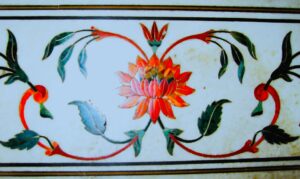
A marble lattice screen surrounds the cenotaphs. Both the screen and cenotaphs have inlaid gemstones in differing floral designs. The dark chamber is filled with many people and a musky odor. If you aim a flashlight on the red stone, it glows like fire.
More World Wonders

Keep Exploring!
Africa | Antarctica | Asia | Australia | Europe | Middle East | North America | South America