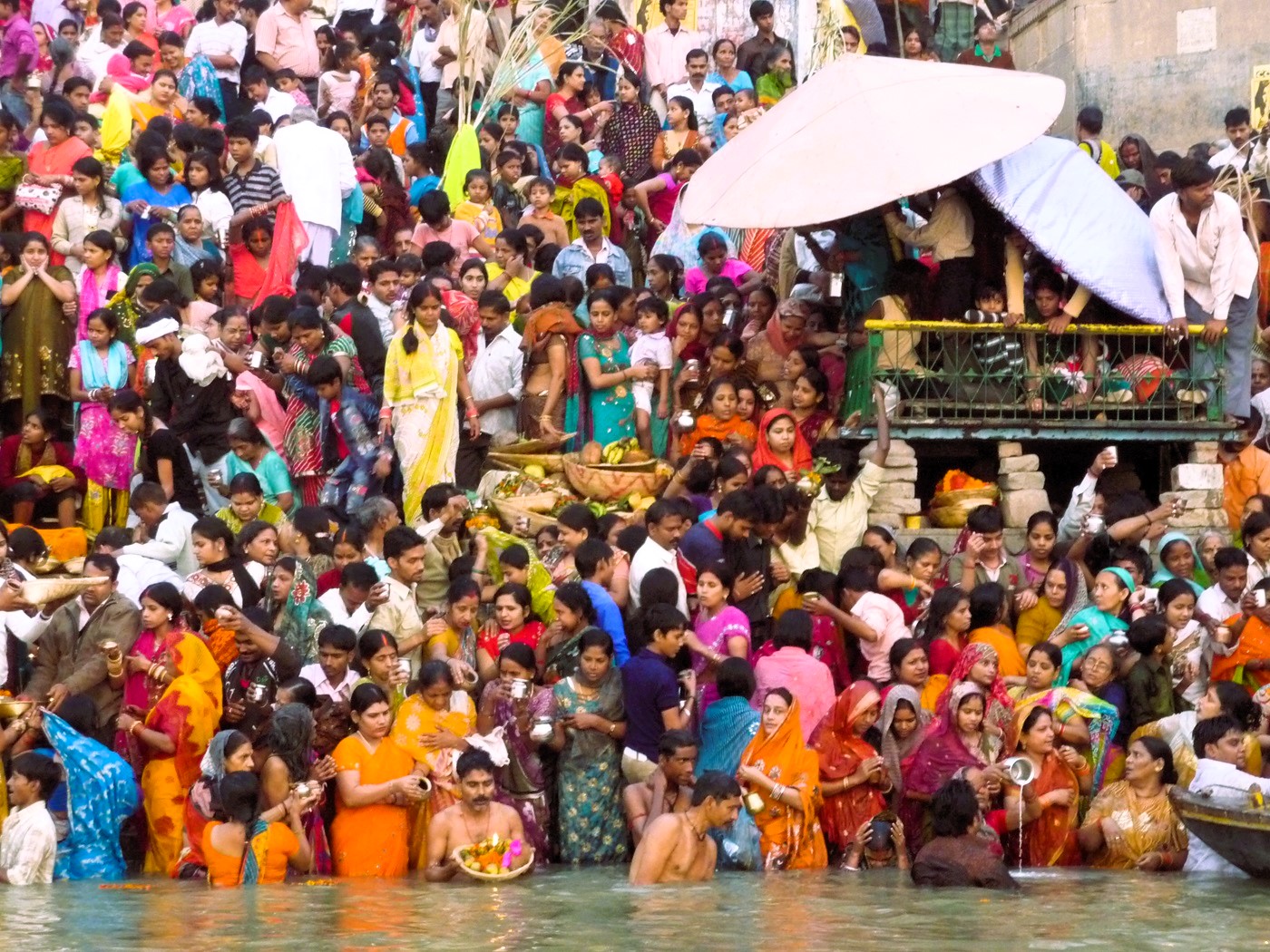
India is a colorful, vibrant, and spicy land. In the northwest, Rajasthan is dotted with colorful cities. Jaipur is the pink city. Udaipur is the white city. Jodhpur is the blue city. And Jaisalmer is the golden city. From a rainbow of saris and turbans to vivid culinary dishes, India is a feast for the senses.
ADVENTURES

Amber Fort Elephant Ride
Ride an elephant up Amber Fort. Hold on while the elephant sways. The trunk has colorful patterns.
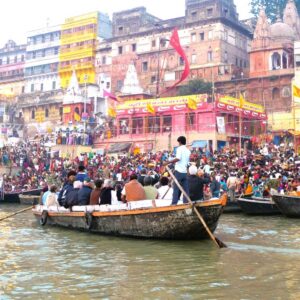
Ganges Boat Ride
Sail in the Ganges, the holiest river in India. At Varanasi, witness spiritual rituals at the ghats.
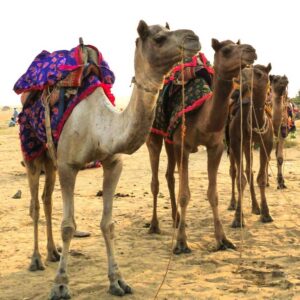
Thar Desert Camel Ride
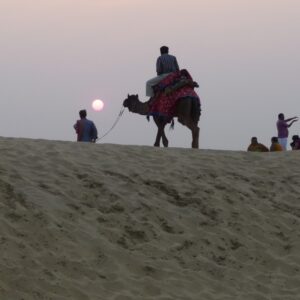
Go on a sunset trek from Sam in the Thar Desert. Hundreds of people are sitting at the tops of the dunes.

Lake Pichola Boat Ride
Cruise Lake Pichola to view the City of Lakes. Sail past island palaces.

Yoga by the Ganges
Take a yoga class in Varanasi by the sacred Ganges River.
MUST SEES: DELHI
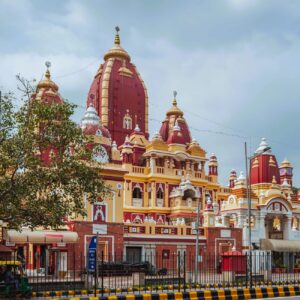
Laxmi Narayan
The red and white temple is dedicated to Vishnu, the Preserver, and his consort Lakshmi, goddess of wealth. Its complex of halls has shrines for Shiva, Ganesha, and Hanuman. There’s even a Hall of Mirrors for gazing upon the infinite.
Jama Masjid
The courtyard holds tens of thousands of people. Shah Jahan built this by 1658 and its architecture echoes the Taj Mahal. The seashell arches, onion domes, white marble, red sandstone, minarets, inlaid stone, and carvings are stunning.
Red Fort
Emperor Shah Jahan built the Red Fort as the new royal residence after moving the capital from Agra to Delhi. Mughal architect Ustad Ahmad Lahori’s design blends Persian palace architecture with Indian styles.
Chandni Chowk
Rickshaws are perfect for navigating the narrow, twisty, medieval alleyways. You are elbow to elbow with passersby, motorcycles, rickshaws, and carts all trying to get through the alley. Even cows use this passage. Every stall has a story to tell.
Qutb Minar
Sultan Qutb-ud-din built the Afghan-style victory tower in 1193 to celebrate victory over the Hindu Rajput king. The minaret’s fluted columns have red sandstone and marble. The bands in the columns resemble bundled reeds.
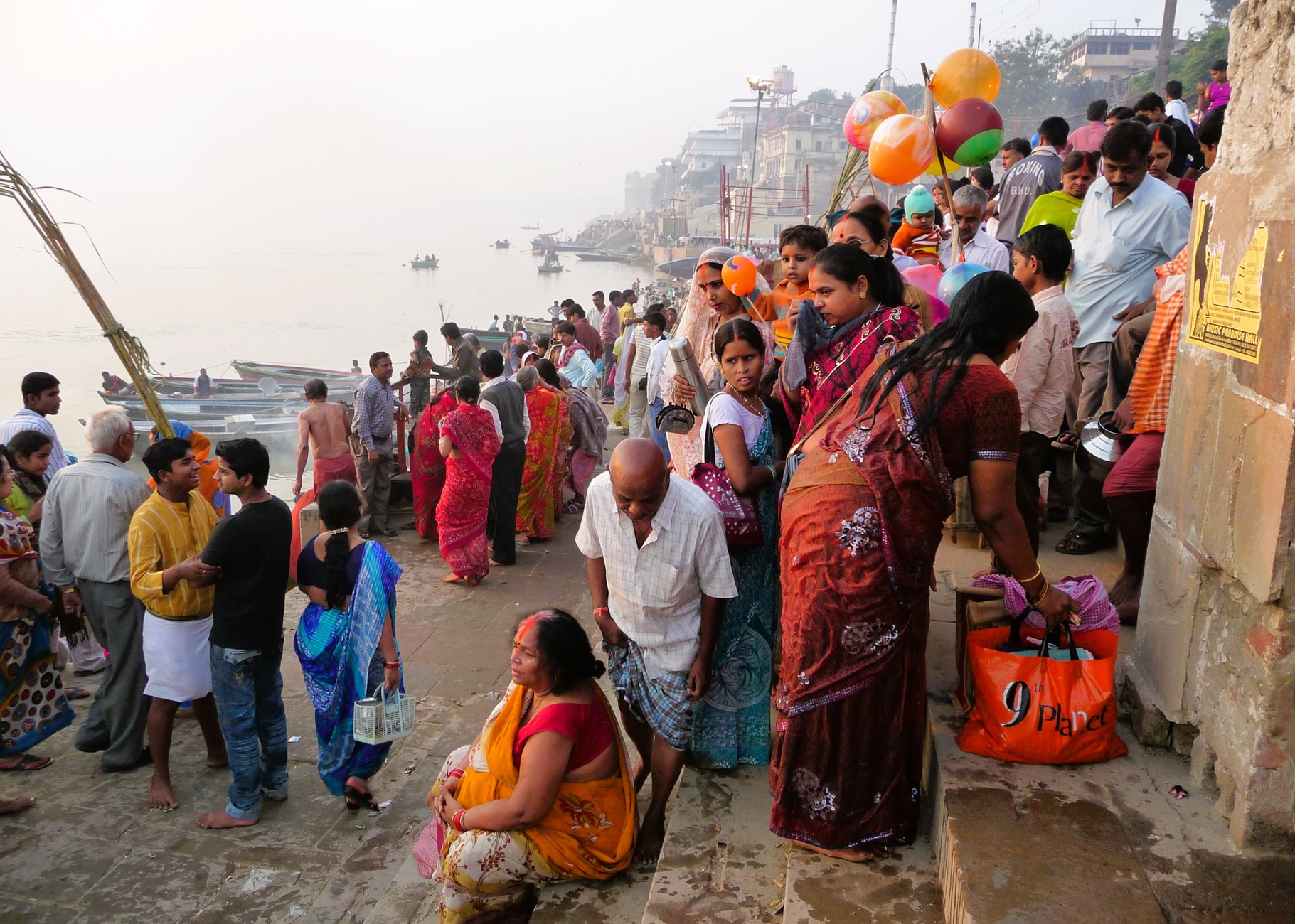
MUST SEES: VARANASI
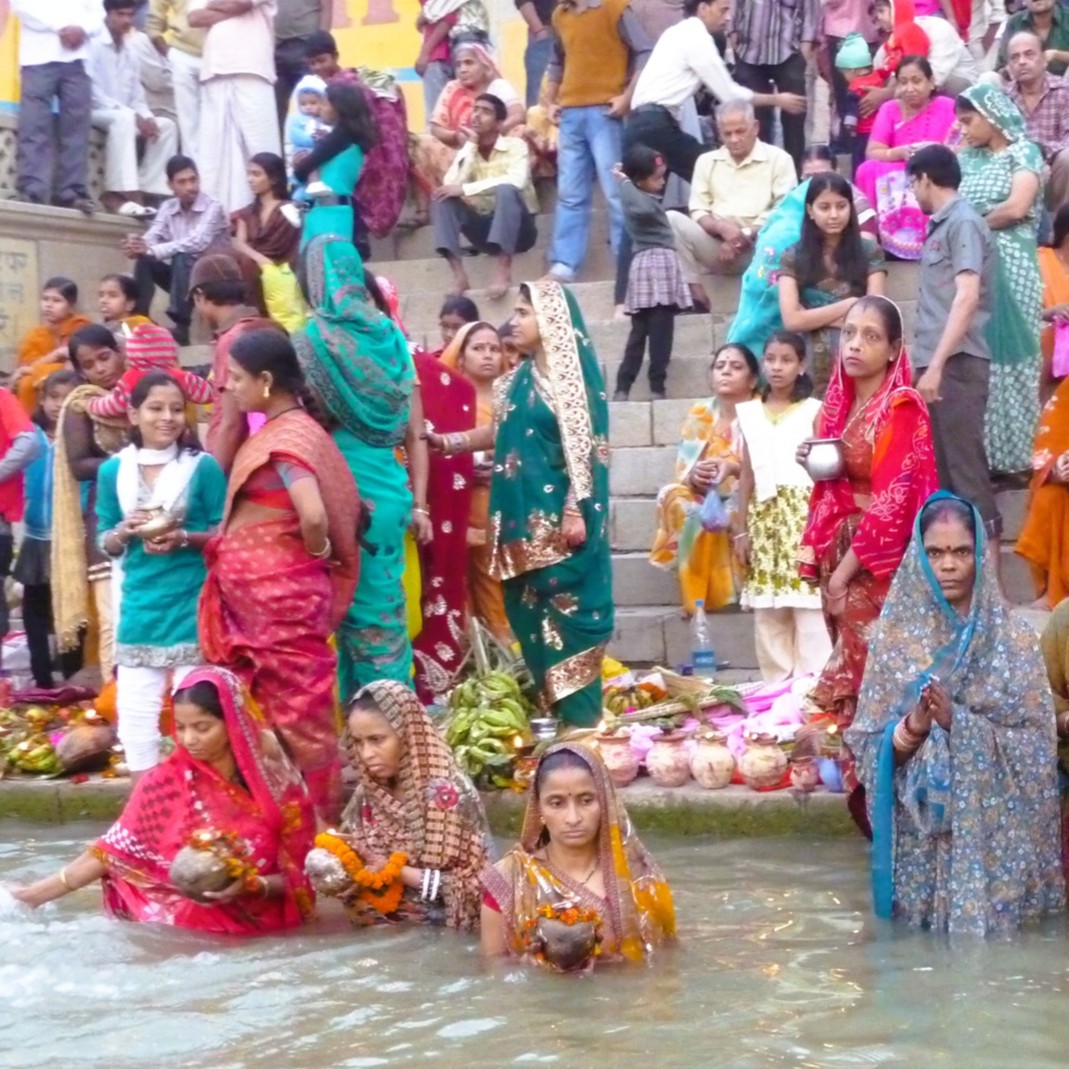
Ganges River
As you drift along the Ganges, watch the pilgrims provide offerings to the rising sun. There is chanting. There is music. When the sun appears, everyone cheers. The gleaming red sun paints a scarlet streak across the river.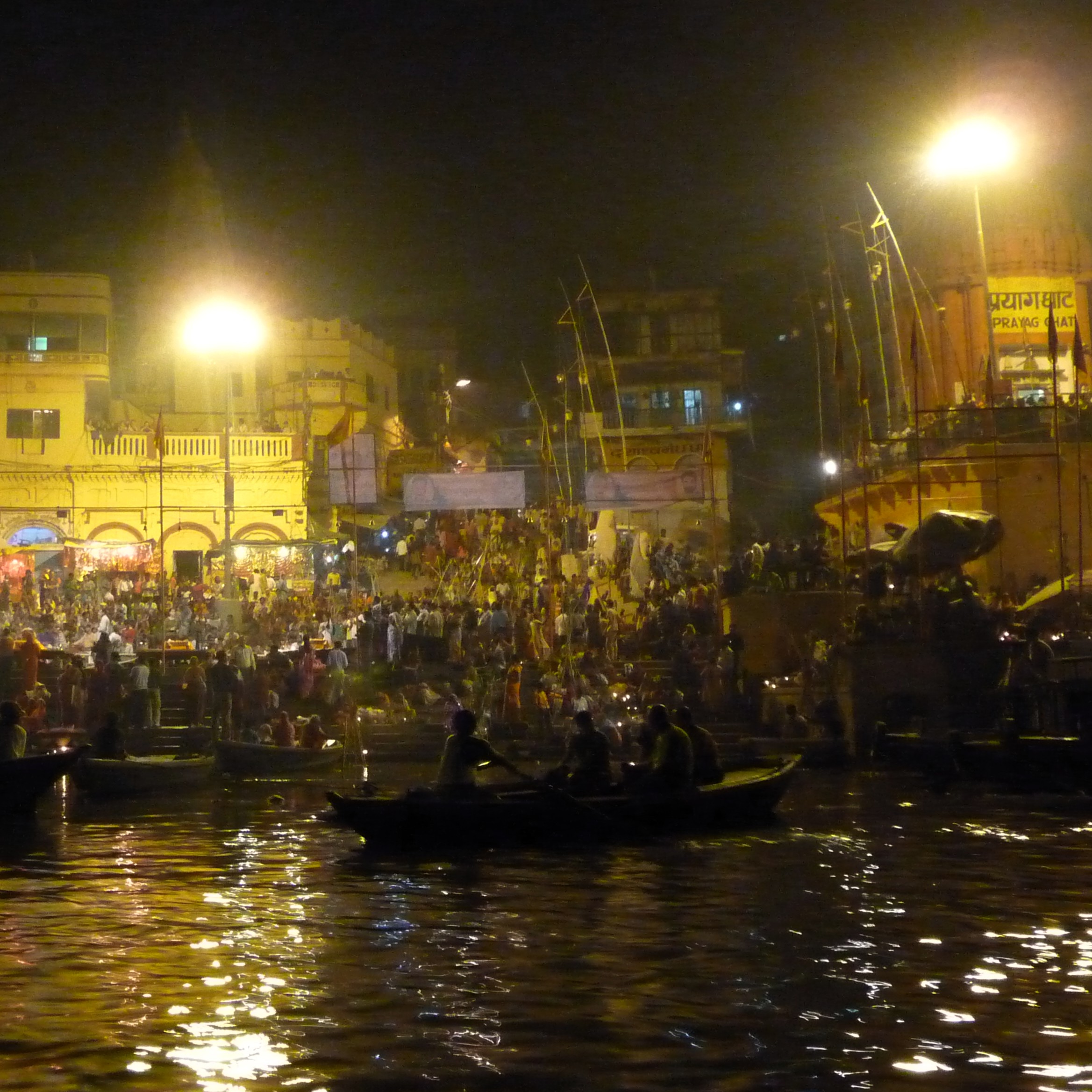
Dashashwamedh
Dashashwamedh is the main ghat near Vishwanath Temple. The Ganga Aarti is a daily ritual of gratitude and purification. After sunset, priests lead thousands at the steps in a sacred choreography with oil lamps, incense, chants, and music.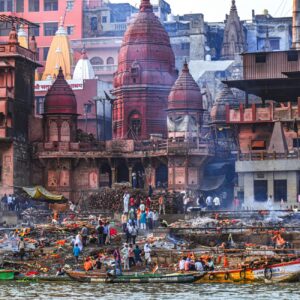
Manikarnika Ghat
Brahmins and family leaders bring the body to the edge of the Ganges and say prayers. The family places the body on a funeral pyre. Workers tend to the fire for up to 3.5 hours. The ashes are collected, saved, and taken to the river.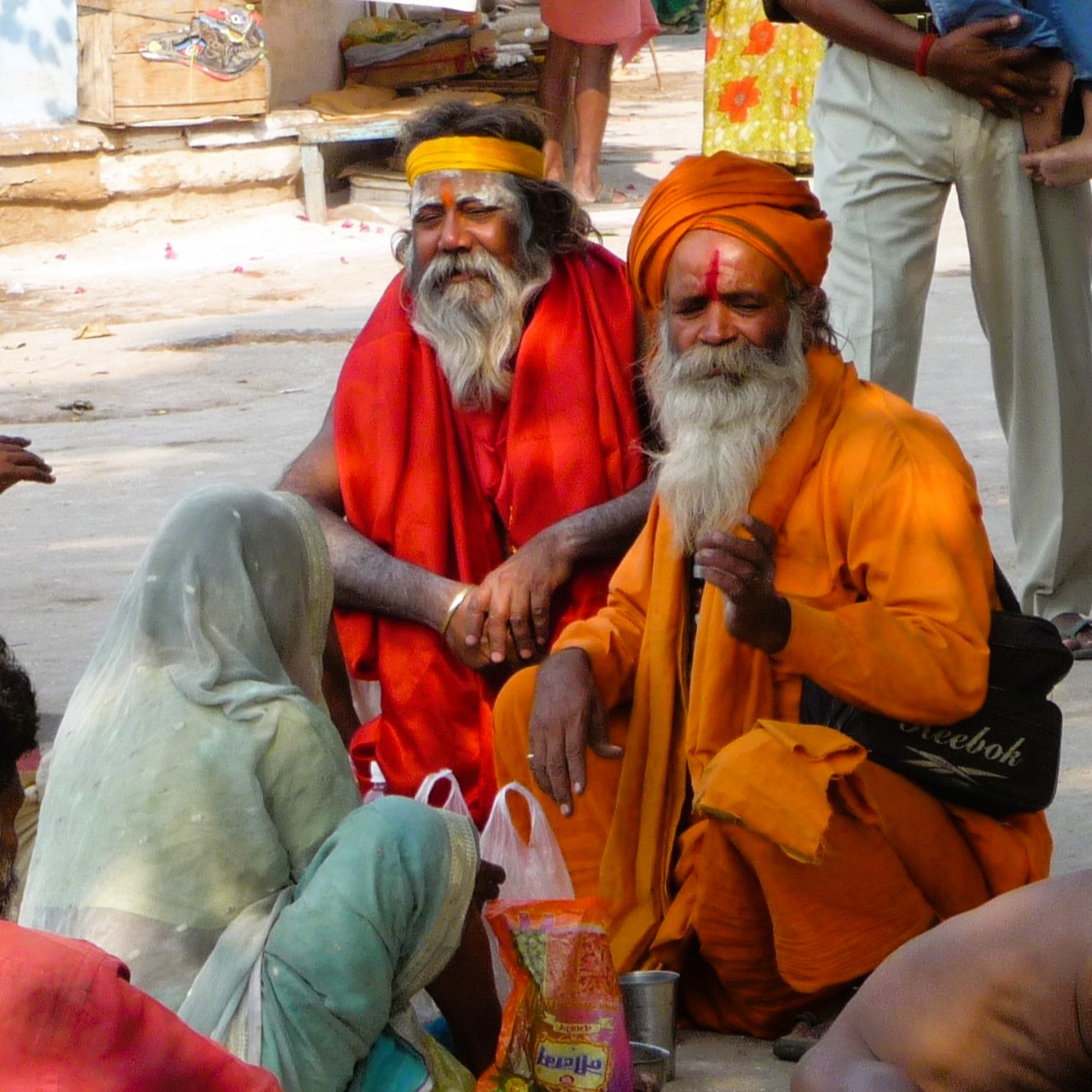
Sadhu
After a holy man walks past me along a narrow corridor, multiple butterflies flutter about seemingly out of nowhere. The butterflies are like his divine, tranquil aura. These ascetics renounce worldly pleasures and rely on donations of food.
MUST SEES: AGRA
Taj Mahal
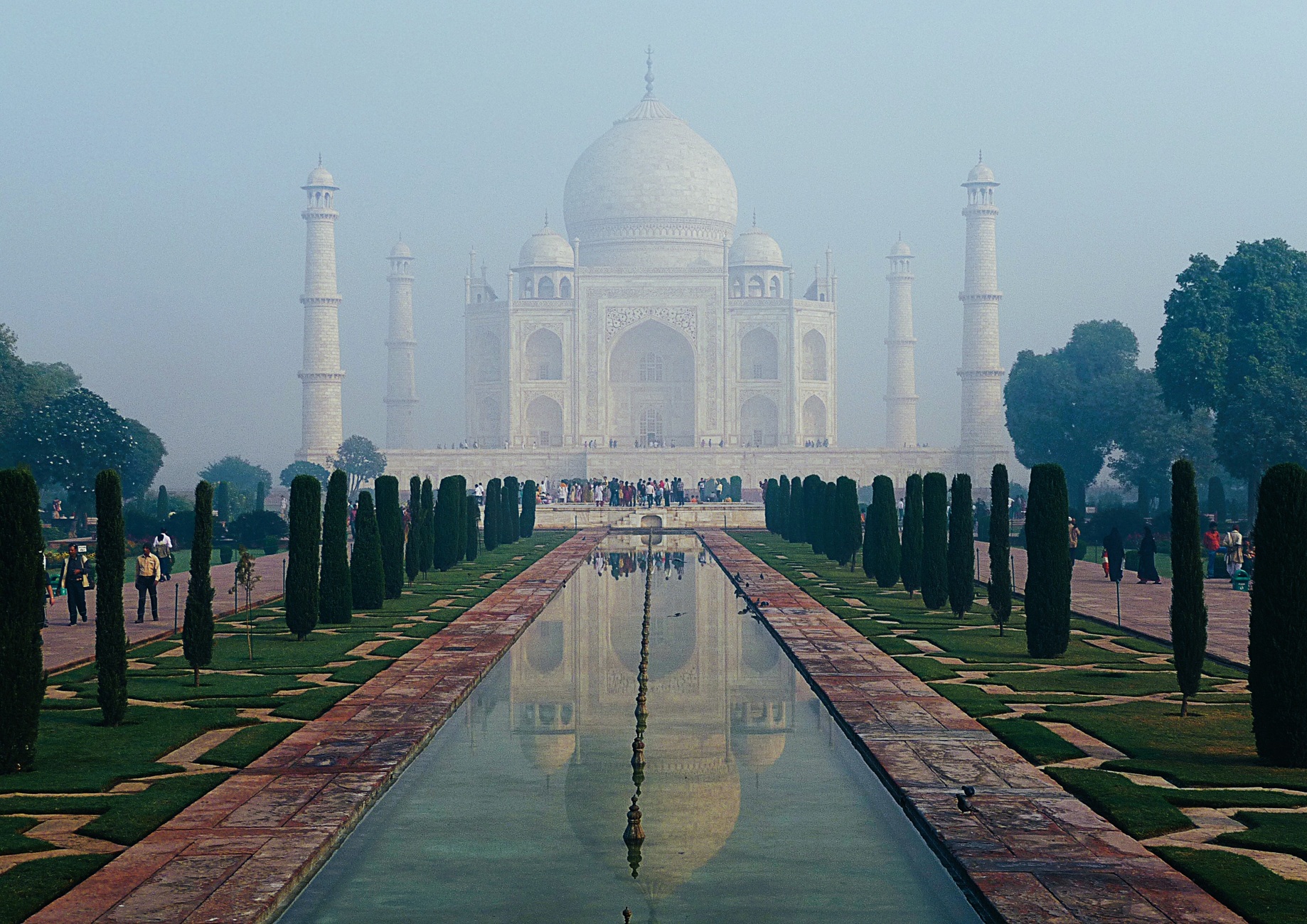
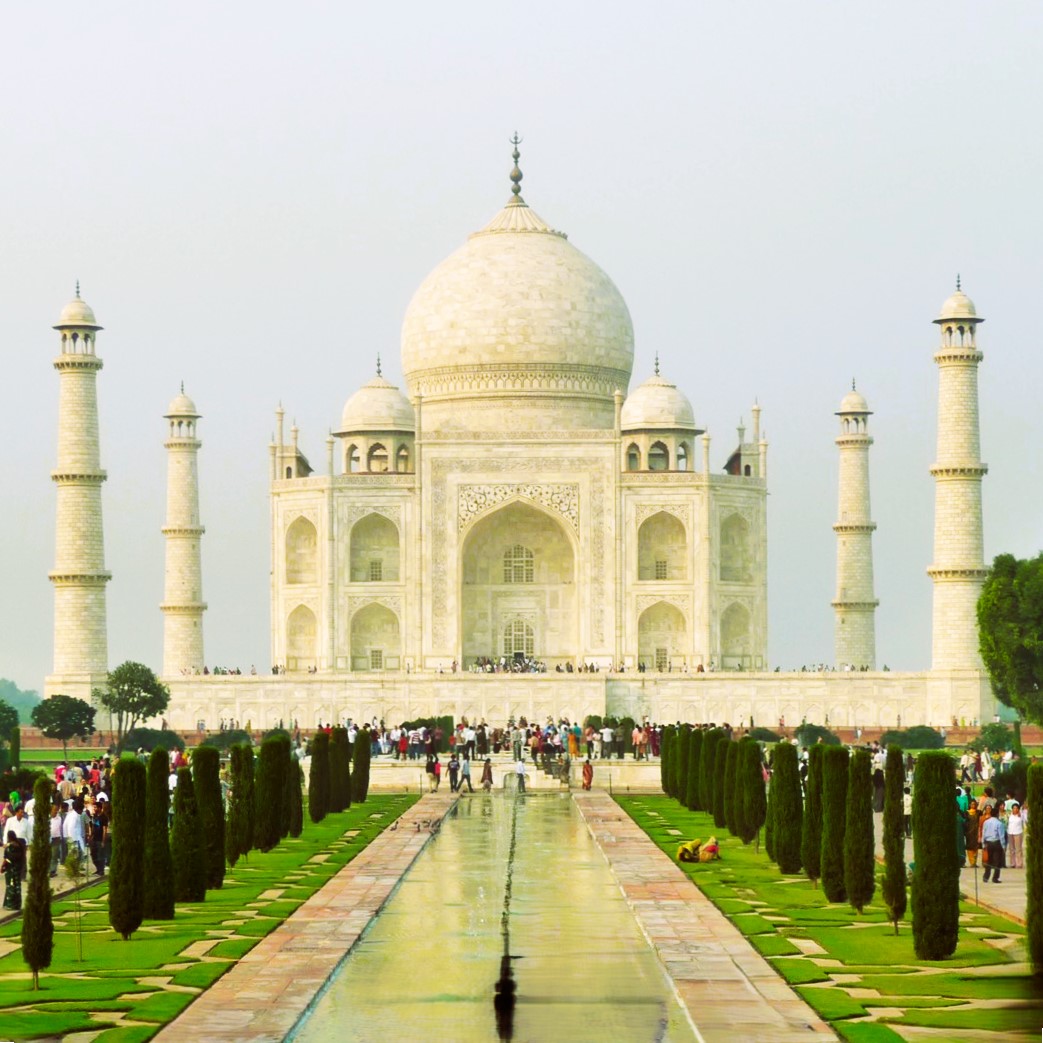
This is a story of great love. Shah Jahan’s wife, Mumtaz Mahal, died giving birth to their 14th child. Then, he spent the next 22 years building the monument. Shah Jahan said the Taj Mahal made “the sun and the moon shed tears from their eyes.”
Agra Fort
On the shore of the Yamuna, Agra Fort was the residence of emperors of the Mughal Dynasty. Inside the red sandstone fort, there’s a wall with semiprecious stones and a white marble palace with golden domes.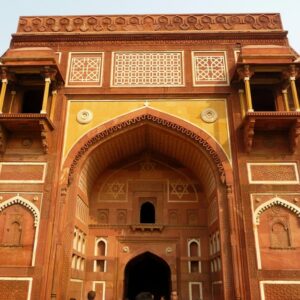
Fatehpur Sikri
Akbar used Fatehpur Sikri as the capital of the Mughal Dynasty from 1571 until it was abandoned in 1611. The town was built per Timurid architecture, which was widespread during Timur’s empire from Central Asia to the Middle East.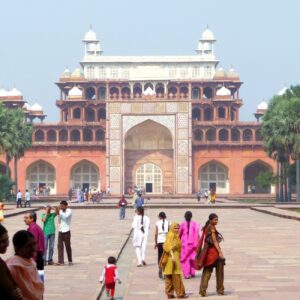
Akbar’s Tomb
Akbar was India’s greatest Mughal emperor, descended from Babur, who was related to Genghis Khan and Tamerlane. The red sandstone mausoleum has white marble minarets, arched gateways, and colorful, floral tile work.
MUST SEES: JAIPUR
Jaipur is the capital and largest city of the state of Rajasthan. The “Pink City” was planned with traditional Hindu/Mughal architecture, which was painted pink to welcome the Prince of Wales.
Amber Fort
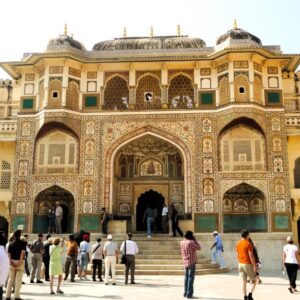
Maharaja Man Singh built Amber Fort on the Hill of Eagles. The palace blends Rajput and Mughal styles with red sandstone and white marble. In the third courtyard, the Sheesh Mahal has mirrored mosaics and colorful glass flowers.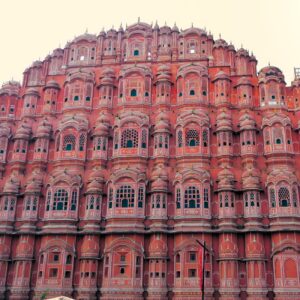
Hawa Mahal
Maharaja Sawai Pratap Singh built the Hindu Rajput Palace of the Winds. The pink honeycomb façade has 953 windows (jharokhas) with intricate latticework. Royal ladies privately observed festivities in the bazaar behind screens.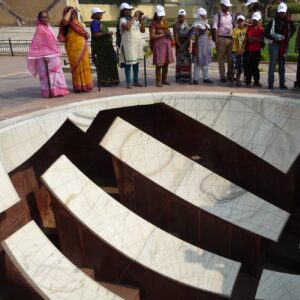
Jantar Mantar
Sawai Jai Singh II founded the pink city of Jaipur and the Jantar Mantar observatory. This garden contains 19 gargantuan astronomical instruments. The instruments predicted eclipses and tracked positions of major stars.
Johari Bazaar
The bazaar is a whirlwind of lights, shops, and people everywhere. Each street has a row of shops. Next to that is the sidewalk, hawkers, and rickshaws. Don’t forget the cows. The stands have multicolored gemstones and elaborate jewelry.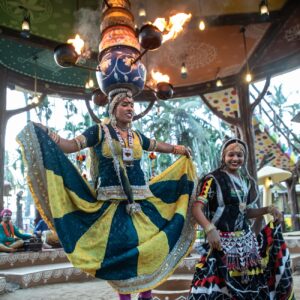
Chokhi Dhani
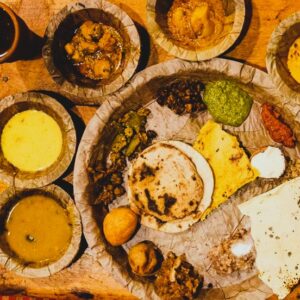
Chokhi Dhani provides a window to Rajasthani culture, food, traditions, and heritage. It showcases music, puppet shows, and dances. At dinner, you are treated as a royal and presented with a thali meal on plates made of leaves.
LMB Sweet Shop
The LMB sweet shop is a madhouse during Diwali. Workers in the center of the shop frantically fill packages. The counter displays colorful and delectable laddus and modaks. Try exquisite sweets made of sugar, nuts, spices, and condensed milk.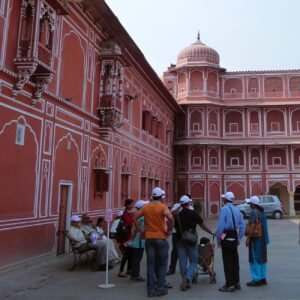
City Palace
The City Palace was the home of Jaipur’s maharajas for nine generations. The first maharaja was the founder of Jaipur. The ladies used to stand behind the windows to see what was happening in the courtyard.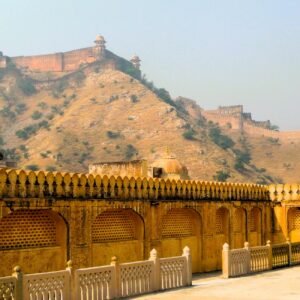
City Wall
The city wall has seven gates and snakes up the ridge of the hill. The walls link the bastions and forts and is like a Great Wall of India (or Jaipur).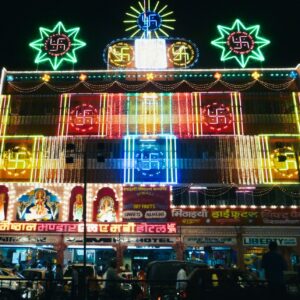
Diwali
The festival of lights is spectacular in the streets of Jaipur. Many shops display strings of colorful flashing lights. Revelers enjoy traditional sweets and light firecrackers.
MUST SEES: UDAIPUR

City Palace
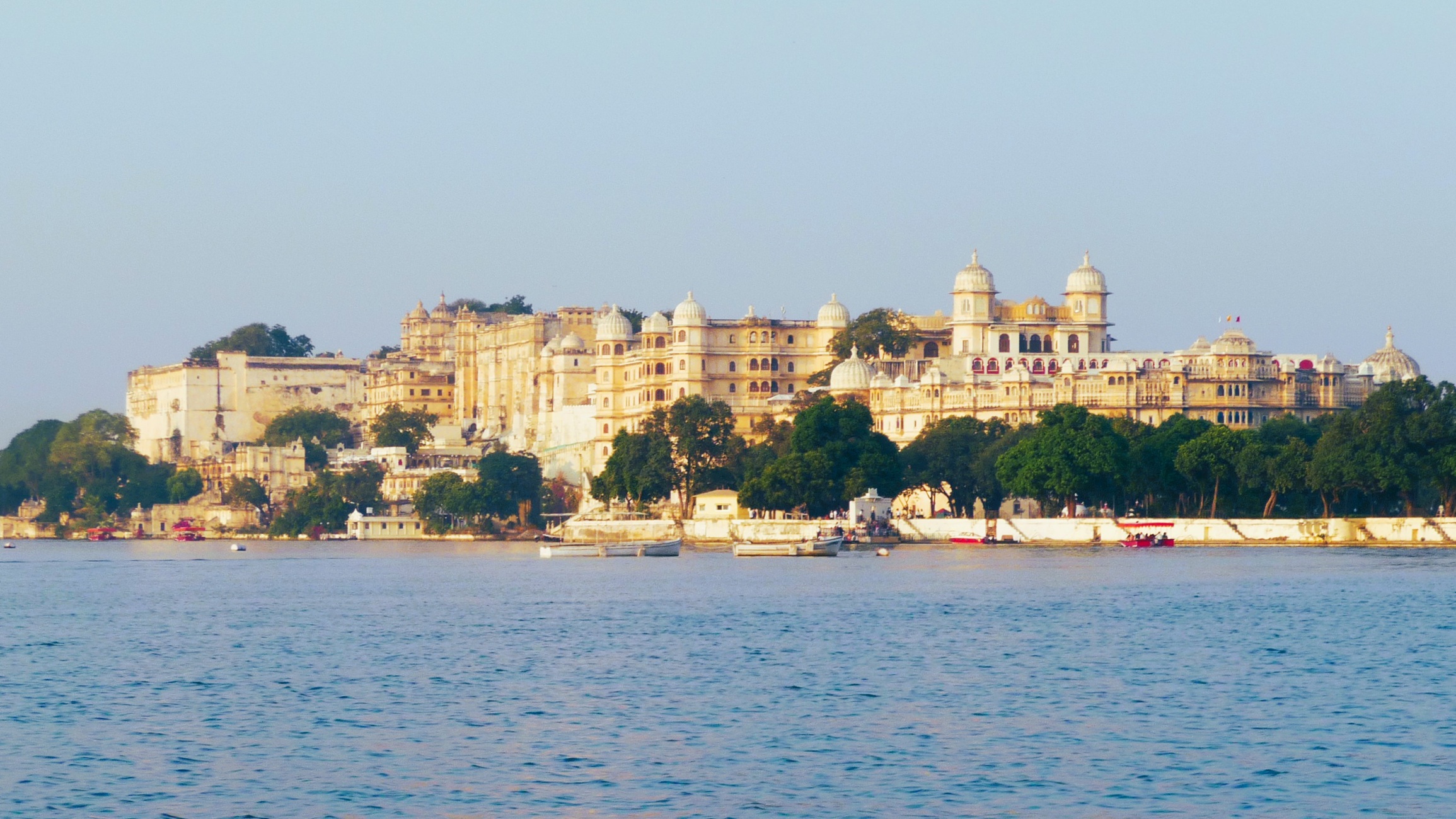
A sage told Maharana Udai Singh II to begin building a new capital at this spot above Lake Pichola. The largest palace in Rajasthan contains marble and granite pavilions, terraces, courtyards, corridors, and hanging gardens.
Jagdish Temple
Jagdish Temple is a Hindu temple. Its pyramidal tower has 3 stories of hand-carved stone with a spire reaching 80 feet. The main shrine contains a black statue of Krishna. The exterior has carvings of elephants, horse riders, and dancers.
Lake Pichola
The village of Pichola built the lake to provide fresh drinking water. The Mewar dynasty later built Udaipur by the lake. Take a boat tour to view the City Palace and two island palaces. The Lake Palace was used in James Bond’s Octopussy.
Ranakpur
Ranakpur is a Jain temple. Jainism practices non-violence, asceticism, and non-absolutism. The white temple is supported by 1,444 marble columns. Beneath the towers is a carved figure Parshvanatha and his 1,008 snake heads.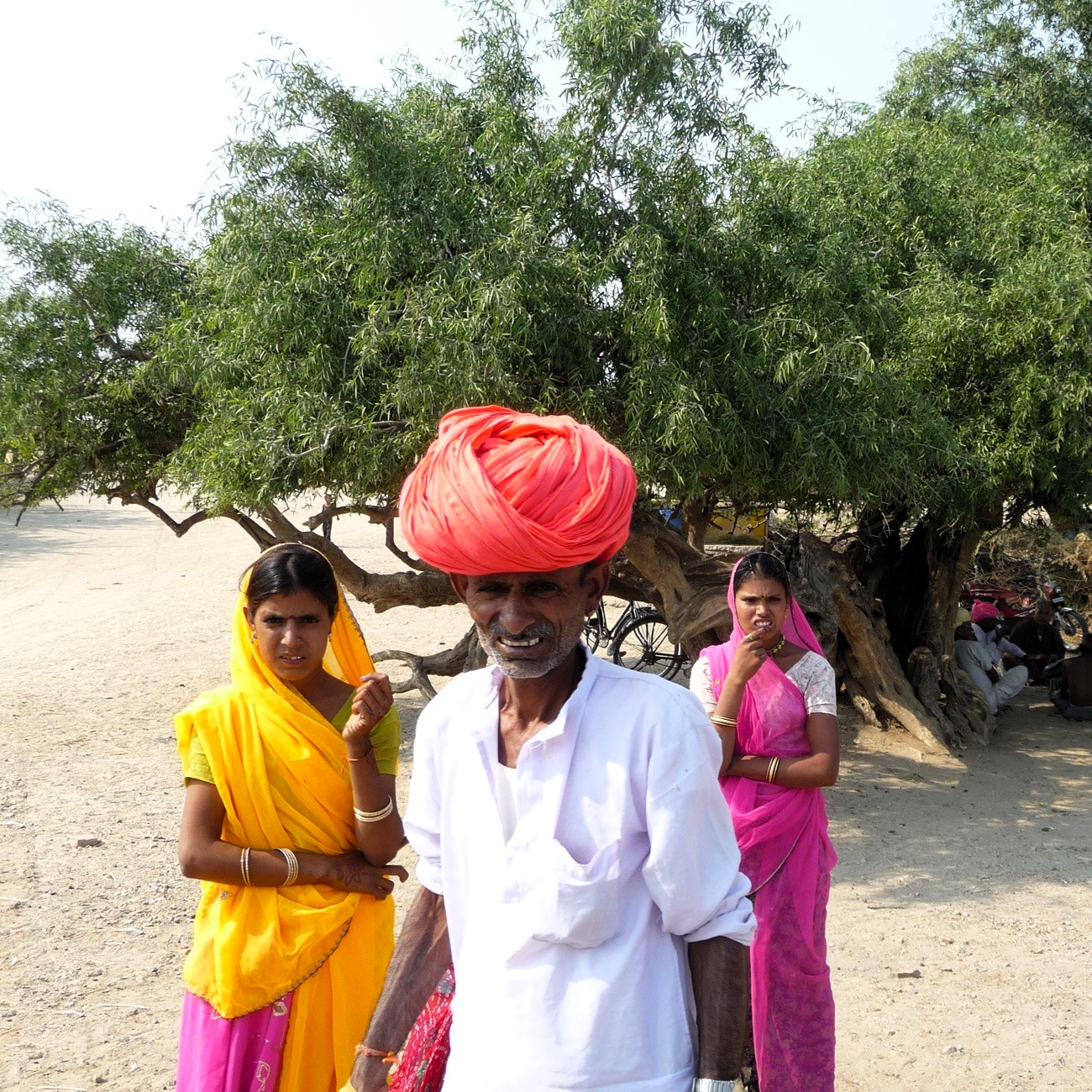
Colorful Turbans
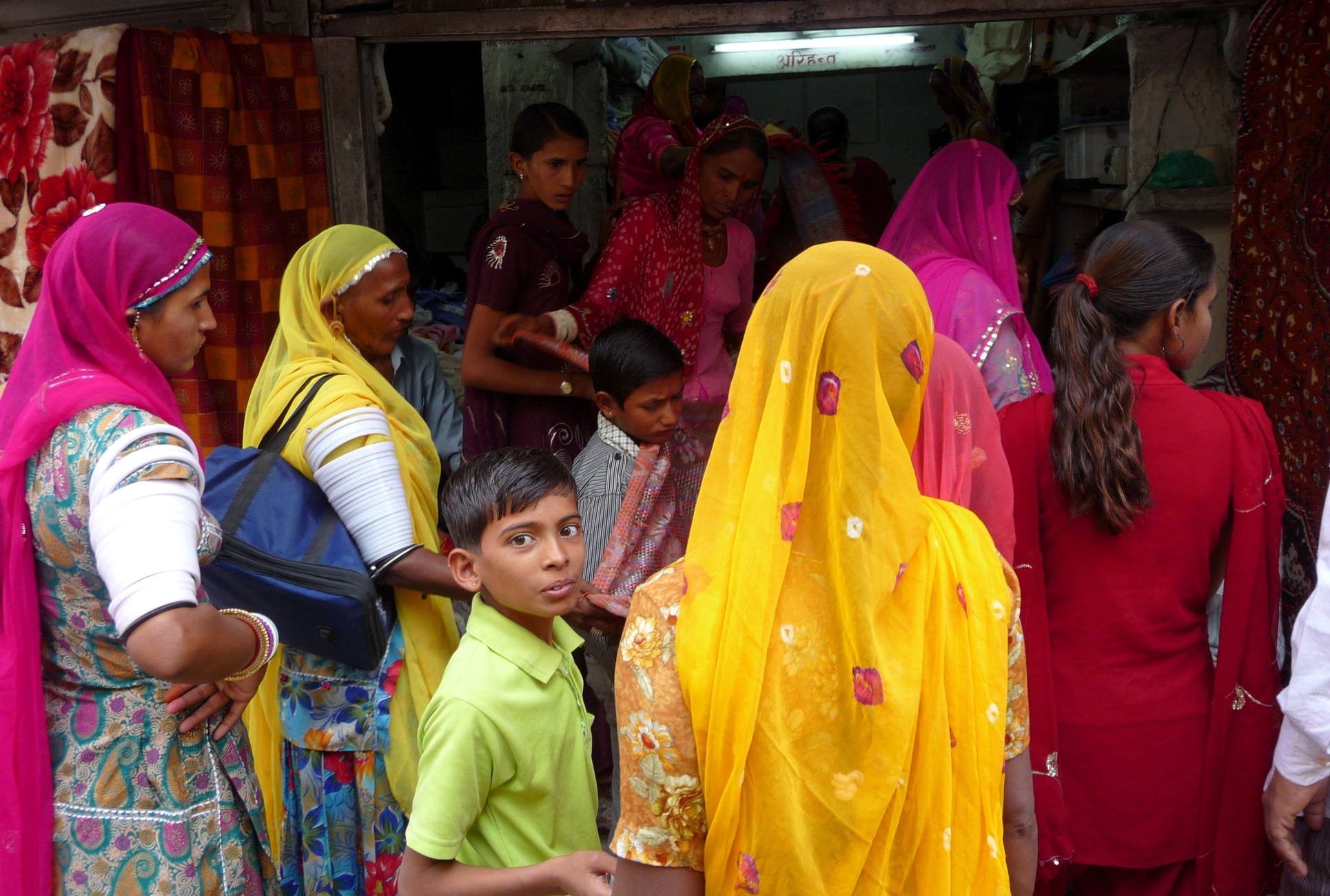
In Rajasthan, the colors and styles of turbans communicate a person’s caste or profession. Turbans also protect the head from scorching desert heat. The Rajputs (warrior clan) were the first to wear them to show their royal roots.
MUST SEES: JODHPUR

Blue City
The Blue City is a sapphire gem in the Thar Desert. Brahmins painted their houses blue to highlight their high caste status. Others believe blue keeps homes cool in summer. From the fort, you can view the marvelous blue walls and alleys of the old city.
Mehrangarh Fort
Mehrangarh Fort is intimidating. It rises straight up the rocky hilltop and you must pass 7 gates and a spiked door. The museum has palanquins – boxes for transporting royal ladies. The armory has the swords of Akbar and Tamerlane.
Sardar Market
Take a tuk tuk to Sardar Market where you can find a swirling muddle of colorful textiles, spices, and vegetables. At night, the Ghanta Ghar clock tower is lit up in many colors.
Mandore Gardens
Just north of Jodhpur, Mandore Gardens is located in rock terraces popular with gray langur monkeys. The lush parkland also houses dark-red, cone-shaped chhatris (cenotaphs) for Jodhpur’s maharajas who are buried elsewhere.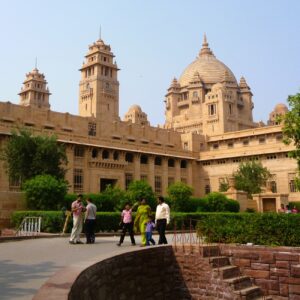
Umaid Bhawan
The maharaja built the palace in a mix of Indian, Muslim, and Parisian styles. With 347 rooms, one wing is now a hotel while the current maharaja lives in another part. The family is chummy with King Charles, and Priyanka Chopra married Nick Jonas here.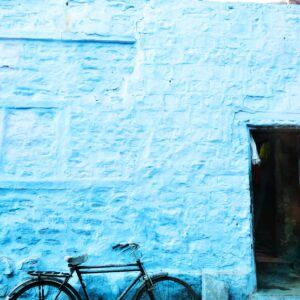
Fading Blue?
The blue homes symbolize their connection to Lord Shiva. With rising temperatures, the blue paint isn’t keeping homes cool enough anymore. New construction materials and the cost of indigo have further led to the disappearing blue.
MUST SEES: JAISALMER
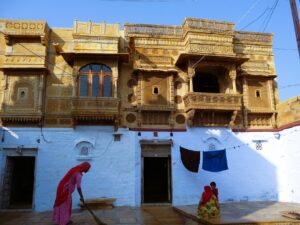
Almost everything in Jaisalmer is constructed of golden sandstone.

Jaisalmer Fort
The honey-colored hill fort occupies the entire plateau of Trikuta Hill. Made of yellow sandstone, the fort blends into the golden city of Jaisalmer and the Thar Desert. Rawal Jaisal built the fortress at the crossroads of key trade routes, such as the Silk Road.
Nathmal-Ki Haveli
Many wealthy merchants built havelis (houses) inside Jaisalmer Fort. Two brothers built the haveli for Prime Minister Nathmal. They started from opposite ends and met in the middle. The haveli isn’t symmetrical, yet it’s still a masterpiece.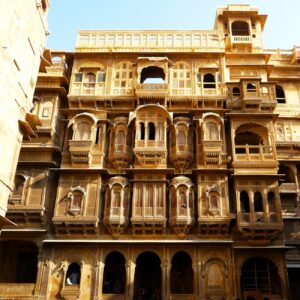
Patwon-Ki Haveli
A famous trader named Guman Chand and his sons built the haveli inside the fort. This tall 5-story complex contains 5 mansions with intricately carved balconies. The largest haveli had 2 underground floors for storing opium.
Gadisar Lake
In 1156, Rawal Jaisal built Gadisar Lake to provide water for Jaisalmer. There are many chhatris and shrines in the lake. If you toss bread into the lake, a giant pile of catfish will wrestle each other to the surface.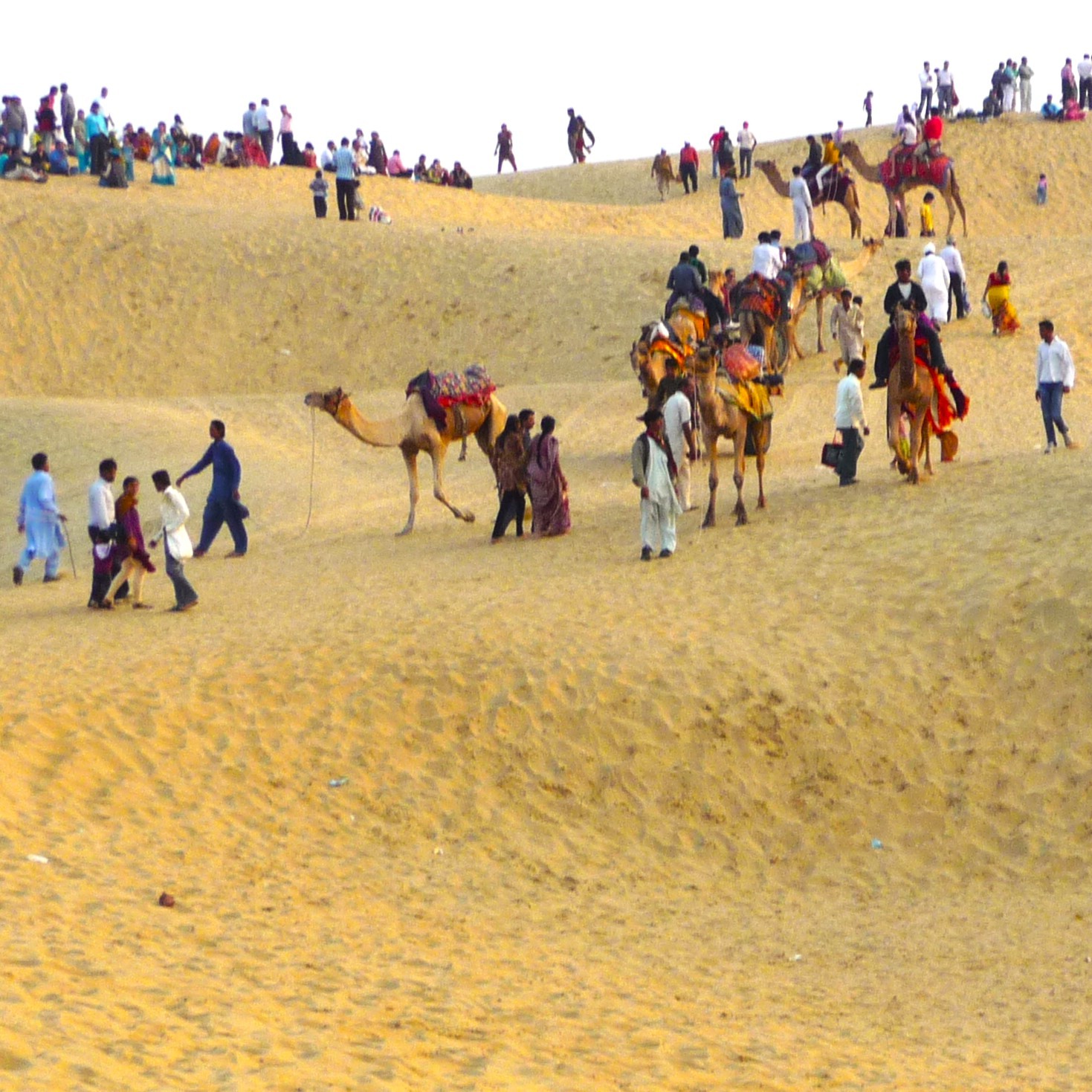
Thar Desert
The camel trek starts in the dusty Thar Desert outpost of Sam, just 65 km from the Pakistan border. The silhouette of a tall camel glides across the ridge of a dune while Indian families are enthusiastically singing.
MUST SEES: CHITTORGARGH
Chittor Fort
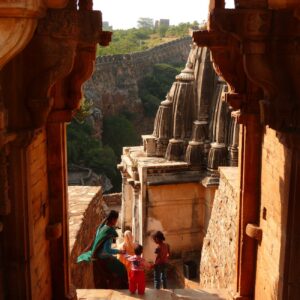
India’s largest hill fort overlooks a sprawling plateau. The former Rajput capital’s walls protect a palace, temples, and tower. The legendary hero Bhima struck the ground, which resulted in water springing up to form a reservoir.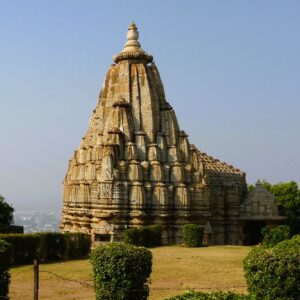
Samadhishvara
This Hindu temple is dedicated to Shiva. Inside the sanctum, there is a stone idol with the three faces of Shiva and six hands. There is loud cosmic drumming, wafting incense smoke, and offerings of sugar.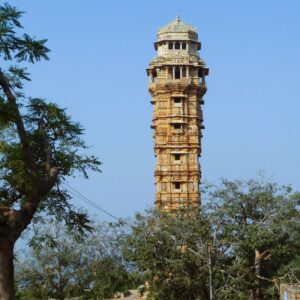
Vijaya Stambha
The Hindu Rajput king Rana Kumbha built the tower to commemorate the victory in the Battle of Sarangpur. The tower reaches 120 feet with nine floors and 157 steps. Climb clockwise up the staircase to the top where there are amazing views of the fort.
FOOD
Thali
Thali is a royal plate of Rajasthani delicacies with a bit of everything. Dunk the baati (bread balls) into the dal (stewed lentils). One dish has kadhi (yogurt, chickpeas, and spices). There’s also a dry curry of vegetables in a spice mixture.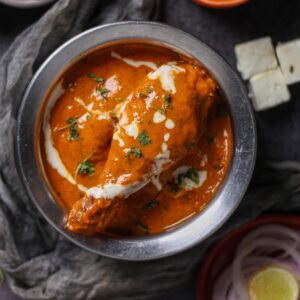
Butter Chicken
The butter chicken’s (murgh makhani) tomato and butter sauce is sweet at first, with creaminess from the butter. Then the subtle spices do their job. Marinated in yogurt and spices, the chicken has a nice char from the tandoor (clay oven).
Panipuri
Panipuri are hollow deep-fried shells with dal, onions, potatoes, and chutney. Pour orange tamarind water or green lime mint water into the crispy shells. Watch locals knock back panipuri with a whip-like flourish of the hand to avoid splashing.
Korma
Korma is meat or vegetables braised in a sauce of yogurt, water, and stock. Kormas are typically creamy, sweet, and a little nutty. Navrattam Korma is a version with nine different vegetables, cheese, and cashews.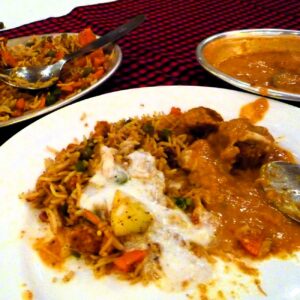
Mughlai Biryani
The biryani is aromatic basmati rice with spices, potatoes, peas, and carrots. The dish is fragrant with saffron, cashews, and raisins. Go easy on the extremely spicy mirchi ka salan (green chili sauce). You can cool it off with the yogurt-based raita.
Bhindi Masala
Bhindi masala is a dish of okra sautéed with onions, and tomatoes. The slippery okra are stuffed with toasted masala spices.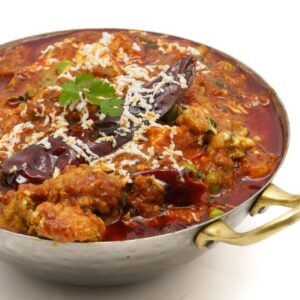
Laal Maas
In this spicy Rajasthani lamb curry, onions and spices (cardamom, cinnamon, mace, and bay) are sautéed in ghee. The lamb is browned in the spices and a fiery red paste of Mathania red chilies and yogurt are added.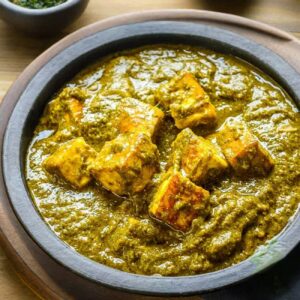
Palak Paneer
This is a dish of puréed spinach with cubes of paneer cheese. The spinach is simmered with onions, tomatoes, ginger, garlic, garam masala, turmeric, chili powder, and cumin. It’s smooth and creamy punctuated with soft paneer.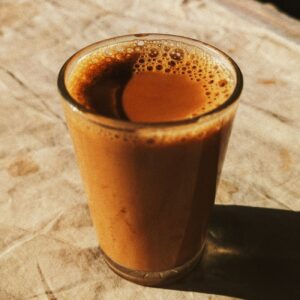
Masala Chai
There’s always a chaiwala when you need one. These entrepreneurial tea sellers set up portable stations in the unlikeliest places. They boil water and milk with spices, and then add tea leaves and sugar. Enjoy the flavorful chai in a small cup.
Masala Dosa
Masala dosa is a thin savory rice crepe. Break off a piece of the cylindrical crispy crepe and dunk it in the potato curry, chutney, and sambar.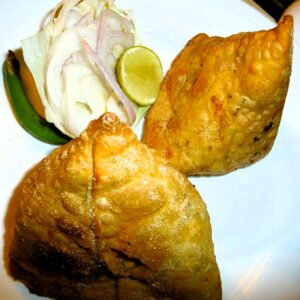
Samosas
A samosa is a crispy triangular pastry with a savory filling of spiced potatoes, onions, and peas. They may also contain raisins and cashews with a sprinkling of cumin dust.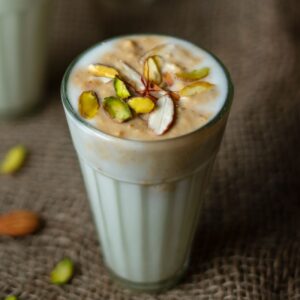
Makhaniya Lassi
At the bustling Sardar Market in Jodphur, try makhaniya lassi, a refreshing yogurt- based beverage. The lassi is a sweet and aromatic flavor burst thanks to cardamom and saffron.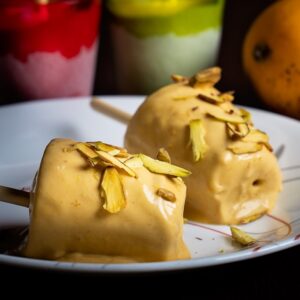
Kesar Pista Kulfi
Kulfi is a frozen dairy dessert. Pistachios and saffron lend tremendous flavor to this dense and creamy ice cream treat.
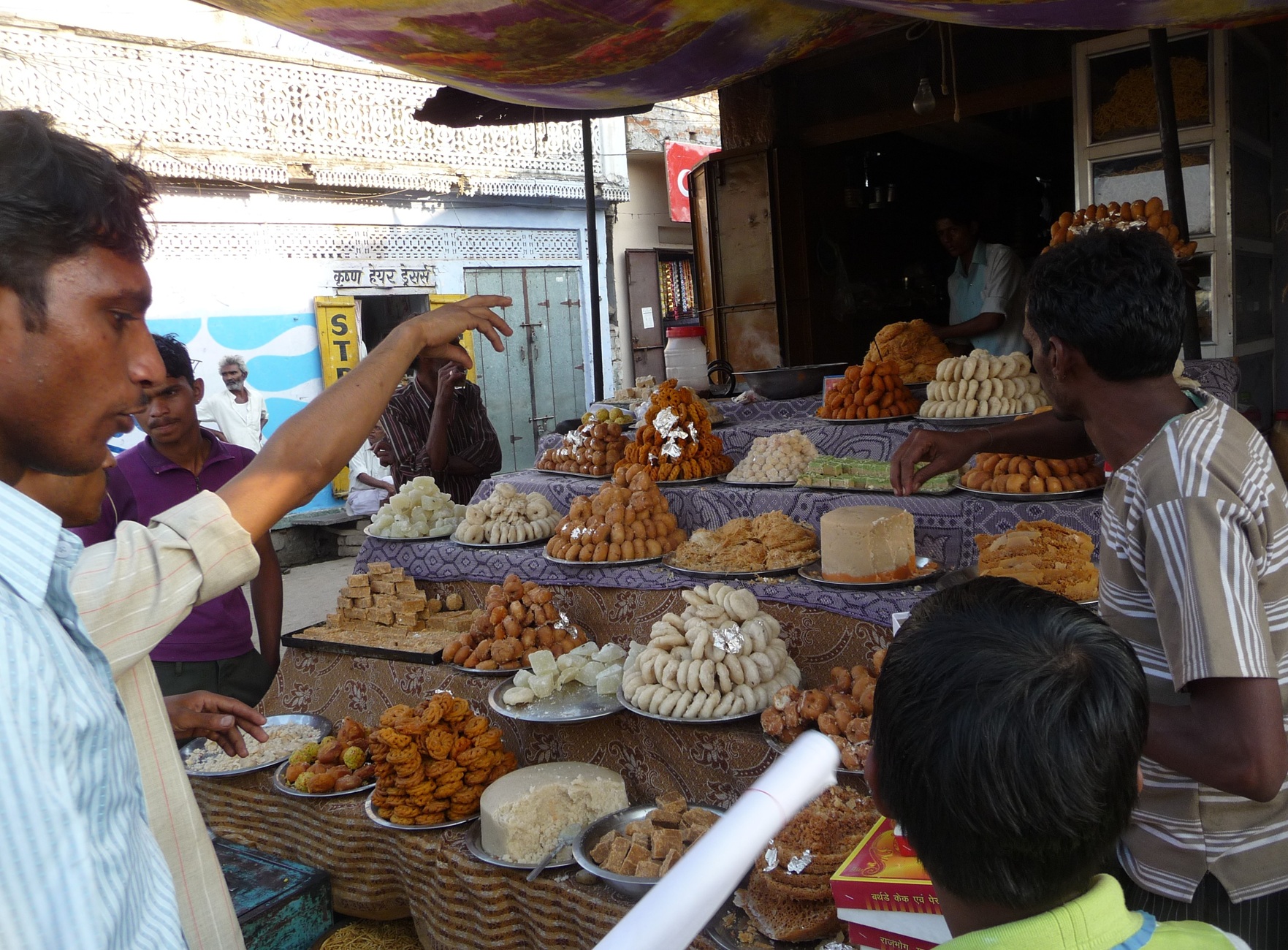
Mithai
Most Indians have a serious sweet tooth. Mithai are Indian sweets and desserts made with sugar, milk, condensed milk, nuts, and spices. Laddu is a round ball of sugar and chickpea flour..
Paan
At the stall, a paan leaf is brushed with lime paste, betel nut, syrup, spices, and folded into a triangular packet. You chew it like bubble gum. After a while, your teeth and gums get slightly numb. You get a mouthful of red, lumpy paan juice, and then you spit it all out. It’s nasty; don’t try it.
TRANSPORTATION

Rickshaw
At the bottom of the staircase, a rickshaw awaits. The rickshaw is the perfect vehicle for quickly navigating the narrow, twisty, crowded medieval Old Delhi alleyways.

Tuk Tuk
A tuk tuk is not much more than a motorized rickshaw. These three-wheelers have a small roof and are great for navigating crowded cities.

Motorcycle
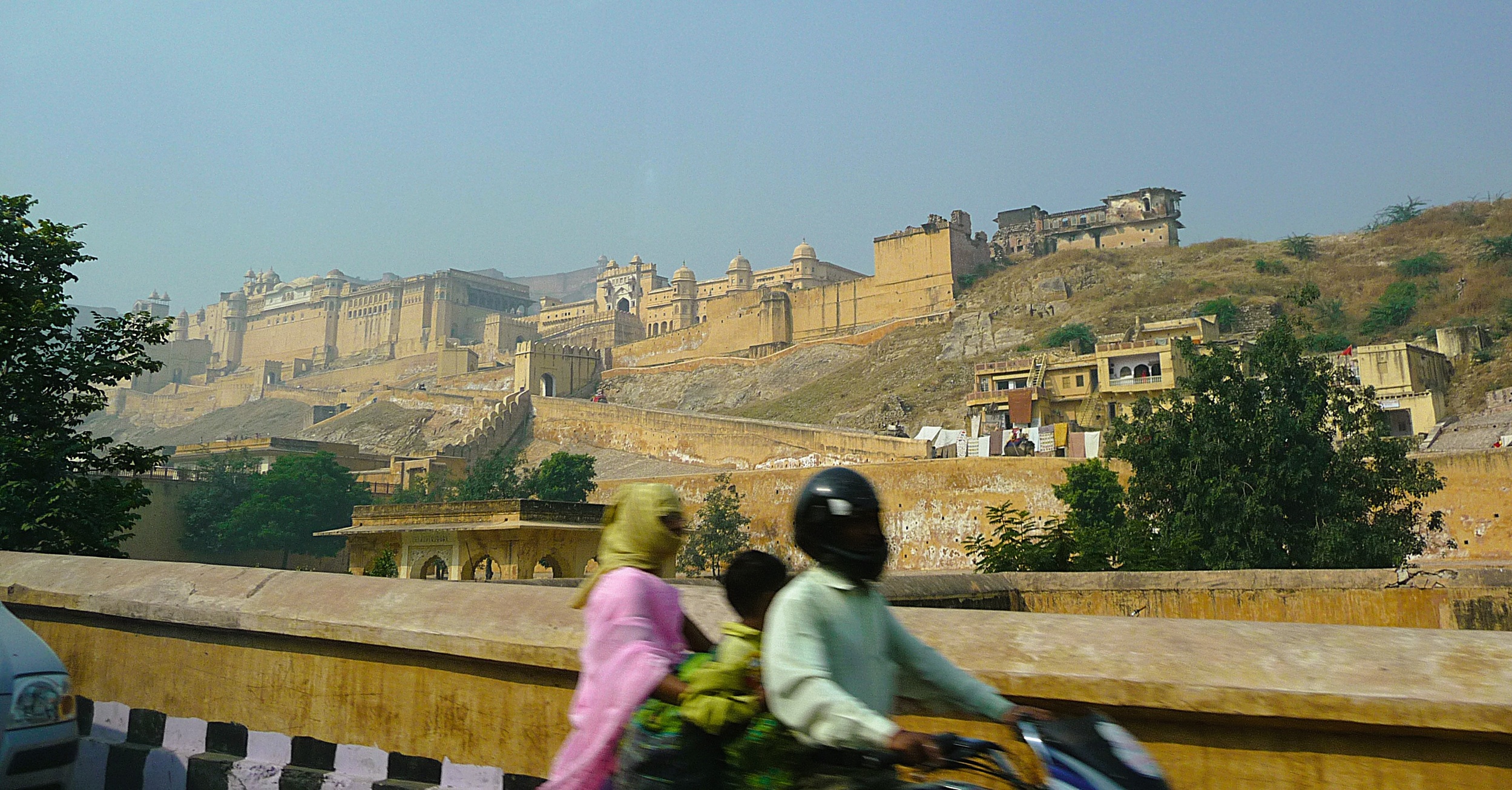
Motorcycles typically carry 3-4 people. Families are perched precariously, with dad at the front, mom sitting side saddle at the back, and a couple kids between them.
Regions
Africa | Antarctica | Asia | Australia | Caribbean | Europe | Middle East | North America | South America