
Nepal is a landlocked nation wedged between India and China. Everest has a magical siren song that calls out to mountaineers across the globe. The majestic alpine landscapes and white-capped peaks that promises larger-than-life adventures. Likewise, trekking to Everest Base Camp is an impressive way to explore Himalayan villages and Sherpa culture.
| Adventures | Must Sees | Bonus | Food |
ADVENTURES

Trek to Everest Base Camp
The path to Everest Base Camp is a rollercoaster through supreme Himalayan mountain ridges and remote Nepali villages
MUST SEES
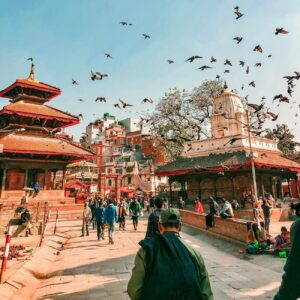
Kathmandu
Kathmandu is hot, dusty, and chaotic. At busy intersections, you may see a clump of black cables. If you follow some corridors, you can find nice, secluded family courtyards where kids are bouncing balls.
Ramechhap
During the trekking season, planes fly Lukla to Ramechhap instead of Kathmandu. The bus ride from Kathmandu passes hills, farms, villages, and the Sunkoshi and Tamakoshi Rivers.
Lukla
With a short runway on the edge of the cliff, Lukla is the most dangerous airport in the world. The Twin Otter propeller plane makes nerve-wracking take-offs and landings from the side of the mountain. Most Himalayan treks begin and end at Lukla.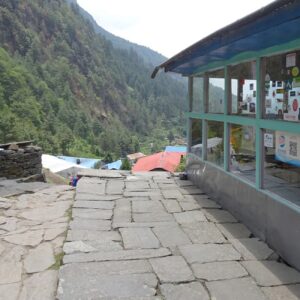
Phakding
Phakding is a small Sherpa village with teahouses and restaurants. This spot in the valley by the Dudh Kosi River is in a pine and cedar forest. You pass prayer wheels, stupas, and mani stones in a clockwise direction. There are also porters, donkeys, and yaks carrying insane loads on their backs.
Suspension Bridges
There are about five suspension bridges on the way to Namche. The long, skinny metal bands sway and bounce with every step above the Dudh Kosi River. It goes without saying that the donkeys and yaks have the right of way.
Namche Bazaar
Namche’s buildings are on terraces in a natural amphitheater. At the entrance, there is a big stupa and a stream with spinning prayer wheels. On your layover, visit the many gear shops (even a North Face store), restaurants, bars, and cafés.
Tenzing Norgay Memorial
In the hills above Namche, visit Tenzing Norgay’s pink statue. Norgay and Hillary were the first to summit Everest in 1953. Sherpa porters and guides are vital to trekking in the Himalayas.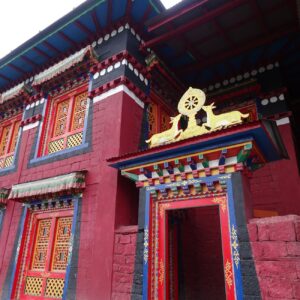
Tengboche
Tengboche is a hill station above Khumbu Valley and below Ama Dablam. The Tengboche Monastery has the Magic Buddha’s footprint and a Magic Buddha statue. The walls have bright colorful murals depicting Buddhist scripture.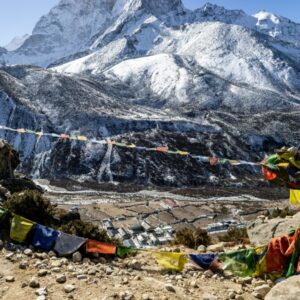
Dingboche
As the highest Sherpa village in the Khumbu region, this is popular for acclimation. It’s needed after steep ups and downs in rhododendron and juniper forests. The main path has white-washed walls, snack shops, snooker halls, and yak dung patties.
Lobuche
Before the settlement of Lobuche, at Thokla Pass, there is a memorial to those who passed away on the mountain. There are only about a couple dozen homes, with shiny solar water heaters. It is right before the last push to EBC.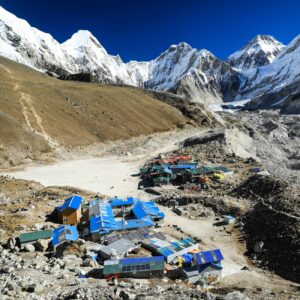
Gorak Shep
Gorak Shep is an outpost at the edge of a frozen lakebed and is only open during the trekking season. Stop here for lunch on the way to EBC. After reaching EBC, return to Gorak Shep and go to sleep early.
Everest Base Camp
From Gorak Shep, walk next to the massive Khumbu Glacier, which is mostly covered by dirt. After a boulder field, you reach the iconic Everest Base Camp. Everest climbers start their ascent in the Khumbu Ice Fall with its treacherous crevasses.
Kala Patthar
After an alpine start at 3 am, it’s a slow and steady climb to this spectacular viewpoint. To your right, see the Khumbu Glacier surrounded by legendary 8,000 m peaks. Straight ahead, there’s an unrivaled view of Everest – it’s the black diamond behind the mist.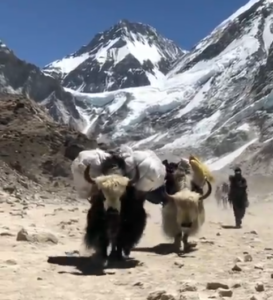
Pheriche
Pheriche is in a wide flat valley at a relatively low altitude. The valley forms a wishbone with Dingboche’s valley (a mile to the east). The air is thick and warm again. There’s a dark and smoky bar where Sherpas in heavy jackets sit closely huddled on benches next to the walls.
Everest
Sagarmatha is the tallest mountain in the world. Under 7,000 people have summitted with 800 attempts a year. For mere mortals, EBC is the closest they will get. For two weeks of trekking, seeing Everest is worth the effort.BONUS

Tea House
Tea houses provide refreshments and nourishment. The communal dining area has a yak dung powered stove and cushioned bench seating along the walls. During the trek, stop at tea houses for tea (ginger lemon, milk, masala) or coffee.
Trail Farms
The trail goes right through the center of some farms. The trail is walled off on both sides by tall rock walls. On either side of the walls are green leafy farm plots.
Porters
Porters haul supplies from Lukla to Namche in 1.5 days and carry up to 135 kg on their backs. The loads have cloth straps attached to their heads for balance. When they rest, they lean the burden on a walking stick/kickstand.
Prayer Wheels
Along the trails, you will pass prayer wheels, stupas, and mani stones in a clockwise direction. Spin the prayer wheels clockwise to release prayers and mantras. Prayer wheels generate good karma and wisdom.
Mani Stones
There are large boulders with Tibetan engravings or paintings. The stones reveal the Buddhist mantra, “om mani padme hum.”FOOD

Momo
The momos are golden brown with a thick and chewy bread-like dough. The yak meat is tender and juicy with shallots. There is a red chili dipping sauce with fiery heat.
Dal Bhat Power 24-Hour
Dal Bhat is a cup of dal (lentils) with spinach and curried seasonal vegetables. It also comes with pickles, a mound of rice, and crispy papadam. The best thing about dal bhat is the unlimited refills!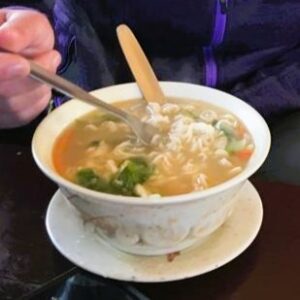
Thukpa
The Thukpa noodle soup is nourishing goodness in a bowl. The noodles are thick and smooth. The broth is extremely hot, a perfect fit for cold Himalayan nights. There is a solid mix of vegetables: cabbage, carrots, and spinach.
Regions
Africa | Antarctica | Asia | Australia | Caribbean | Europe | Middle East | North America | South America