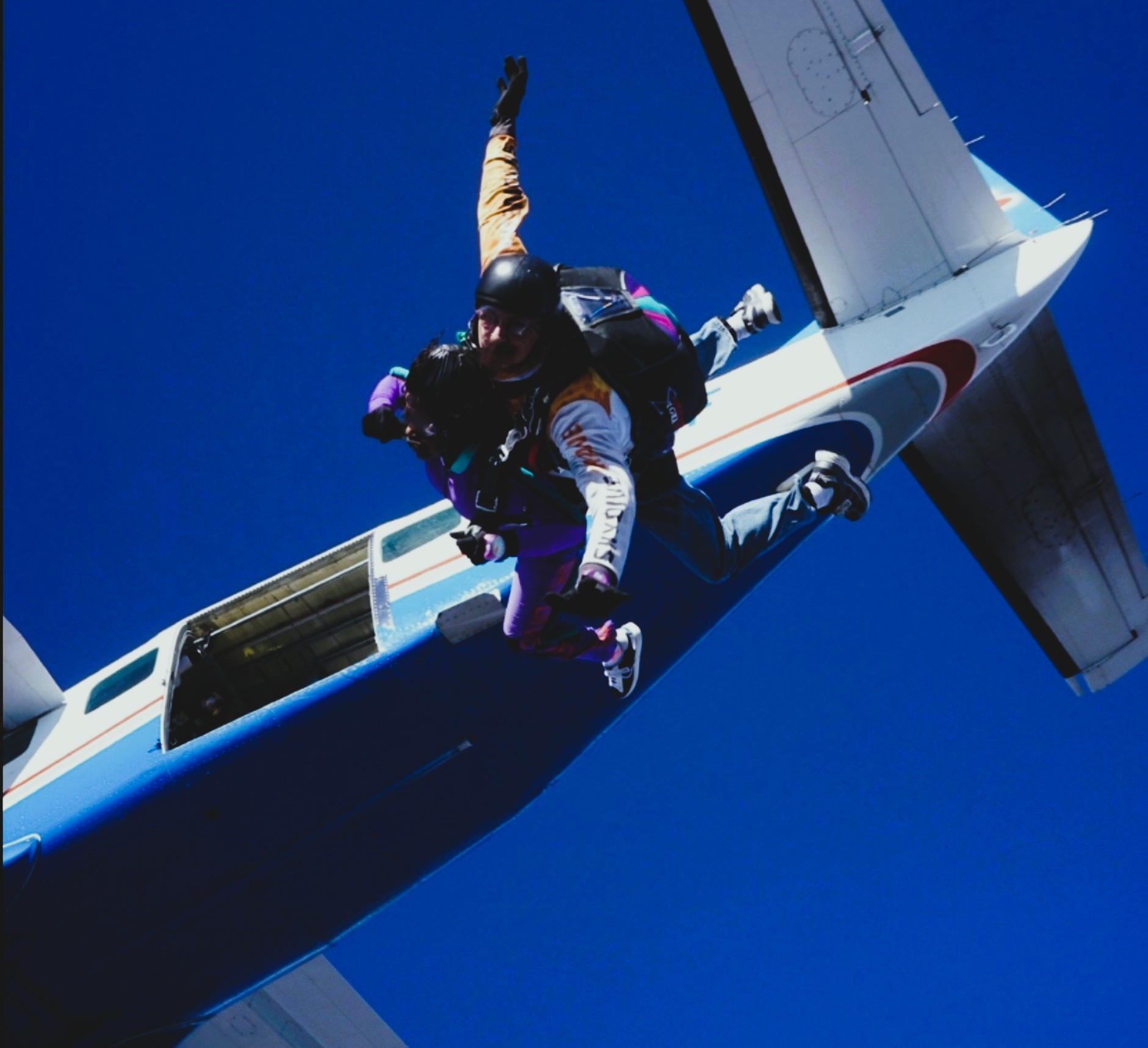
| Skydiving Altitude: 14,000 feet above sea level |
Terminal Velocity: 120 mph for 60 seconds |
| Jump Plane: De Havilland DHC-6 Twin Otter | 22 jumpers | port-side exit |
Parachute Ride: 5-10 minutes |
| Objective: Skydiving above Perris Valley, California, USA |
|
Why would anyone skydive out of a perfectly good plane? Embrace your urge to fly too close to the sun. Sometimes you need a jolt to remember you are alive. Live in the moment, take a risk. Skydiving is the ultimate adrenaline rush.
| Heebie-Jeebies | Takeoff | Jump | Free Fallin’ | Terminal Velocity | Terra Firma | Plan Your Visit | Directions | FAQs |
Heebie-Jeebies
Early Saturday morning, I zoom across the stark barren Perris Valley roads. My heart races a little as I spot the cylindrical wind tunnel next to Skydive Perris facility.
At the office, an attorney says if I die through the fault of their employees I am out of luck. They record me as I verbally agree to the waiver.
While waiting for the plane, I spot a blue dragonfly hovering in the distance. How must it feel to float and fly all day? I can hardly wait.
The Takeoff
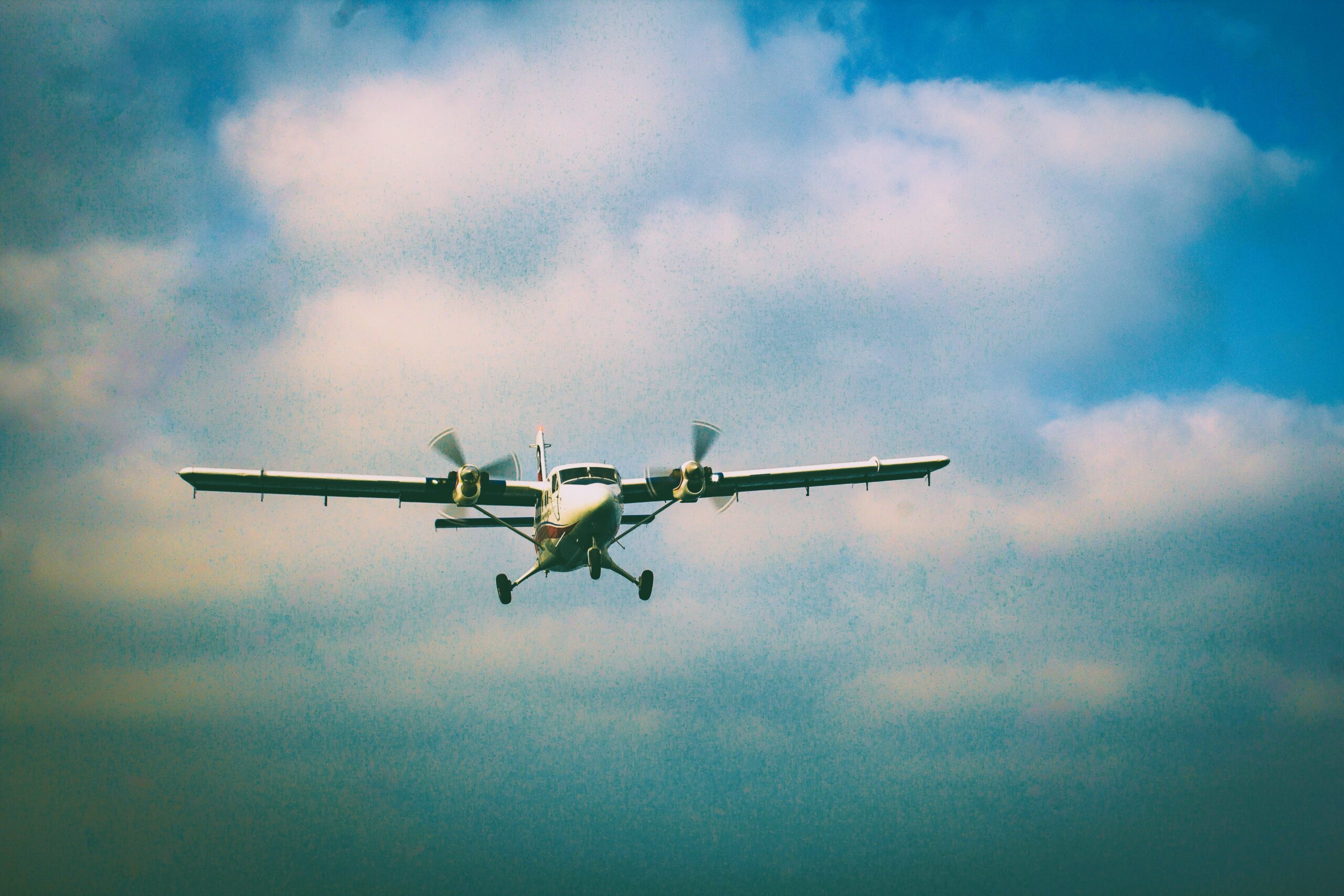
The dual-propeller plane spins around and stops in front of the waiting area. Our group of skydivers resemble a crammed can of sardines. We are up in the air, and the features on the ground look like green and yellow smudges. As I look around the plane, all I see are ridiculously huge grins (mine included). The plane flies 20 minutes to the ultimate elevation and the whole way up we give each other fist bumps. I glance at the altimeter on my wrist, and we have reached the proper altitude: 14,000 feet above sea level! In quick succession, all the solo skydivers jump off the plane.
Who Jumps out of a Perfectly Good Plane?
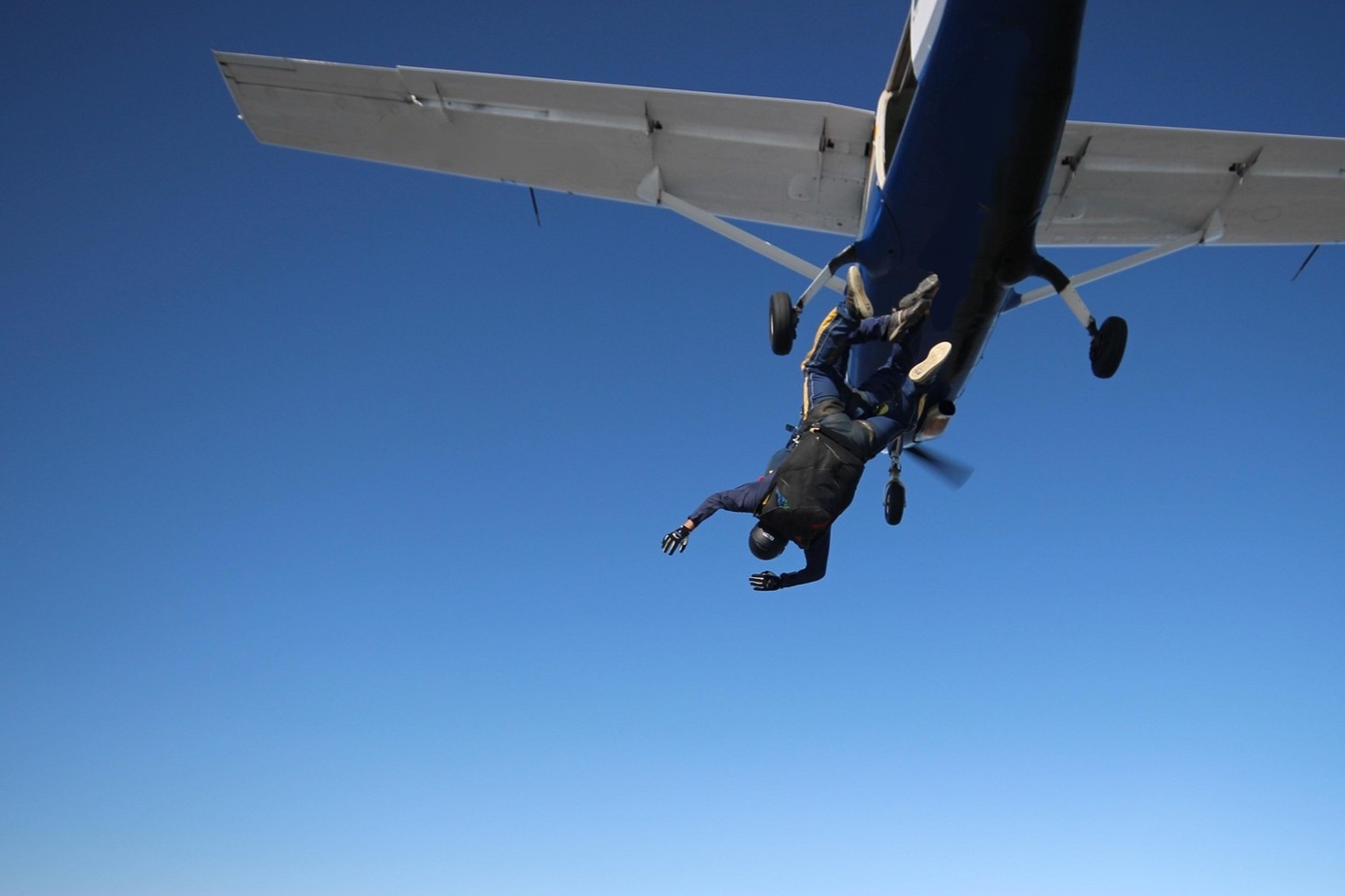
Slowly, I head over toward the exit, with my instructor strapped to my back. I fold my arms, drop my right knee, and stare at the ground below. I tune out my mild fear of heights. Ferocious gusts of wind blast through the plane. My instructor tells me to push off, arch my back, and fling my limbs behind me. I surrender to the process. The jump is really about letting go. So, I leap without any hesitation into the unknown liminal space below.
Free Fallin’
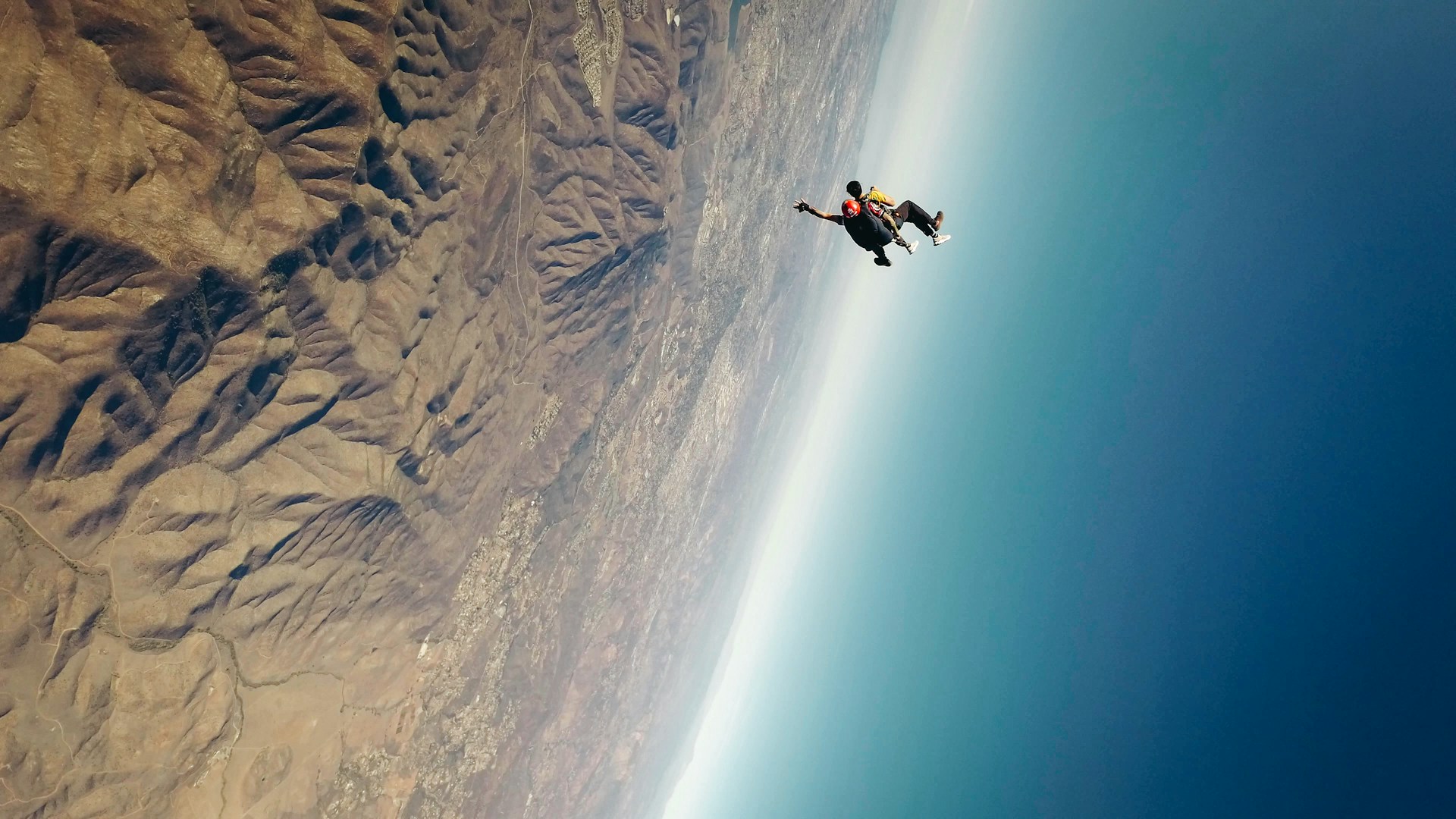
Serious sensory overload immediately settles in. Oh $#!7! I am free falling in the middle of the sky. There is absolutely nothing supporting me from the sides, above, or below. We keep gaining tremendous amounts of speed. My ears start popping. “How long have I been up here?” My brain is unable to process everything that is going on. And then I start shouting at the top of my lungs “This is f*%*&^$ incredible! Awwweesommme! Woo-hoooo! Yeah!! Hell yeahhhh!!!”
I remember to twirl my finger – the signal for the instructor to spin us. And around and around we go – the revolutions become more and more out of control. I have no idea what axis I am spinning about. Although I don’t usually get dizzy, I can’t decide whether to keep spinning or if the spinning feels completely insane. I have no idea of how much time has passed. This probably has all happened in a matter of seconds. With head tilted high, I can see the entire valley floor and Lake Elsinore in the distance. I really feel as if I am soaring through the air like a bird.
Terminal Velocity and Canopy Flight
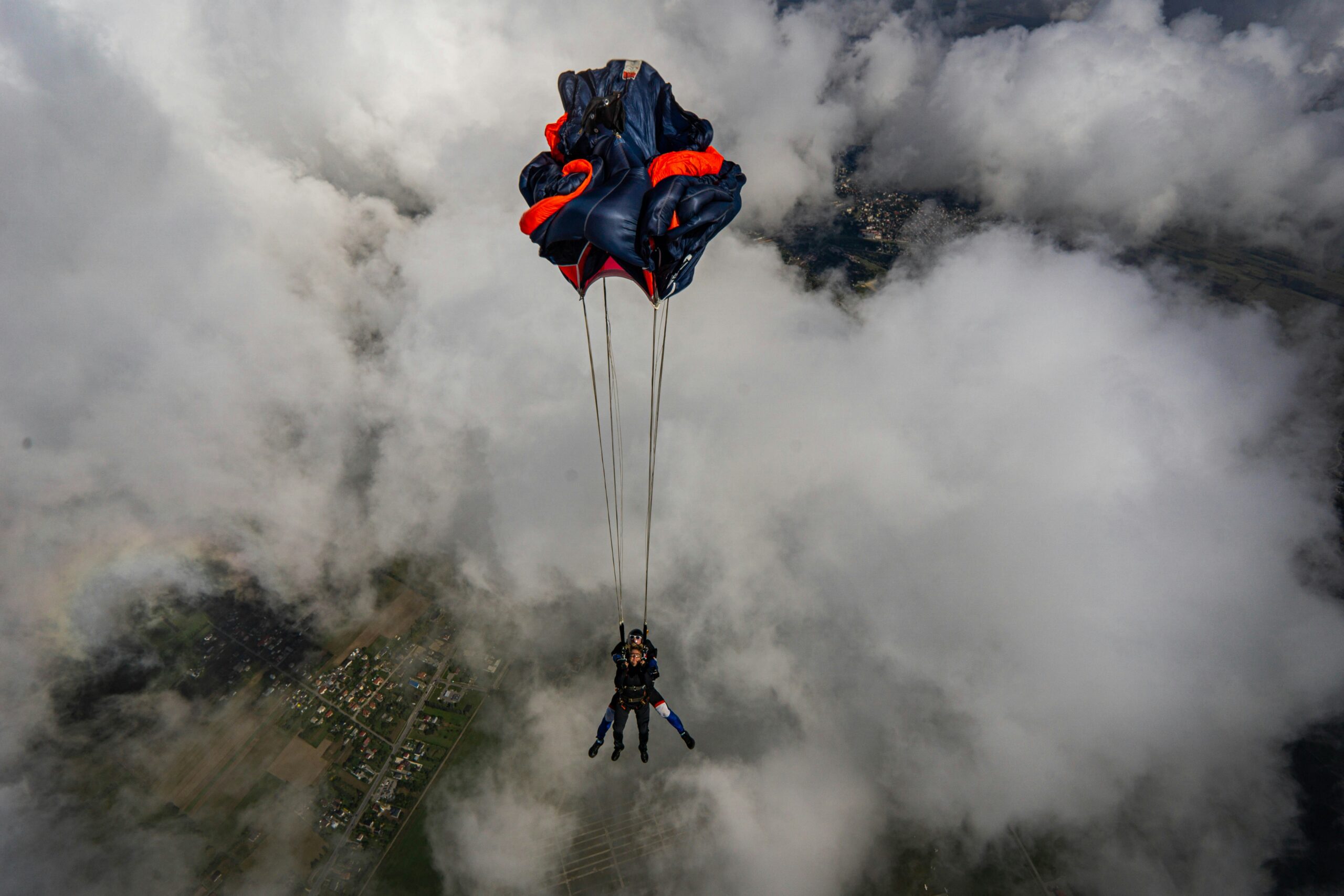
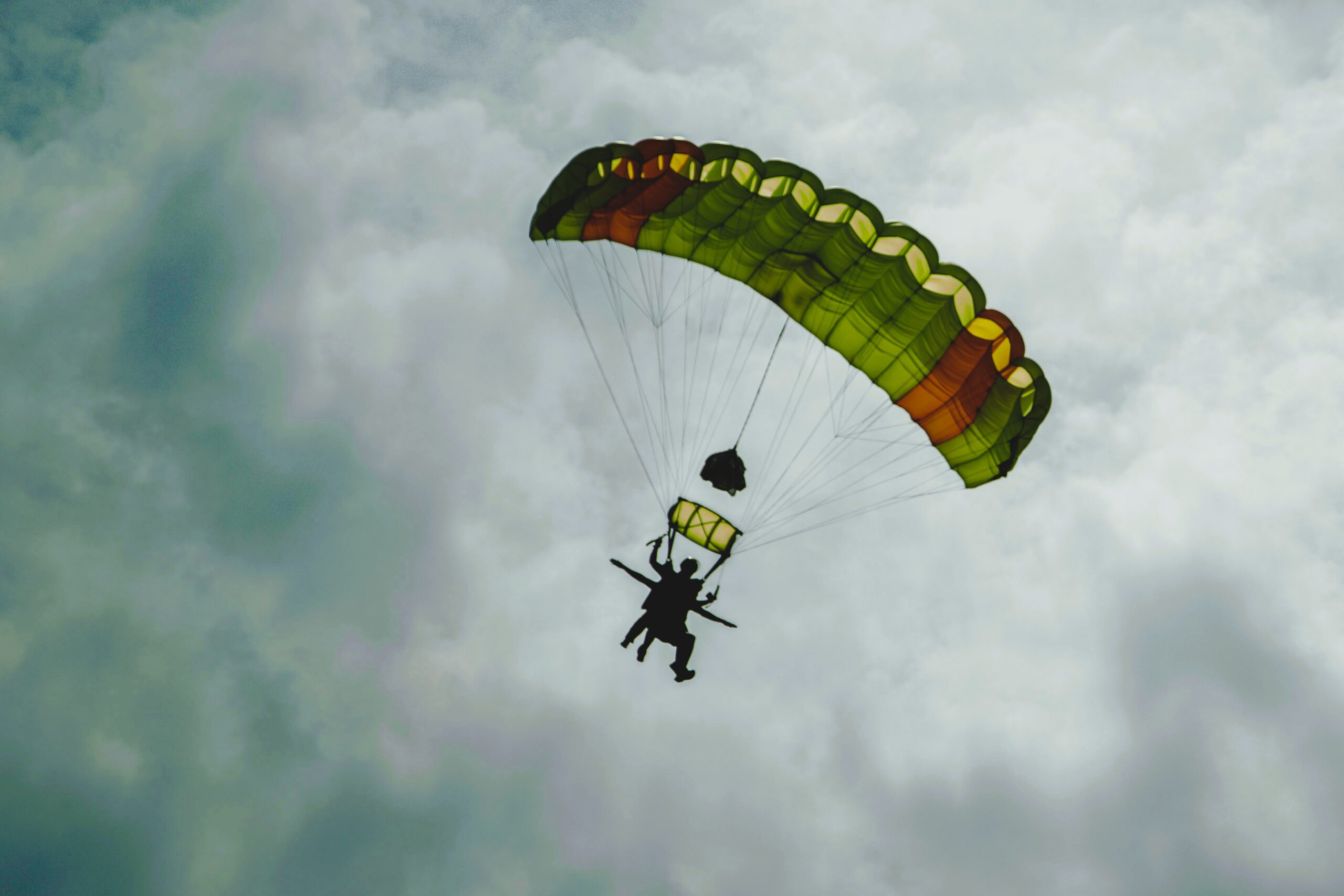
The instructor tells me to pull the chute since we have reached terminal velocity (120 mph) at 5,000 feet. For some reason, I forget what to do for a split second. But soon I get with the program and pull the orange golf ball to release the chute. We immediately slow down. If you want to spin, then you pull down on one of the loops above. I pull the loop on the left by my chest and we start spinning. Then I pull the loop on the right and we start spinning in the opposite direction.
When we finally stop spinning, I feel suspended in some invisible substance. I cannot tell whether I am moving or not. What a rush, I am not sure there are words that accurately describe what I am feeling and thinking.
Before we touch down in the drop zone, I see a plane land 600 feet below my two dangling feet.
Terra Firma
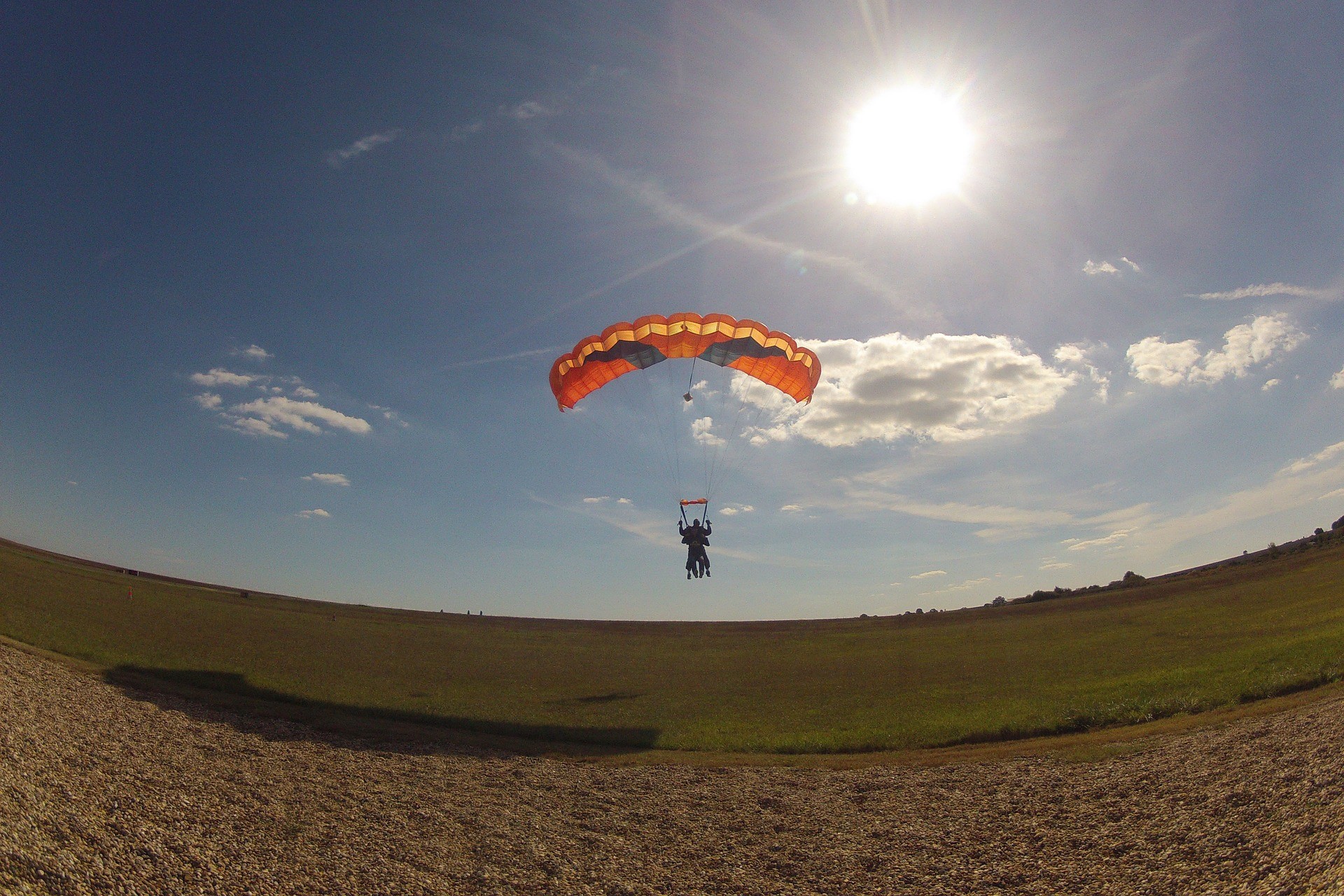
Knees bent, legs up, and a nice soft landing. This is a “one-step” landing, where we only take one step to reach the ground support crew.
High fives all around!
As I remove my jumpsuit, I see about 30 skydivers swirling in the sky above. It is an amazing sight of colorful bouncing dots.
My adrenaline is still sky high. I feel as if I can accomplish anything right now. Nothing can stop me!
Plan Your Visit
|
Directions
| Take the CA-60 and head east for 28.9 miles. At Riverside, merge onto the 215 S and drive for 12 miles to Perris. Take exit 17 for CA-74 W toward 4th St. Turn right onto CA-74 W/Redlands Ave. Continue straight onto S Redlands Ave. Turn right onto E 7th St. Make a left onto S G St. Turn right onto Case Rd. Turn left onto Goetz Rd. Make a left onto Mapes Rd and park in the Skydive Perris parking lot. |
Frequently Asked Questions About Skydiving
| Is skydiving dangerous? Yes, like any outdoor sport, skydiving involves inherent risks especially since you are jumping out of an airplane. Modern gear redundancy, strict training, and oversight by organizations like the USPA make it a highly calculated and managed risk. Statistical data shows the fatality rate is roughly 1 in 217,000, and tandem skydiving for first-timers is even safer. |
| Are there any age requirements? The United States Parachute Association (USPA) mandates that you must be at least 18 years of age to skydive. Bring your valid, government-issued photo ID with you to the dropzone (driver’s license or passport). There is no upper age limit. |
| Are there any physical requirements? To make a tandem skydive at Skydive Perris, the weight limit is 240 lbs. There are no exceptions. They will weigh you when you arrive. Skydiving weight limits are not intended to be exclusive or discriminatory. They will enforce the limits for your safety and comfort. Note: An additional fee of $25 is assessed for any tandem student weighing over 220 lbs on jump day. If you have ear or sinus problems, a seizure disorder, diabetes, fainting spells, heart issues, prior shoulder dislocation ,or neck/back pain, you may not be a candidate for skydiving. |
| Are there any language requirements? It is critical for you and your instructor to communicate without issue. In most cases, you need a strong understanding of written and spoken English to make a tandem skydive. |
More Epic Adventures
If you are looking for other epic adventures, check out the following. Would you paddle in Antarctica? How about climbing to the top of Kilimanjaro? Or trekking to Everest Base Camp?