| From: Long Beach (KLGB) |
To: Long Beach (KLGB) |
| Flight Time: 30 minutes |
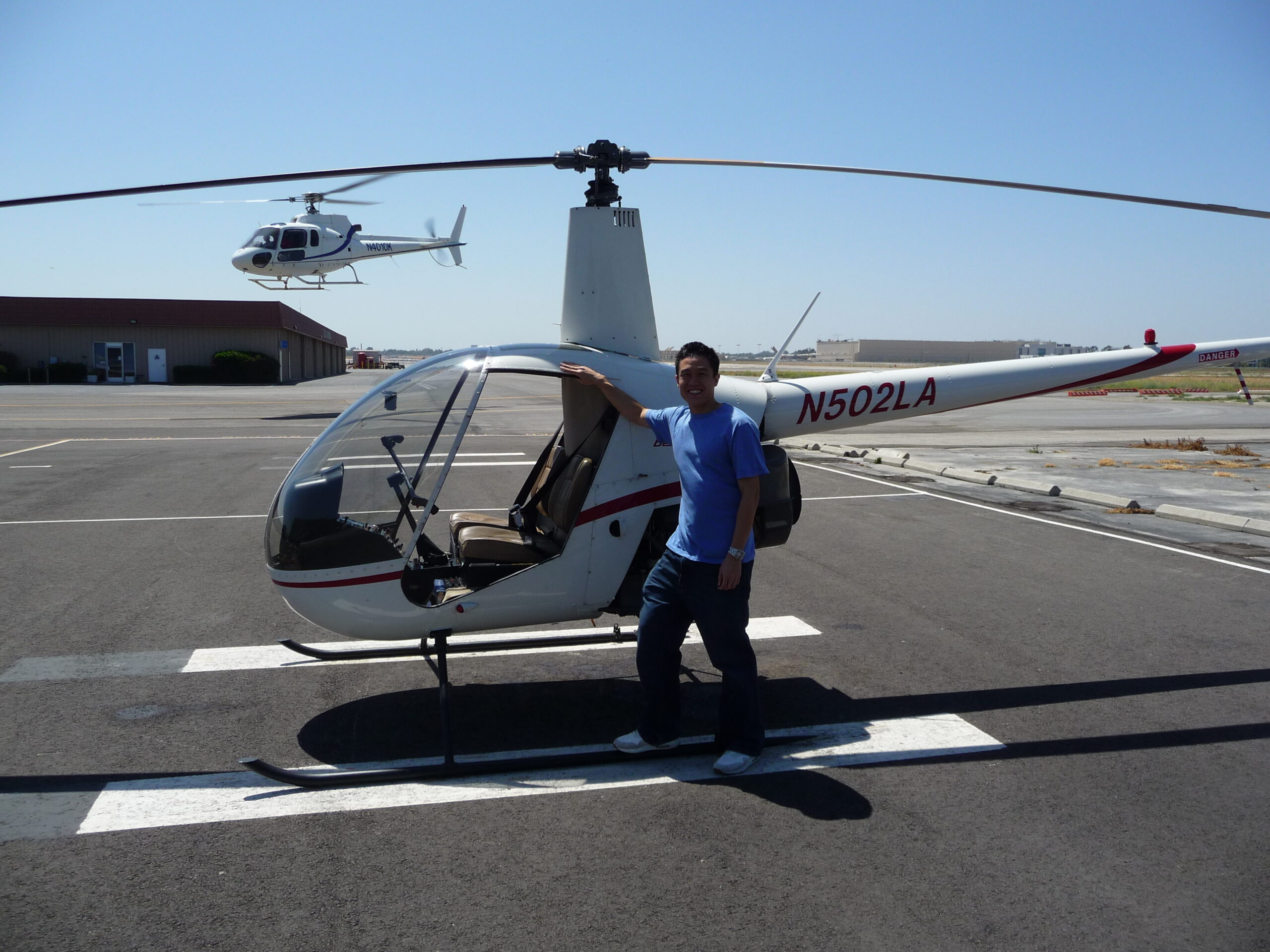
Aircraft: R22 |
| Altitude: Long Beach (KLGB) |
Cruising Speed: 100 mph |
| Objective: Learn to Fly a Helicopter above Long Beach |
|
Breaking news. Gridlock on the 5. Carmegeddon on the 405. Two-lane shutdown on the 10. Raise your hands if you are ready for an alternative method of transportation. Helicopter, anyone?
There are many places that offer flight training and introductory flights. There is a classroom session about helicopter controls. You learn useful tidbits like the Jesus nut. It is the only thing holding the rotors to the helicopter. If this thing fails, the only thing you can do is pray to Jesus. If that does not faze you, then you are going to have fun. Plus, the instructor does all the hairy stuff like taking off and landing.
| Take off | You Can Fly! | Hover | Plan Your Visit | Directions | Interactive Map | Flight Path | FAQ |
Takeoff
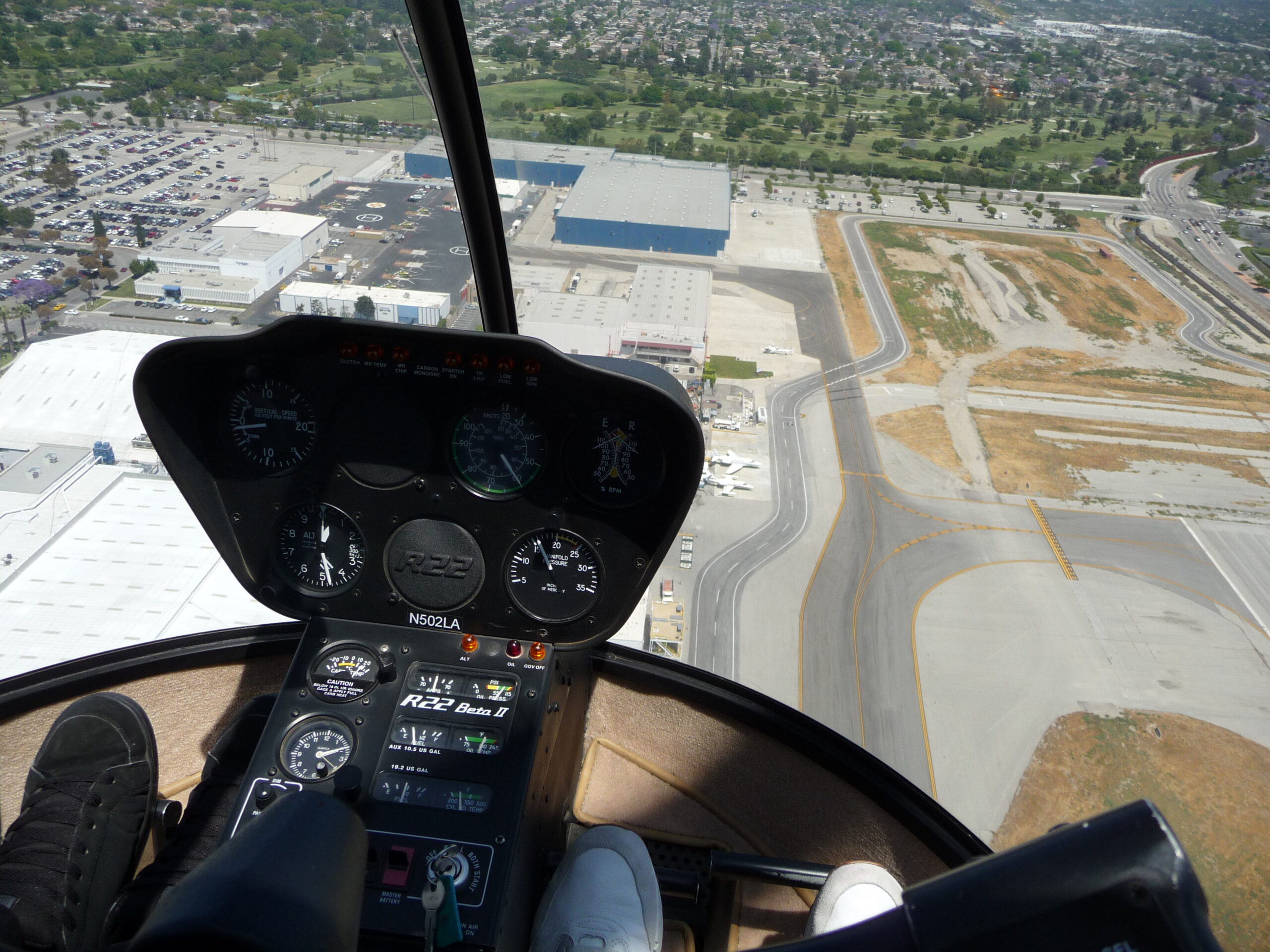
The instructor starts the engine and the rotors roar to life. The instructor checks the instrument panel by flipping switches on and off. You put on a headset so that you can hear instructions during the flight. The instructor pulls up on the collective and the helicopter hovers above the helipad. After a couple swift exchanges with the air tower, they clear us to go. The chopper darts into the air. This is the most exhilarating part of the flight. The sensation of a light and speedy aircraft combined with the knowledge there’s nothing but air surrounding you is incredible. To demonstrate the maneuverability, the instructor performs a couple swift, banking turns to the left and the right. Then the helicopter swings like a pendulum at about 45 degrees in each direction.
You Can Fly!
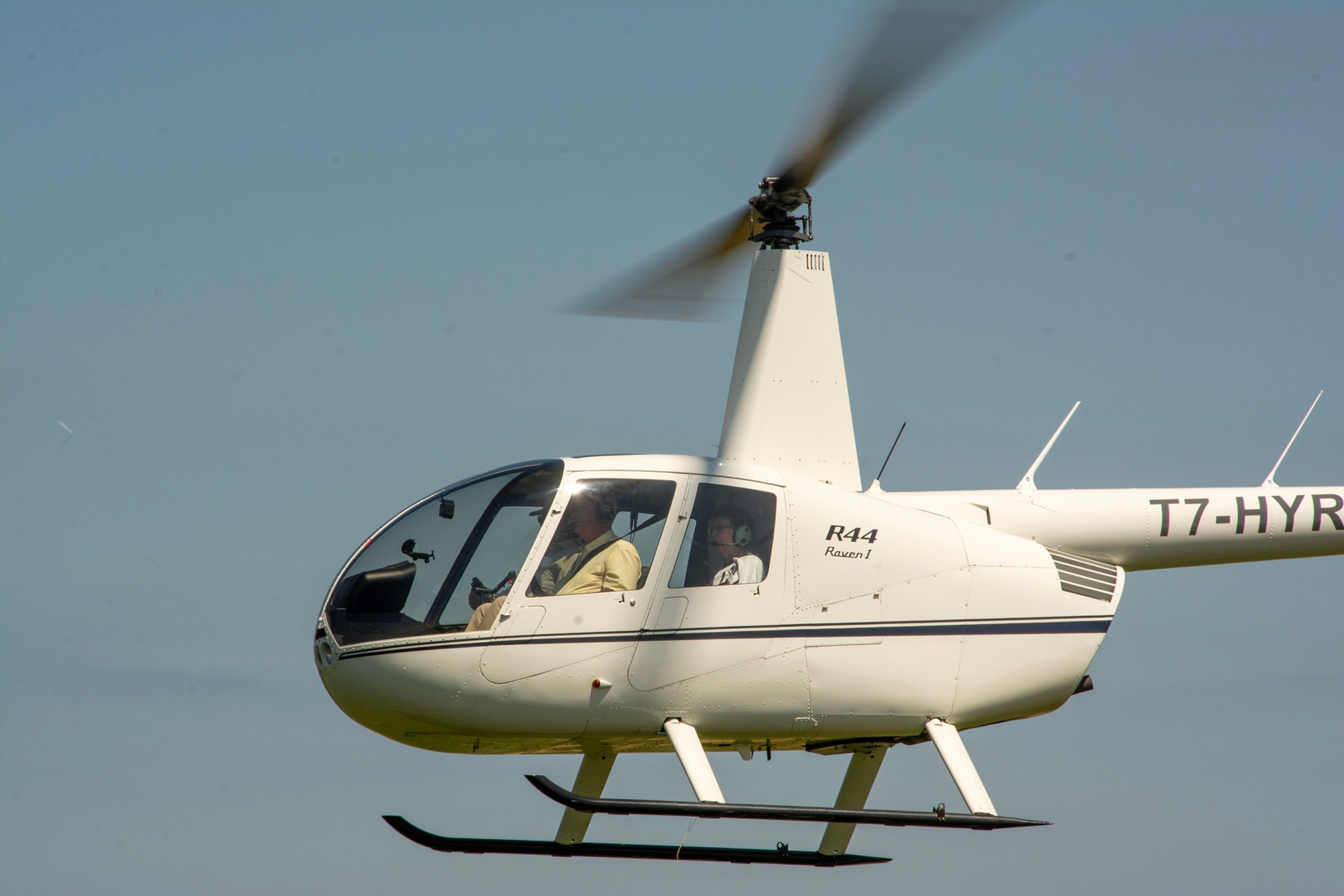
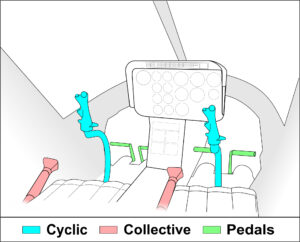 At some point, the instructor lets go. You grab the collective to maintain the current altitude. Plant your heels on the floor and set toes on pedals, ready to turn the direction of the nose. Your right hand clutches the cyclic, which is pretty much a handlebar-shaped joystick. The flight instructor has a firm grip on the other end of the cyclic, just in case. At the Los Angeles River, they give you the go ahead to turn the helicopter toward the ocean. So far so good, steering the whirlybird while in forward flight is straightforward.
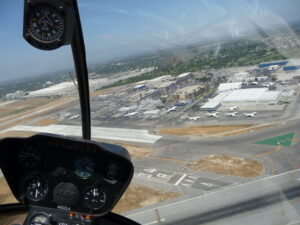
At 700 feet above the ground, the view is amazing. You are high enough to appreciate the terrain, yet low enough to see people walking around. As we approach downtown Long Beach, it feels strange looking down at the tops of high-rises that are so near. Soon, local landmarks such as the Queen Mary and convention center (painted by the marine artist Wyland) become visible.
Before the coast, the instructor tells me to turn east before the blimp and head along the shoreline. While flying over the beach, I can see the swimmers, lifeguard huts, and offshore islands. At Redondo Avenue, I turn the chopper back north.
Hover
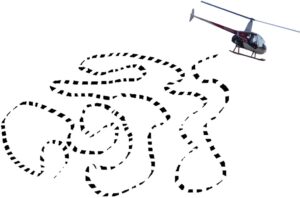
Hovering is the most difficult part of flying a helicopter. When the helicopter isn’t moving forward, the controls become extremely sensitive and any pilot input causes significant movement. Moving the cyclic rocks the cockpit back and forth. Also, there’s a slight lag between the time you adjust the cyclic and the movement of the helicopter. Every adjustment to the cyclic forces the pilot to chase the preceding movement in a series of constant corrections. Plus, you must contend with two columns of air. The rotors push air down against an opposite cushion of air below the helicopter. It feels like two magnets repelling each other.
Although it feels like the helicopter isn’t staying in one place, the instructor says it’s holding within a small area. Most novice pilots use an entire football field sized area when learning to hover. Typically, it takes about 10 hours to really figure out how to hover correctly. After the hovering practice, the instructor swings the helicopter around and effortlessly lands the chopper.
With 30 minutes logged, you’re only 39.5 hours from earning a helicopter license. Then you can rise above the jammed roads and leave the traffic behind.
Plan Your Visit
|
Directions
| Follow the 710 S until you reach the 405 S. Take exit 29A to merge onto E Spring St toward Cherry Ave. Turn right onto Cherry Ave. Turn right onto E Wardlow Rd. Head right onto Airflite Way. Turn left and Anthelion Helicopters will be on your right. |
Interactive Map
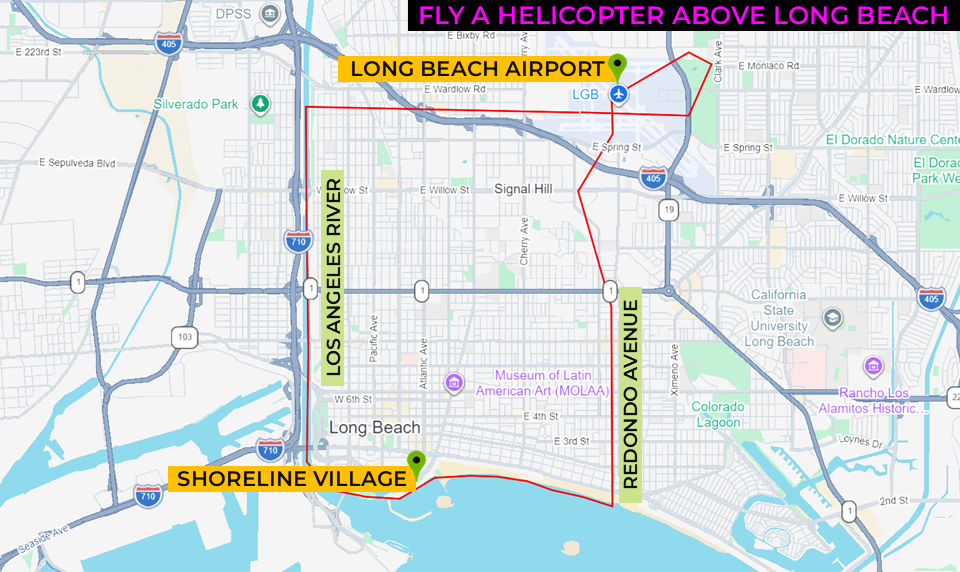
Flight Path
- Head west from the airport to the Los Angeles River.
 Follow the river south toward the ocean.
- Fly past the rooftops of the downtown. high-rises, the Queen Mary, a blimp, and the convention center.
- Follow the Pacific shoreline.
- Head north on Redondo Avenue.
- Fly above Signal Hill by veering slightly to the left of the desalination tanks.
- Hover at the airport’s hover practice field.
Frequently Asked Questions
| What does the lesson include? The demo flight combines a mini simulation course with a hands-on 30-minute helicopter flight. The combination of flight simulator and R22 helicopter flight will help you learn the fundamentals of helicopter operations and safety. During your demo flight you will learn helicopter control, including straight and level flight, climbs and descents, turns, and hovering. |
| How much does the lesson cost? The demo flight is $199 for 30 minutes. |
| Tell me more about the R22 The R22 is the most popular and widely used training helicopter in the world. The R22 is a two-seat, single-engine helicopter. Its Lycoming O-320 engine provides 124 hp for a cruising speed of 110 mph. |
More Epic Adventures
If you are looking for other epic adventures, check out the following. Would you paddle in Antarctica? How about climbing to the top of Kilimanjaro? Or trekking to Everest Base Camp?