| Location: Negril, Jamaica |
Windsurfing Time: 1 hour |
| Objective: Windsurfing in Negril |
|
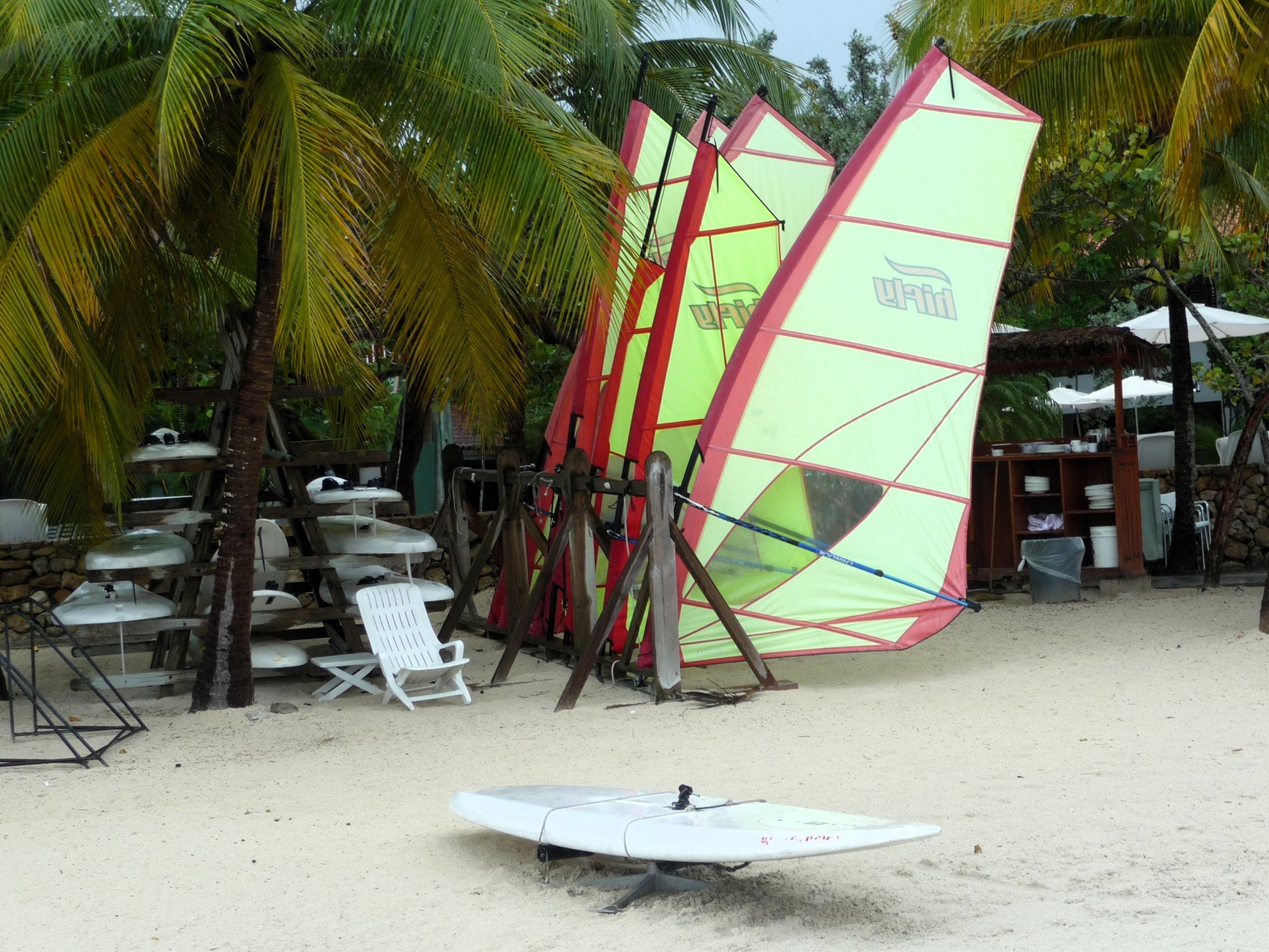
Looking to catch some air in Jamaica? Go windsurfing in Negril and explore the crystal-clear waters and white sands of Seven Mile Beach. After soaking up warm water, sunshine, and booming, reggae, are you ready to ride the wind for fun and excitement? The day before, while taking shelter from the rain, I ran into someone who could line up a windsurfing lesson.
| The Fixer | The Lesson | Sea Legs | Windsurfing | Learning the Ropes |
Sun is shining, weather is sweet now
Make you wanna move your dancing feet
To the rescue, here I am
Want you to know, y’all, here I stand
~ Bob Marley
The Fixer
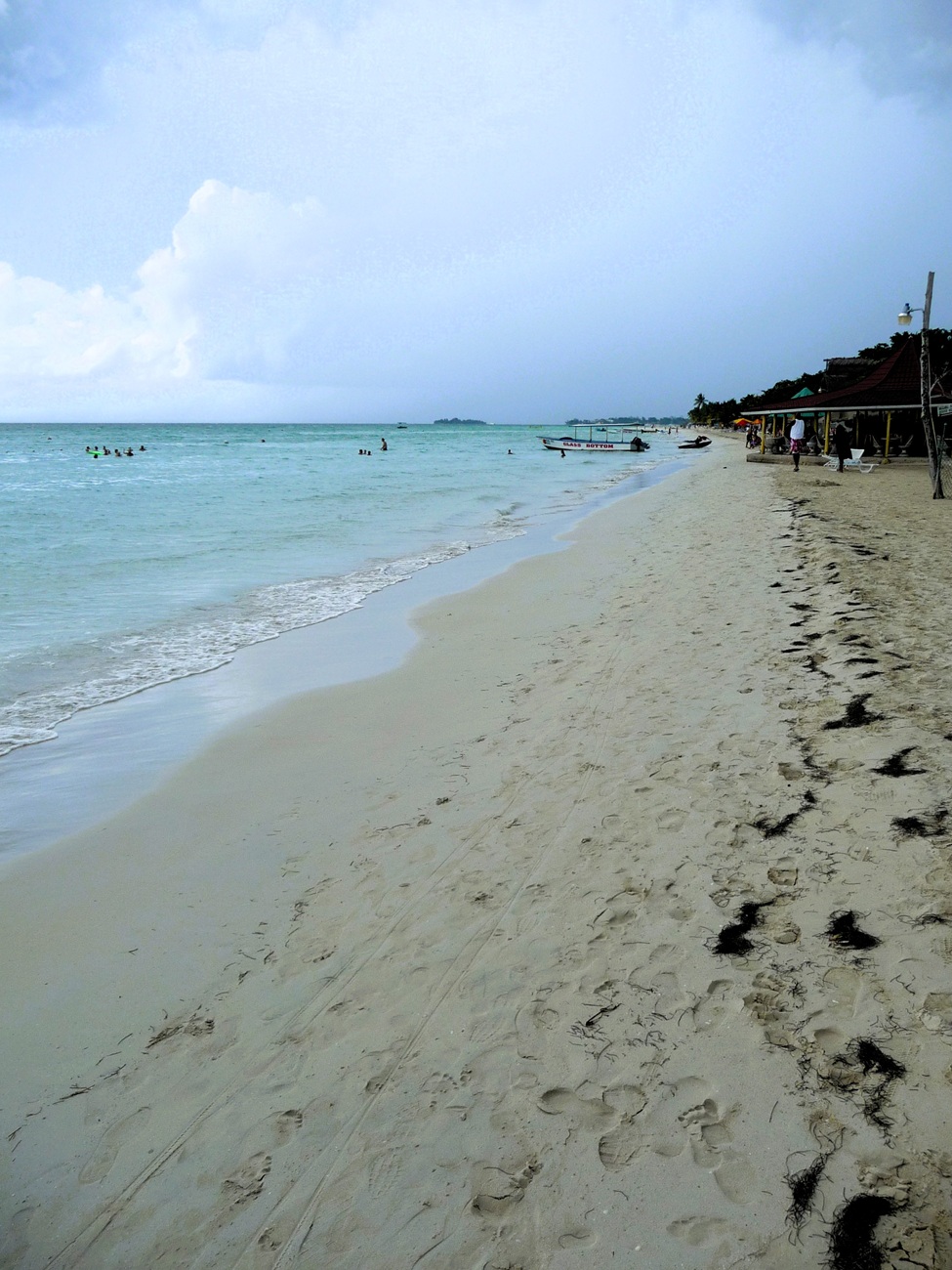
In the early morning, I walk by Seven Mile Beach’s floating moon bounce, and wait by the guard post. The fixer arrives and we walk up and down the resort looking for a windsurfing board. Eventually, the sly entrepreneur uses connections with resort guards and beach sports instructors to arrange a windsurfing lesson for me.
The Lesson
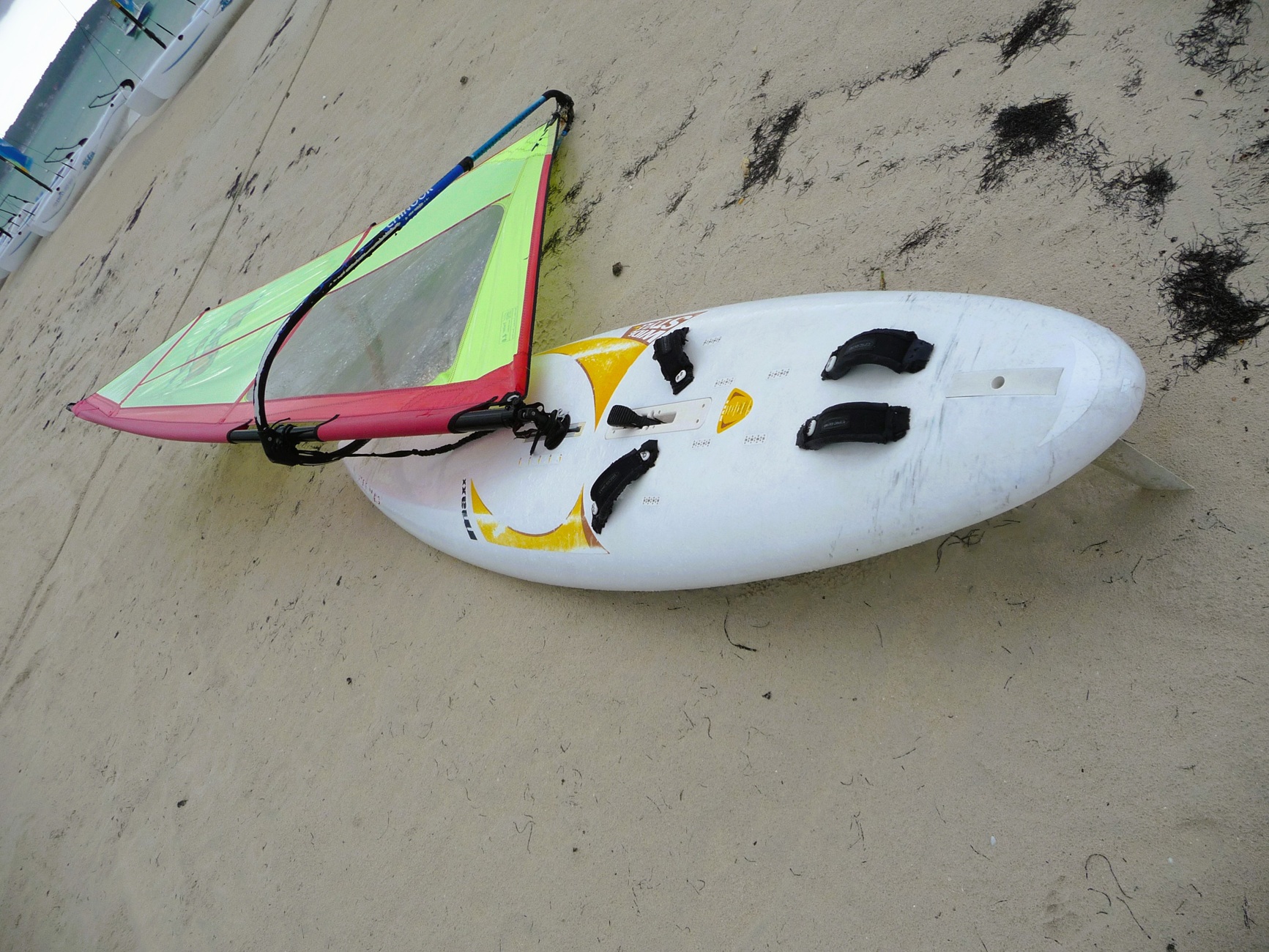
The lesson is pretty rudimentary. I stand on the board, lift the sail by the edge, and then turn the sail to catch the wind. Changing directions involves turning the sail to the opposite side.
Sea Legs
It takes some time before I get my sea legs on the board. Getting accustomed to the shifting weights and balances of the sail and the board takes lots of practice. I must lean back and keep my knees bent to avoid jumping off every time I lose my balance.
Soon, I get the rig moving – slowly – but moving nonetheless. I let the wind dictate where I go. All I try to do is hold on and stay upright. I manipulate the sail at different directions and angles until the sail tugs back gently against a mild gust. I have caught it; I am harnessing the power of the wind and air. The northerly wind remains slow and steady, and pushes me a few football fields from the coast.
This is a different sensation from the more violent action of traditional surfing as I cruise along like a sailboat. Of course, that is only due to the lack of wind and my lack of experience. With stronger winds and greater ability, the sport switches from displacement sailing to hydroplaning. With the hydroplaning style, you see the thrashing turns, vicious flips, and bracing jumps commonly associated with windsurfing.
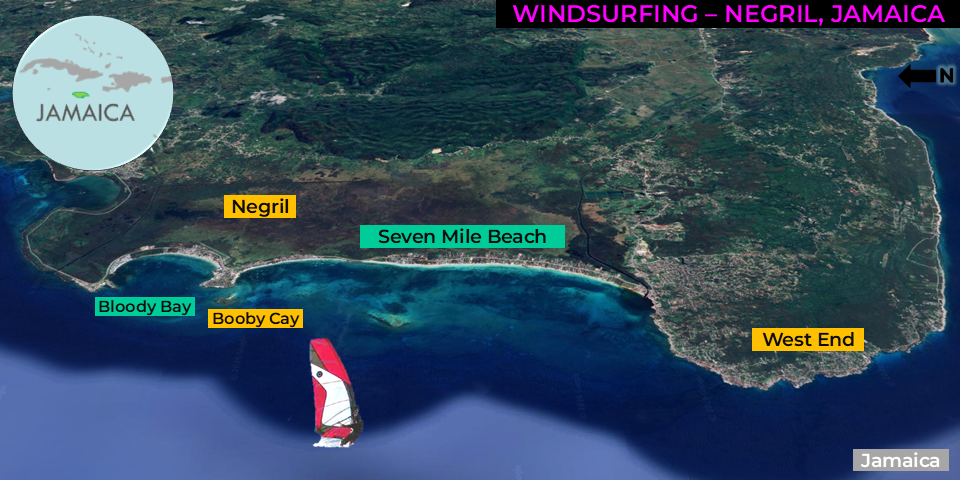
Windsurfing from Bloody Bay to Booby Cay
I almost reach the islet across from Bloody Bay, when the resort motorboat pulls up next to me. They ask me if I want a tow back to shore. I tell them to go for it. Then, I hop on the boat, hook my rig up, and enjoy the ride back to shore. I spend another half hour attempting to get my rig to move. It is a test of perseverance as I keep hitting the water, boom … as I keep slipping off the board, boom … and I lose grip of the sail, boom. But there is not enough wind and my time is up, so I call it a day. Besides, the island’s Sirens are luring me with blistering bass lines, fiery grooves, silky melodies, and tropical, sizzling riddims … boom, boom, Boom, BOOM, BOOM, BOOM!
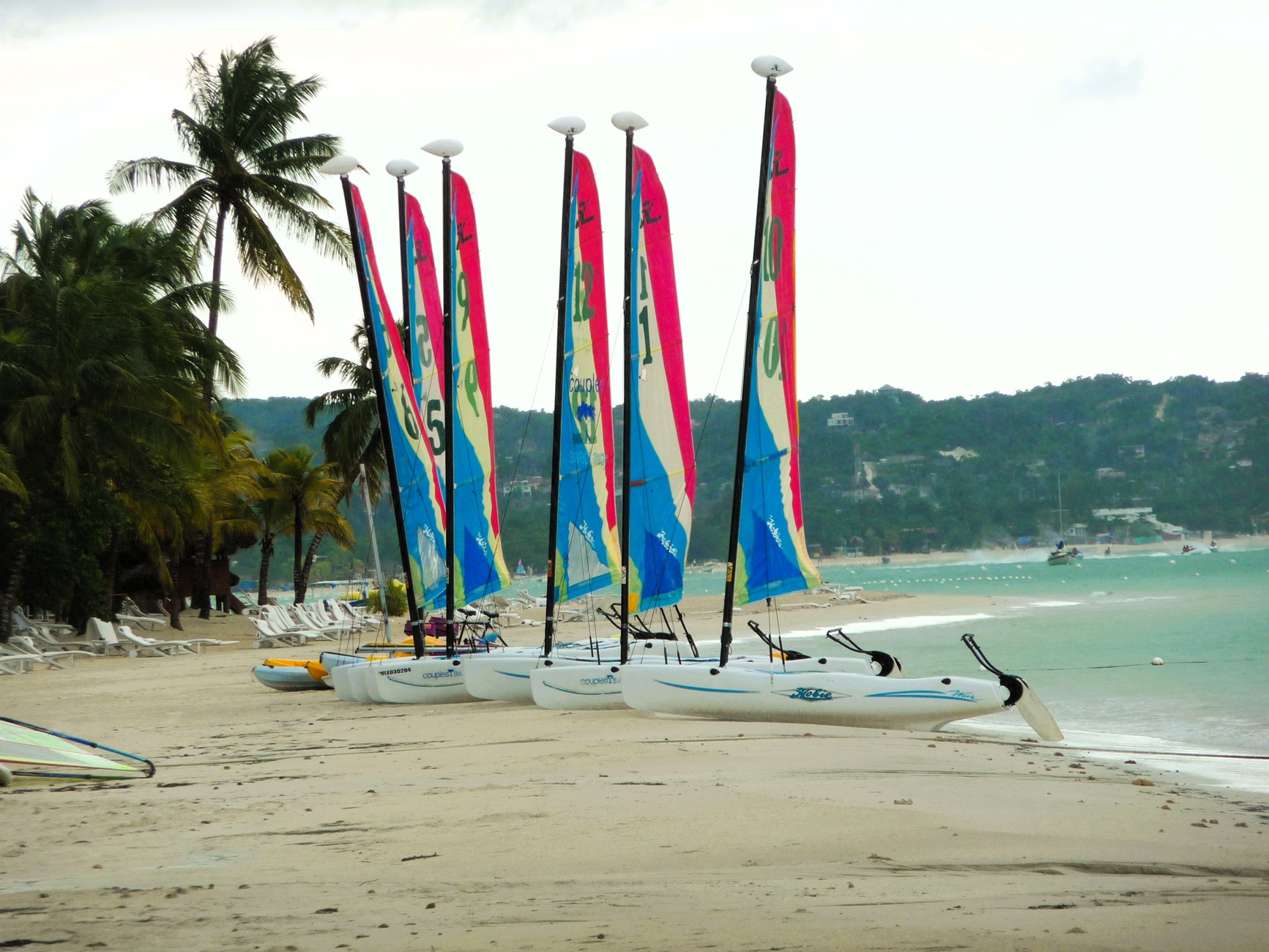
Learning the Ropes
- Position the board so that the wind blows across it.
- Maneuver the sail so that the mast is parallel with the board across the wind. The mast should extend past the back of the board, and the clew of the sail should be pointing downwind.
- Clear the sail by pulling the mast parallel to the water and into the wind.
- Place your back foot onto the board.
- Swing the mast forward into the wind and power it up close to the water.
- Steer a broadreach using traditional downwind steering.
- As the wind catches the sail, sheet in with your back hand and let the wind pull you up onto your back foot. Don’t pull with your arms, which will pull the sail down and reduce lift. Instead, extend your arms as much as possible and let the wind pull you up.
- As you roll up onto your board, kick your front foot to provide an extra boost.
- Step carefully onto the centerline of the board with your front foot.
- Hook in to the harness lines on the boom.
- Step back and into the foot straps.
- Plane across the water like a skipping stone.