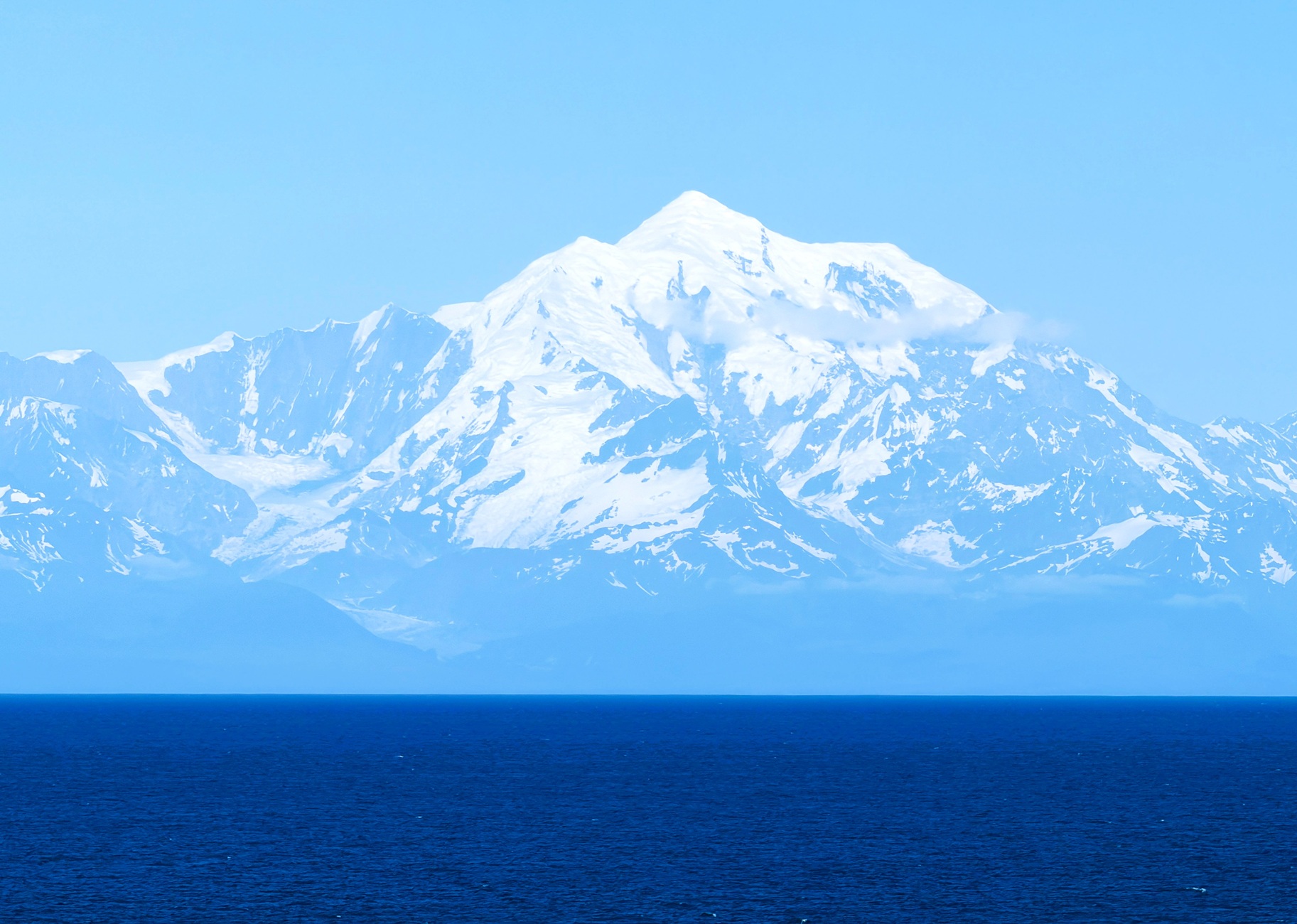
Glacier Bay National Park & Preserve’s story begins after the Great Ice Age. Two massive ice sheets covered most of North America 18,000 years ago. After the ice sheets melted, glaciers grew and advanced to the entrance of the bay. Around 250 years ago, the glacier surged into Icy Strait and pushed the Tlingit out of their ancestral lands. Within 15 years, it stopped growing and began to retreat.
Since then, the glacier has undergone the fastest known retreat. The bay’s inlets and waterways now lie fully exposed. Scientists study the terrestrial and marine wildlife that have returned to the land in this living laboratory. Glacier Bay National Park is only accessible by boat or seaplane with only a 10-mile road inside the park. Most of its pristine landscapes is only viewable from the sea. Of the over 1,000 glaciers, 62 have names, and 7 active tidewater glaciers calve icebergs into the sea. From a ship, you can see remarkable white-capped mountain peaks, jagged coastlines, and spellbinding fjords. In the Tlingit’s homeland (Sít’ Eeti Gheeyí or “The Bay in Place of the Glacier”), they call calving “white thunder.” The Tlingit value the vital balance between humans and their natural surroundings.