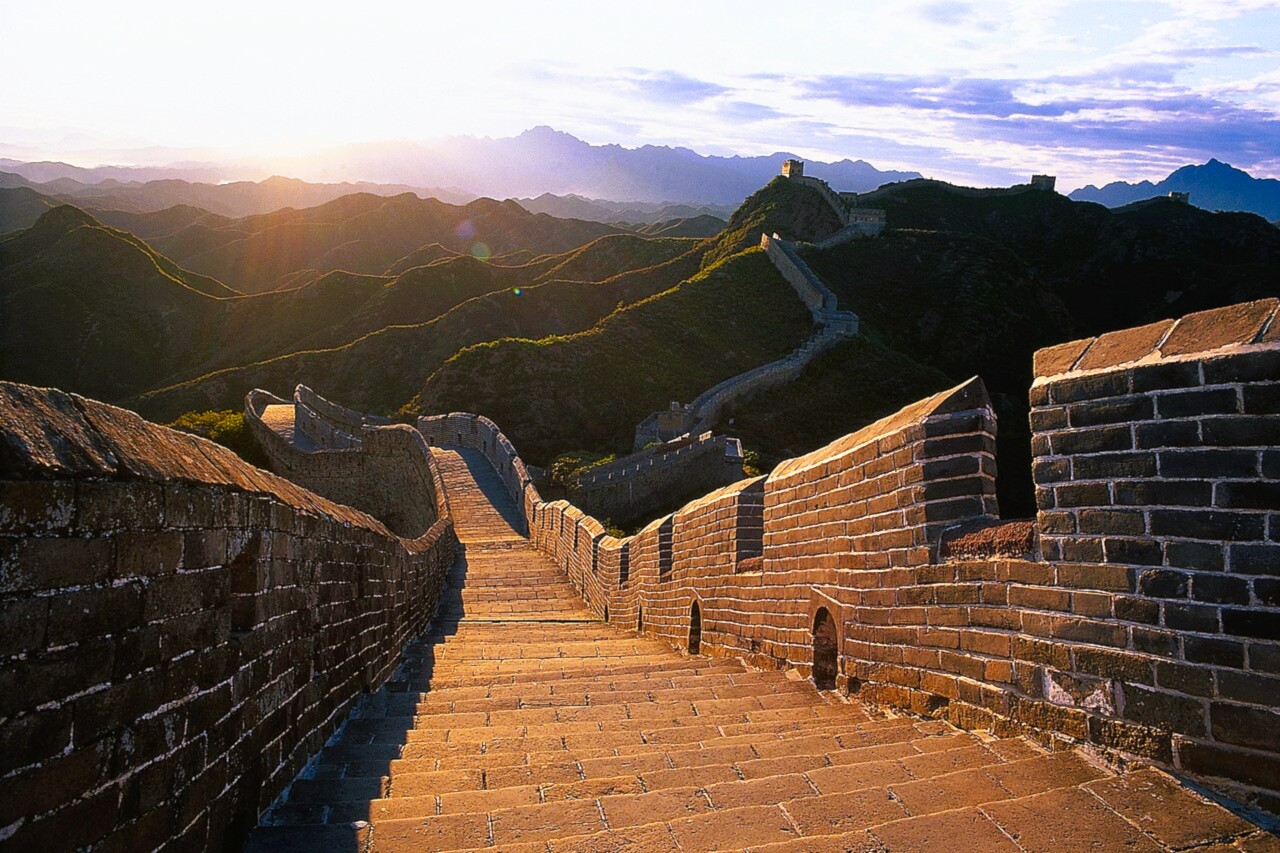
| Location: Great Wall of China, Badaling, Beijing, China Length: 5,500 miles remaining | 13,170 miles built over time Materials: Rammed earth, wood, granite, marble Construction Phases: Warring States, Qin, Han, Ming Built: 500 BC |
The Great Wall of China once defended against nomadic invaders for thousands of miles. Now, it’s a symbol of immense architectural significance.
| Building an Ancient Civilization | All Along the Watchtower | Catch You on the Flip Side |
Building an Ancient Civilization
China’s first emperor led the construction of the Great Wall over 2,000 years ago. Spanning 13,170 miles, the fortifications served as a defensive system between China’s fertile agricultural society and nomadic groups from the Eurasian Steppe. Through the ages, multiple dynasties built and connected the network of fortified structures. The wall stretches from the Gobi Desert in the west to Korea in the east. It remains a powerful symbol for establishing the boundaries of Chinese culture.
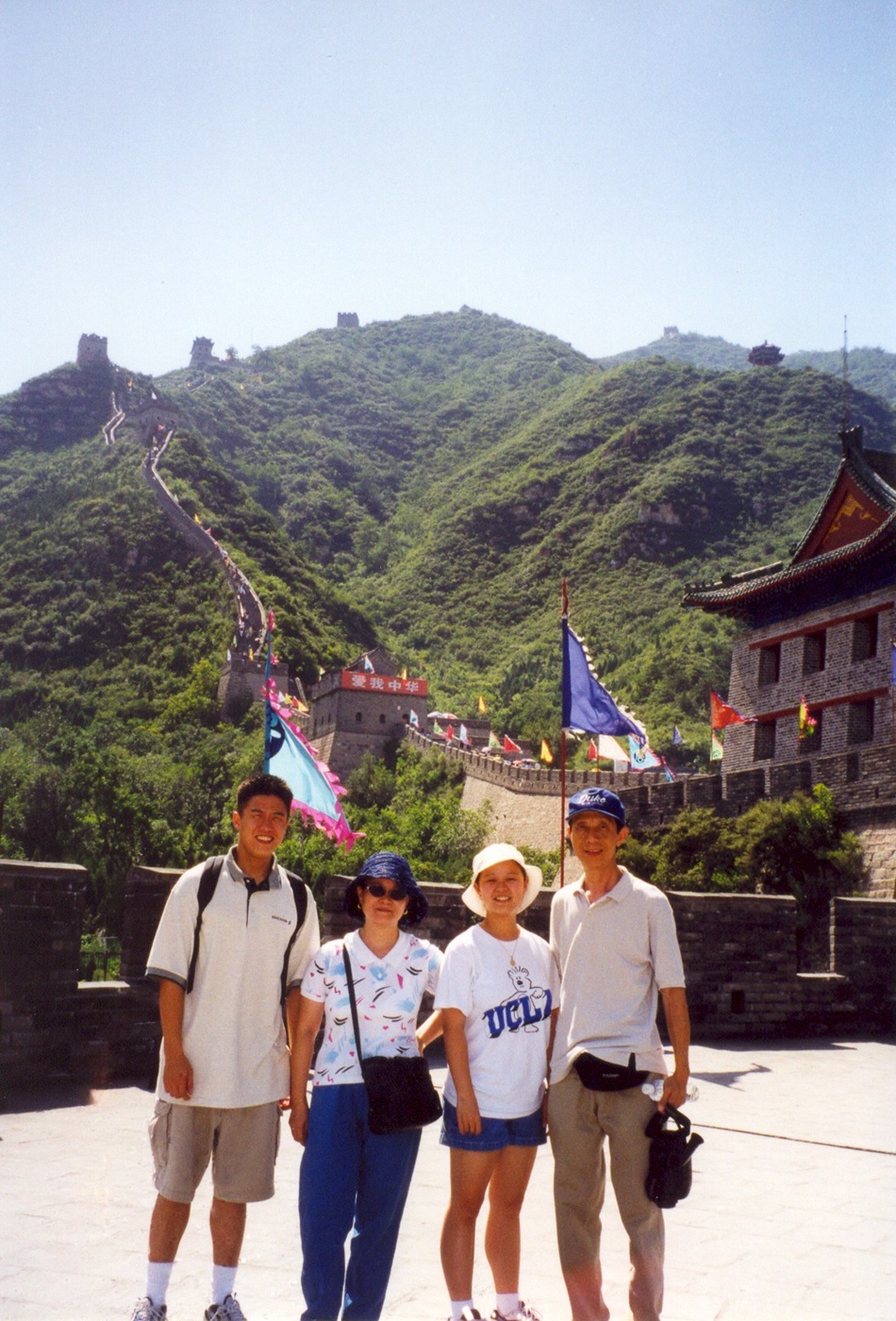
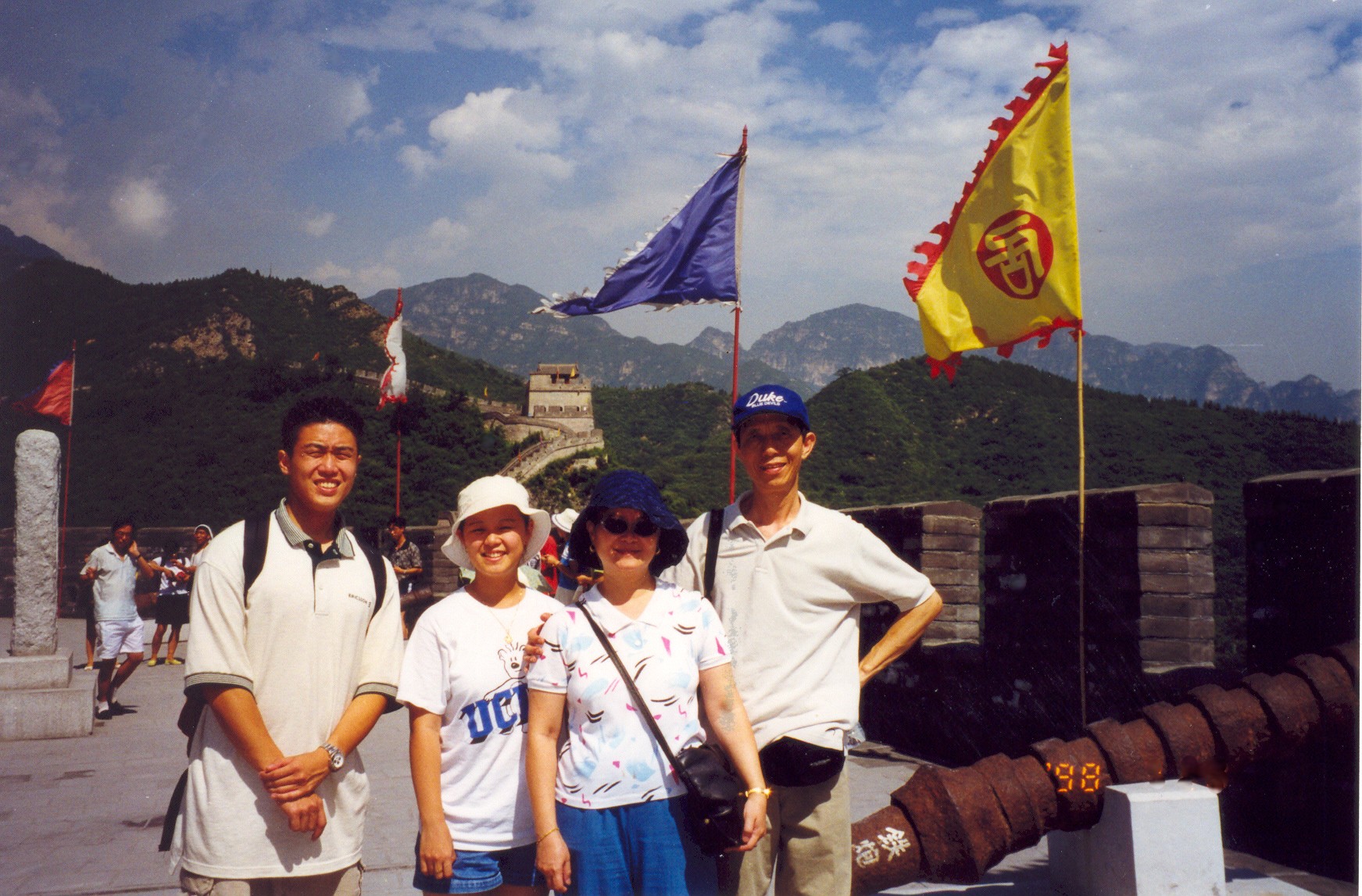
Badaling is the most accessible and popular section of the wall. Badaling is only a 20-minute high-speed train ride from Beijing. Juyongguan is south of Badaling, 37 miles northwest of Beijing, and has less visitors. Juyongguan is a strategic mountain pass in the Guangou Valley that was fortified to defend the capital and protect a vital trade route.
All Along the Watchtower
From the base, the imposing 60-foot-tall wall has sheer vertical sides with no hand or foot holds. Looking upward, it doesn’t seem like you could scale the wall. The builders expertly designed this section to match the surrounding terrain. At the central low point, the main fortress has a bottleneck shape where access is easily controlled. On either side, the wall climbs sharply up the green slopes. It then assumes a commanding position on top of the steep ridgeline.
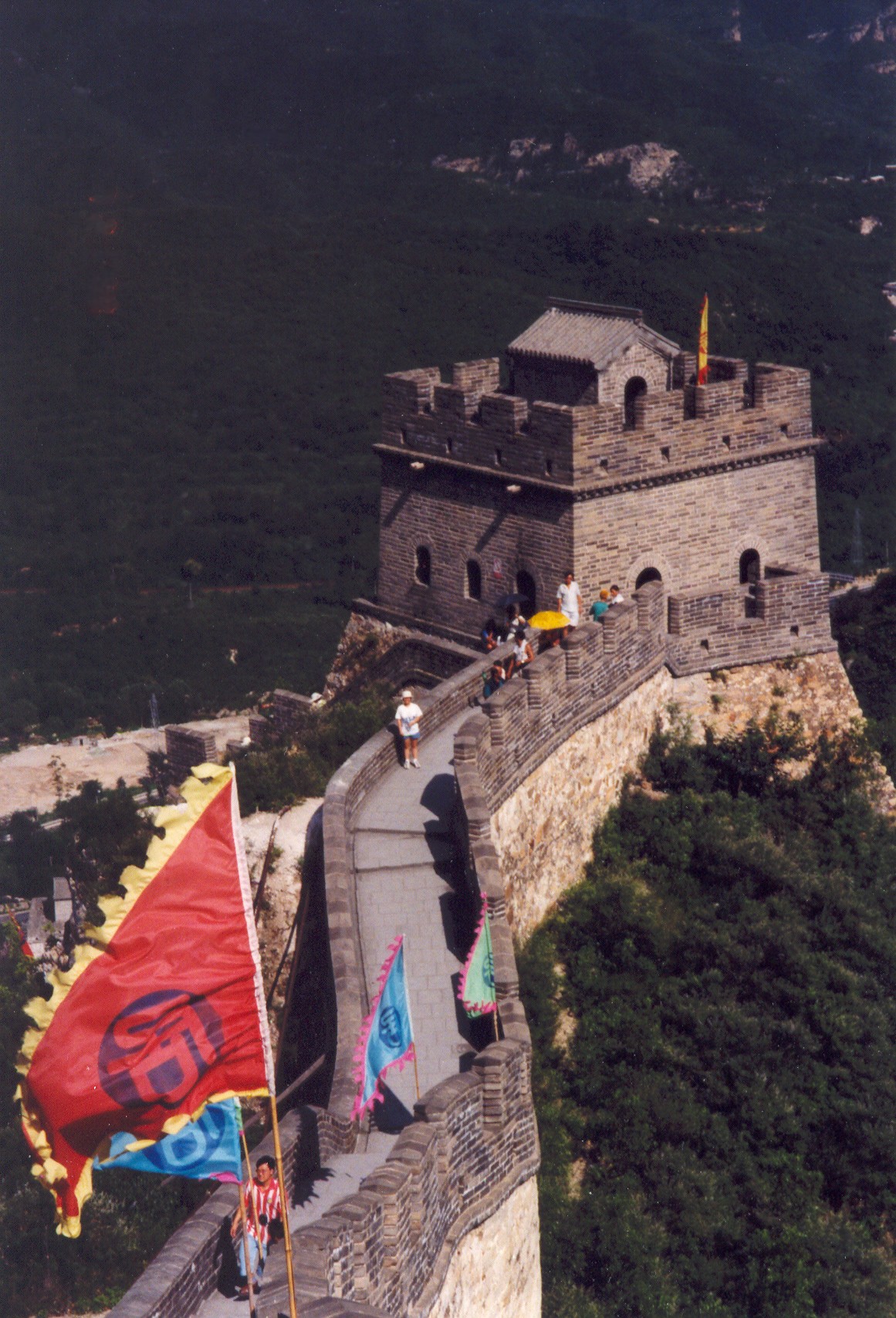
The steps are less steep than the rugged western sections of the wall. Yet, each step is almost three-feet tall. It takes a high leg lift to reach the next step. With a backpack, scaling this section of the wall requires some exertion. The path quickly rises with some sketchy portions.
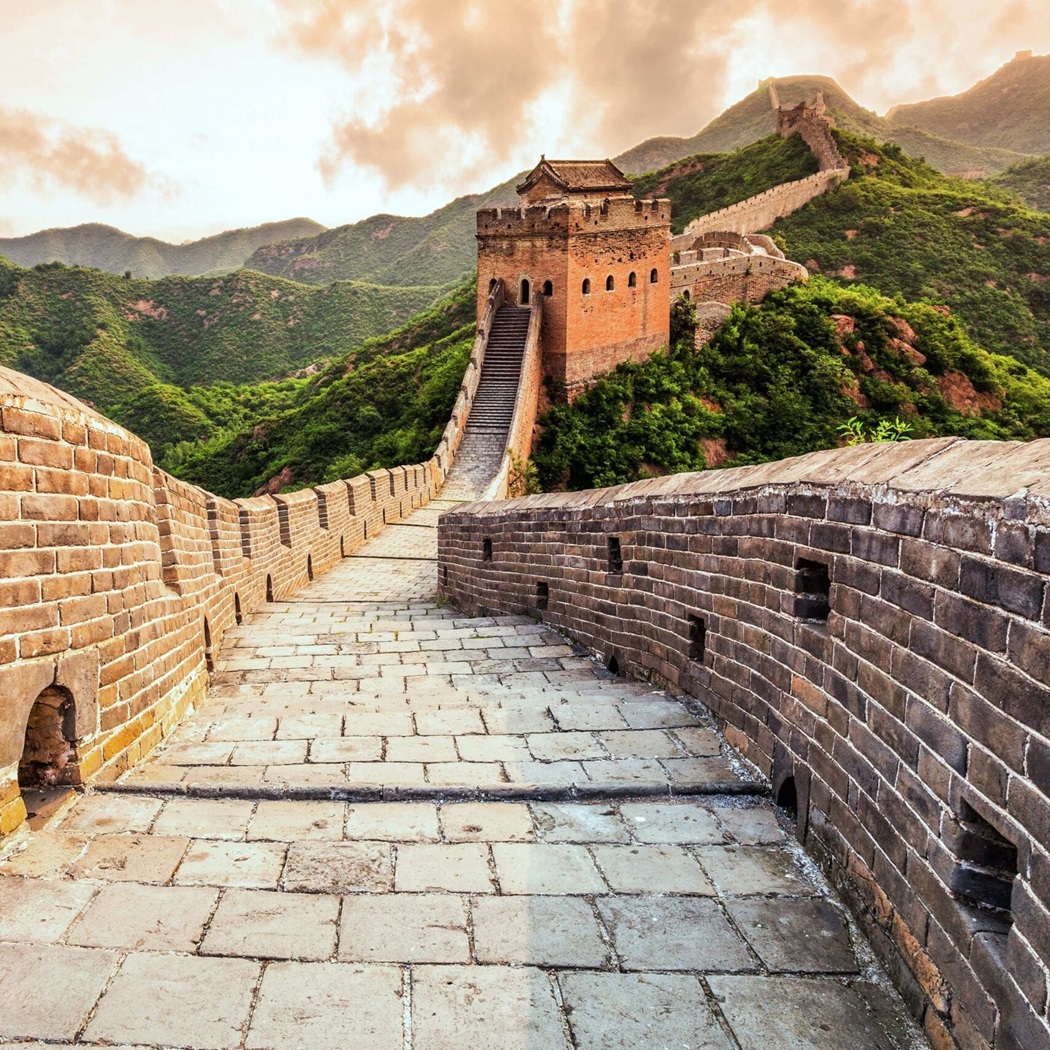
The first watchtower is about a third of the way to the top. The cold dark Arrow Tower bastion provides relief from the relentless sunshine. Looking out the window down below is rather startling. After each multi-story watchtower, the path levels off and becomes a flat space with no steps. The parapet is a low wall about 3-feet high that kept people and horses from falling off. The parapet also has crenellations (like a castle) with rectangular notches for stationing archers.
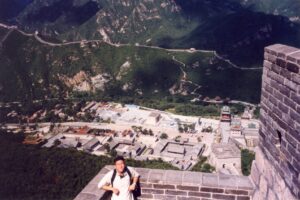
There is just enough time to go for the watchtower at the top of the ridge. It feels like the last push on a climb up a mountain peak. My heart is pounding, my head is ringing, my throat is dry, and my body is dripping. After a few stops and a slow pace, I reach the Beacon Tower outpost.
Catch You on the Flip Side
Instead of smartphones, soldiers used beacon fires or lanterns to send smoke signals to the next tower. On the other side of the valley, the wall looks so small. It resembles a thin string necklace or a skinny snake in a giant hilly patch of grass.
On the way down, I catch a praying mantis. In China, I think it symbolizes good fortune and prosperity.
When you return to Beijing, make sure you have a reservation at the Qianmen Quanjude Peking Duck restaurant.
More World Wonders

Keep Exploring!
Africa | Antarctica | Asia | Australia | Europe | Middle East | North America | South America