
White Sands is the world’s largest gypsum dune field covering 275 square miles of desert. Around 12,000 years ago, the Tularosa Basin was teeming with lakes, streams, grasslands, and Ice Age mammals. From the nearby mountains, rain and snow dissolved gypsum and transported it to the basin. The large lakes evaporated with the warming climate and formed selenite crystals from the gypsum. Then, strong winds shattered the crystals and scattered the white gypsum sand. These winds continue to shape the shifting sands into fascinating shapes where hardy plants and animals have learned to adapt. The White Sands Missile Base surrounds the park and the first atomic bomb was detonated at the Trinity Site north of the park.
MUST SEES
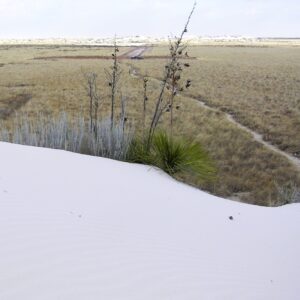
Playa Trail
This playa is a flat dry lakebed in the center of the Chihuahuan Desert. As water and heat reach the playa, different plants and animals emerge. Hike the ½-mile trail on a land where mammoths, lions, camels, and dire wolves once roamed.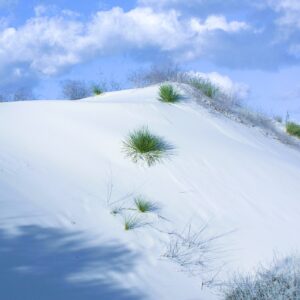
Dune Life Nature Trail
The Dune Life Nature Trail is an ecosystem at the confluence between the desert and the gypsum sand dunes. The one-mile loop is teeming with life and passes 30-foot dunes.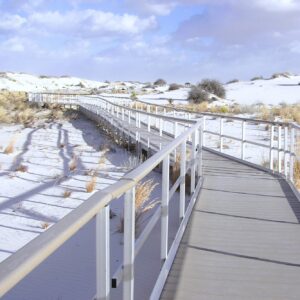
Interdune Boardwalk
The elevated boardwalk leads you through the science behind the world’s largest gypsum dune field. Learn about its wildlife, plants, and geology while preserving the delicate biocrust below.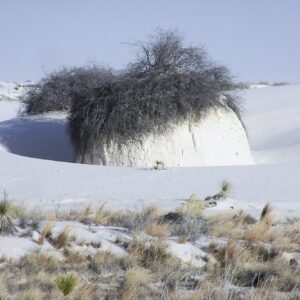
Plant Survival
Tenacious shrubs survive by “holding on.” When their roots find ground water, some of the water is absorbed into the sand. This mound wraps the roots and anchors the plant. After the dune has moved on, the pedestals remain in place.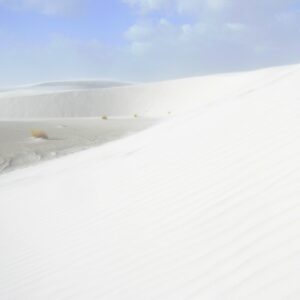
Alkali Flat Trail
At the center of the dunes, Alkali Flat Trail follows the edge of ancient Lake Otrero. Follow trail markers on a 5-mile loop up and over the shifting dunes. You will see stretches of endless sand in every direction.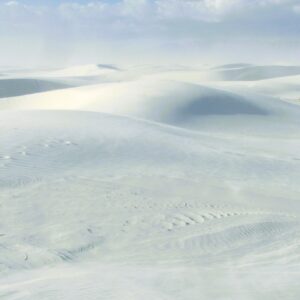
Dome Dunes
At the edges of the sea of sand, these are the rarest type of dune. The wind blows material at these circular mounds from all angles.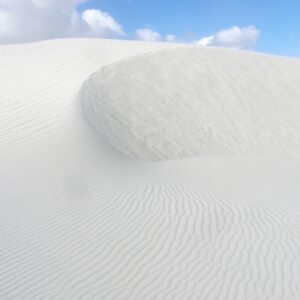
Barchan Dunes
When the wind only blows consistently from one direction, it forms these crescent-shaped dunes with horns. The outer arcs catch the wind and become raised and convex like the outside of a sphere.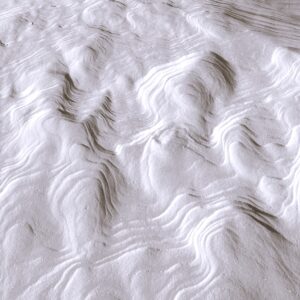
Parabolic Dunes
Strong winds move in one direction to remove, erode, and blow out sediments. These U-shaped depressions have sediments deposited higher up at the rim of the U.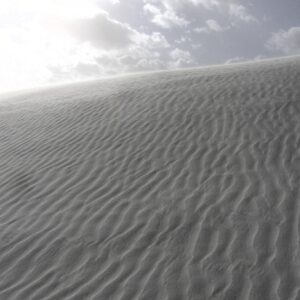
Transverse Dunes
These linear dunes are transverse (set at right angles) to the wind. The wind pushes the sides and raises them along long lines. The dunes are typically parallel to each other.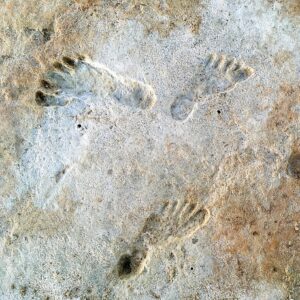
Footprints
Imagine humans hunting extinct Ice Age animals. Their footprints in former wetlands became fossilized. Radiocarbon dating of seeds by the footprints suggest humans inhabited the land for 23,000 years. The footprints are not currently viewable to the public.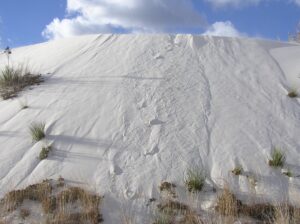
Keep Exploring!
Africa | Antarctica | Asia | Australia | Caribbean | Europe | Middle East | North America | South America