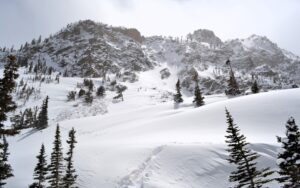
Rocky Mountain National Park (RMNP) is located within the Front Range of the Rocky Mountains. This is a subarctic world that stretches above the treeline, past the harsh alpine tundra, up to frosty peaks. This extreme terrain has 72 summits above 12,000 feet reaching up to the fourteener, Longs Peak, at 14,259 feet. About 700 million years ago, the Rockies uplifted to over 20,000 feet above sea level. Over the past 60 million years, erosion has worn the mountains down to their present height. Repeated glacial events have sculpted the current landscape. Experience the majestic peaks, glaciers, and perennial snowfields via hiking and snowshoeing adventures. After visiting RMNP, be sure to check out these other epic Colorado hikes.
MUST SEES
Estes Park
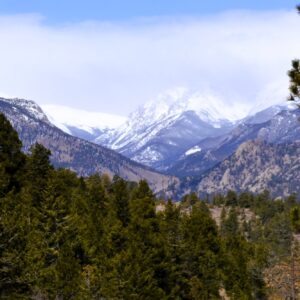
The town of Estes Park is the gateway to the Rockies. This is a perfect staging area for adventures into Rocky Mountain National Park with three nearby entrances to the park. With proper preparation you can climb a 14er, Longs Peak.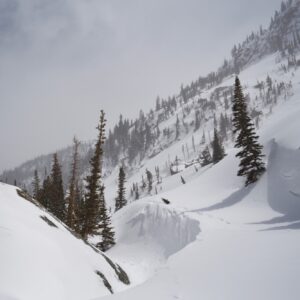
Bear Lake
This is a hub for trails connecting lakes, peaks, and mountain passes with opportunities for hiking, backpacking, and wildlife viewing. From late May to mid-October, you’ll need a Timed Entry plus a Bear Lake Road Reservation.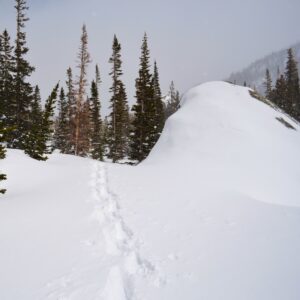
Snowshoeing
From late October to late May, snow covers most trails in RNMP. From Bear Lake Trailhead at 9,475 feet, you can go snowshoeing or skiing. In winter and spring, you will see snow-capped peaks, glittering white vistas, and icy brooks.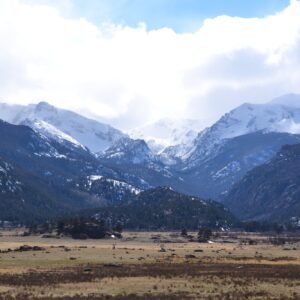
Moraine Park
Bygone glaciers swept through this area and carved the meadows of Moraine Park. Now you can watch herds of elk frolic and graze beneath the giant summits in the distance. There’s a 5-mile hike that loops the valley.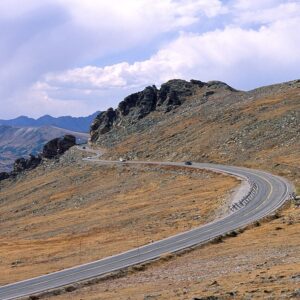
Trail Ridge Road
Trail Ridge Road is truly a highway to the sky. It connects Estes Park to the east and Grand Lake to the west across 48 miles. With a maximum elevation of 12,183 feet, it is the highest continuous paved road in North America. You must have a timed entry pass and check weather conditions.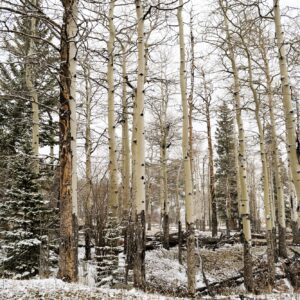
Aspen
The quaking aspen has golden trembling leaves. In fall, the leaves turn yellow. Because of the cold mountain climate, seeds don’t germinate well. As a result, roots generate vertical shoots, which clone the trees.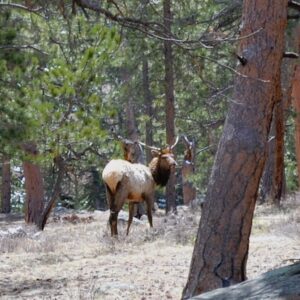
Elk
Elk are one of the largest members of the deer family, second only to the moose. The North American Elk has a dark brown mane, light-brown body, and white rump. In the fall, the males have large antlers and weigh about 1,100 pounds.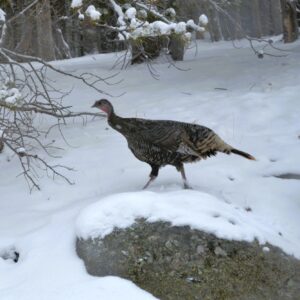
Wild Turkey
The wild turkey stands about three to four feet tall. They forage for nuts and seeds in the coniferous forests at 8,000 feet.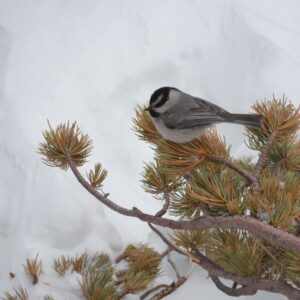
Pygmy Nuthatch
The pygmy nuthatch has a gray back and white fuzzy belly. These four-inch songbirds forage for food in pine forests. The cooperative nuthatch roosts in groups and even likes to forage with other species.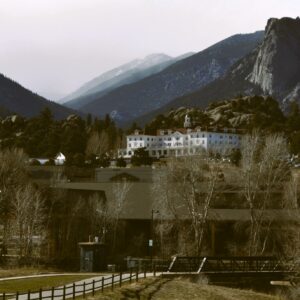
Stanley Hotel
As the road emerges from the winding mountain pass, the isolated Stanley Hotel bursts into view. It served as inspiration for Stephen King’s Overlook Hotel in his terrifying novel and film “The Shining”.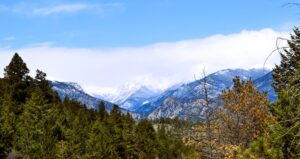
Keep Exploring!
Africa | Antarctica | Asia | Australia | Caribbean | Europe | Middle East | North America | South America