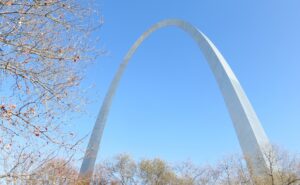
The Gateway Arch (aka Gateway to the West) is a monument to the westward expansion of the United States. Through the Louisiana Purchase, Thomas Jefferson doubled the size of the growing nation. Lewis and Clark led the Corps of Discovery on an expedition from St. Louis to the Pacific and explored the uncharted West. The Finnish-American architect Eero Saarinen designed the tallest monument in the National Park Service, at 630 feet. It stands tall on the western shore of the mighty Mississippi. The Arch symbolizes the pioneering spirit of the men and women who would shape the future of the continent.
MUST SEES

The Arch
Construction began in 1963 and completed in 1965. The Arch’s shape is a catenary curve – the shape of a free-hanging chain when held at both ends. Its 142 sections consist of 900 tons of stainless steel, more than any other project in history.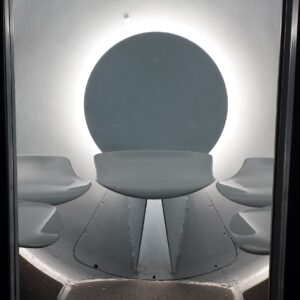
Tram
The tram takes you to the top in four minutes. When the doors open, you enter a futuristic capsule (like in a Bond film). Five people can sit in a pod. Each pod rotates 155 degrees on the way up. The ranger said the staircase is not open to the public.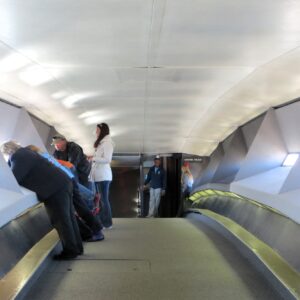
Observation Area
At 63 feet, the elevated passageway connects the ascending tram to the descending tram. Designed to hold 160 people, there are only 80 at the top at a time. There are 16 tiny windows on each side. When your 10-minute limit is up, you exit to the tram.
The View
From the observation windows, you have panoramic birds-eye views of STL. To the west, you see St. Louis, the Old Courthouse, with Missouri beyond the horizon. To the east, observe the Mississippi River, East St. Louis, and Illinois.
Museum
The Museum at Gateway Arch contains exhibits about the nation’s expansion after the Louisiana Purchase. See how people settled the American West. Examine the territorial conflicts among the US, Spain, and Great Britain.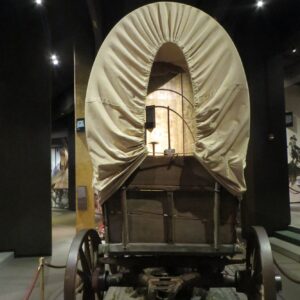
Lewis and Clark
Jefferson’s set his vision for the US in motion with the Louisiana Purchase. Lewis and Clark left St. Louis for the Pacific. Sacagawea was essential to the expedition’s success and even gave birth on the trip. By 1805, they reached the Oregon coast.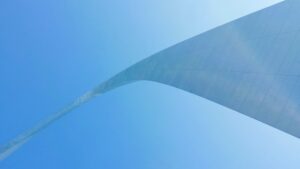
Keep Exploring!
Africa | Antarctica | Asia | Australia | Caribbean | Europe | Middle East | North America | South America