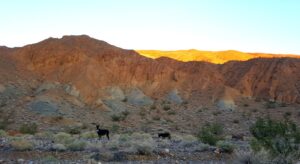
Death Valley has an ominous name with unforgiving threats, such as extreme heat, dehydration, flash floods, and mine hazards. In between the Mojave and Great Basin deserts, this park is not your typical desert. It ranges across alternating valleys and mountains: Death Valley, Panamint Valley, the Panamint Range and Amargosa Range. Its intense heat is caused by repeated rain shadow effects. The Sierra Nevadas block eastward moisture creating a major rain shadow in the deserts below, and again by the Panamints. Then, the valley’s surrounding mountains recirculate the hot air.
This land has also witnessed many colorful stories. The Timbisha Shoshone thrived here for centuries by harvesting pinyon pine nuts and mesquite beans, and hunting. The Lost 49ers crossed in the search for gold and barely survived, proclaiming “Goodbye, Death Valley” on the way out. Chinese laborers mined borax for the 20-mule teams, built a future ghost town, and made a 160-mile road.
Visit the lowest point in the US, colorful hills, sand dunes, slot canyons, salt flats, mountains, and badlands.
| Must Sees | Nearby Attractions |
MUST SEES
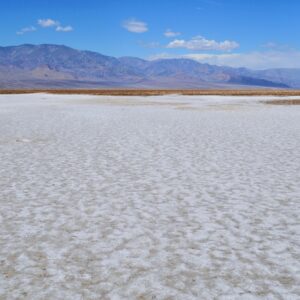
Badwater Basin
At Badwater, the lowest point in North America is 282 feet below sea level. It’s all uphill from here! Only 84 miles away, Mt. Whitney is the highest point in the contiguous US. While there’s a spring, it’s undrinkable due to the surrounding salt crust.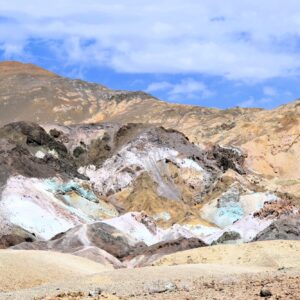
Artist’s Palette
Go to Artist’s Palette before dusk to view shocking amounts of color. The hills hold pastel splotches of red, orange, yellow, blue, pink, and green. The 9-mile one-way Artists Drive Scenic Loop is full of dips and curves.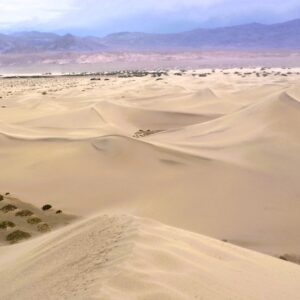
Mesquite Flat Sand Dunes
Eroding northern mountains provide sand. Wind forms ripples and dunes. Southern mountains trap the sand. Choose your own path to the tallest dune. You might even hear the singing sands.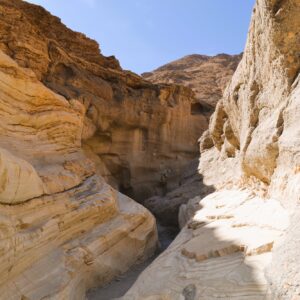
Mosaic Canyon
Walk four miles along the slick narrows of Mosaic Canyon. Shimmy through undulating walls polished by frequent flash floods. Look for mosaic rock created by natural cementing together of older smaller pieces of rock.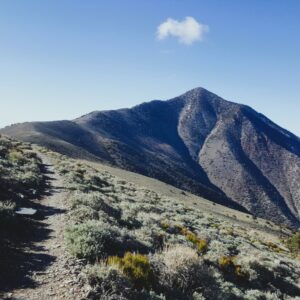
Telescope Peak
Some pioneers avoided the Sierra Nevadas only to send their wagon trains through Death Valley. Then, they had to climb the Panamint Mountains. You can retrace some of their steps on a 15.4-mile roundtrip hike to 11,049′ Telescope Peak.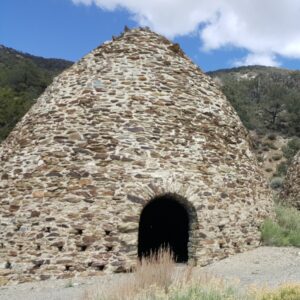
Charcoal Kilns
The 10 charcoal kilns in Wildrose Canyon shaped like beehives rise 25 feet. In 1877, a mining company used the kilns produced charcoal for use in smelting for lead-silver mines.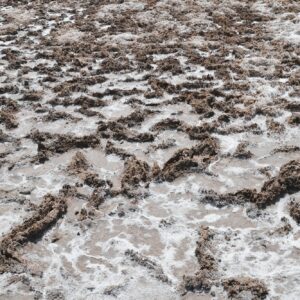
Salt Flats
The salt flats of Badwater Basin change in appearance throughout the year. After many cycles of freezing and thawing, the thin salt crust forms hexagonal shapes.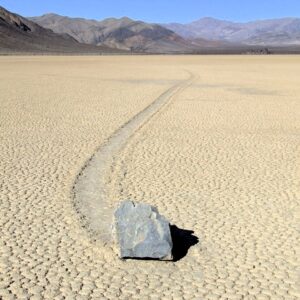
Sailing Stones
If you have an SUV with high clearance and tough tires, explore the Racetrack Playa. In a dry lakebed, you’ll see tracks of giant boulders that have moved over 1,000 feet. No one has ever seen the rocks move. It’s probably wind and rain that enable the rocks to sail.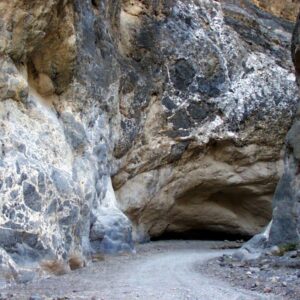
Titus Canyon
Hike as much of the 27-mile of Titus Canyon Road as you like. Just remember to bring one gallon of water per person per day. Near the entrance to the narrow gorge is the ghost town of Leadfield.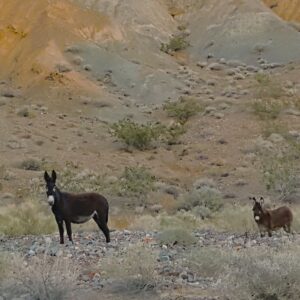
Burros
The wild burros are descended from pack animals left behind from the mining days. Be careful because they are known to bite and kick.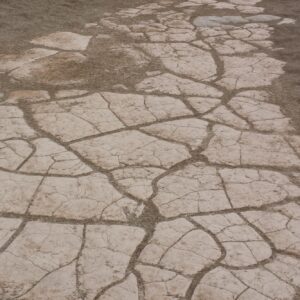
Mud Flats
After the rain rapidly floods the ground, the sun bakes the mud. The intense heat forms cracks resulting in fascinating patterns. 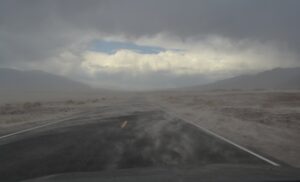
NEARBY ATTRACTIONS
Trona Pinnacles
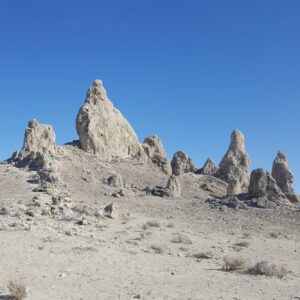
About an hour and a half away from Death Valley, explore the mysterious Trona Pinnacles. The landscape contains over 500 tufa spires with some rising to 140 feet. This jagged terrain is a popular film location for sci-fi projects such as Star Trek and Planet of the Apes.
Keep Exploring!
Africa | Antarctica | Asia | Australia | Caribbean | Europe | Middle East | North America | South America