| Distance: 15 miles (out and back) |
Elevation Gain: 5,710 feet |
Peak Elevation: 4,800 feet |
| Objective: Hike Mt. Wilson via Little Santa Anita Canyon, San Gabriel Mountains, California |
Difficulty: Strenuous |
|
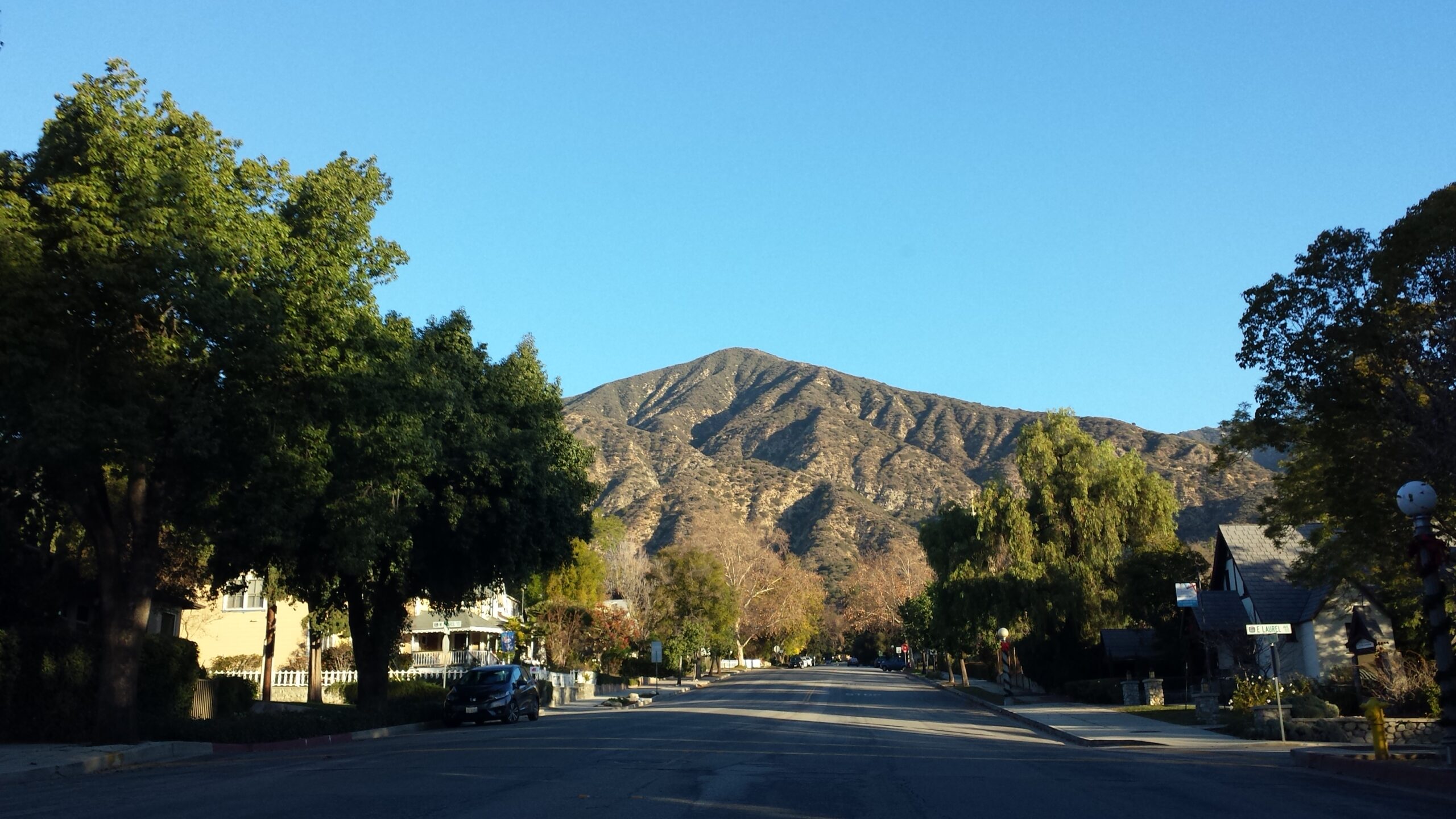
Do you ever have the urge to head straight to the base of a mountain and climb to the top? From Sierra Madre, you can leave civilization behind and climb Little Santa Anita Canyon to the top of Mt. Wilson. Mt. Wilson is the most prominent peak in the San Gabriel Front Range overlooking Pasadena. This route begins in the Sierra Madre foothills, climbs to Mt. Wilson, and returns back down to town. Edwin Hubble used the 100-inch telescope at Mt. Wilson Observatory to discover that the universe is expanding.
By Edward So, who has summited most of the peaks in the San Gabriel Mountains
| Directions to Trailhead | Directions to Summit | Start at the Edge of Sierra Madre | Orchard Camp | Manzanita Ridge | Hubble’s Observatory | Factoids | Video Tour | Interactive Map | FAQ |
Directions to Trailhead
| From the 210, exit and head north on Baldwin Ave. Drive 1.5 miles and turn right on E. Mira Monte Ave. After two blocks, the hike begins at Mt. Wilson Trail road, left of Lizzie’s Trail Inn. |
Directions to Summit
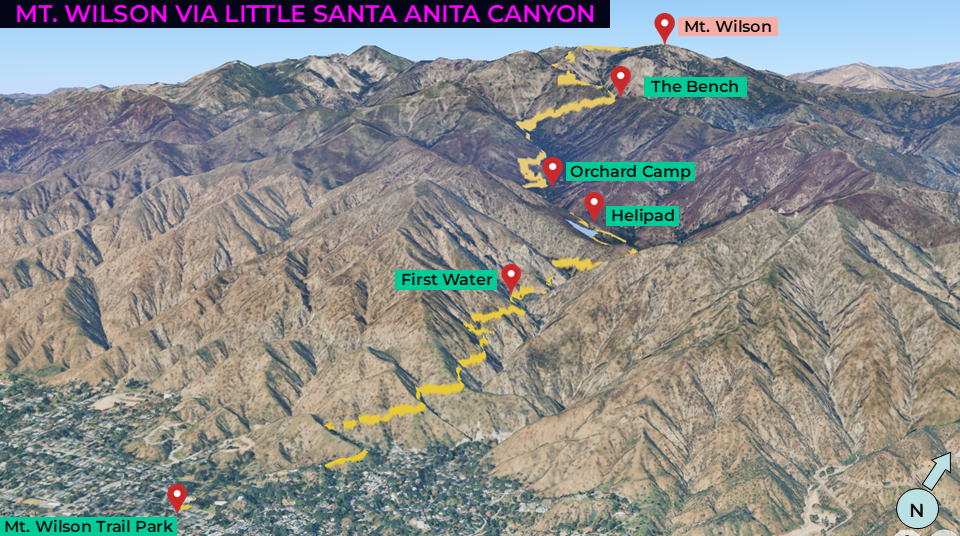
| Trailhead: Mt. Wilson Trail begins from Sierra Madre. 1.5 miles: Keep left at the First Water junction. 2.6 miles: Keep right at the junction connecting to Jones Peak. 2.7 miles: On your right is a helipad. 3.5 miles: You have reached Orchard Camp. 5.5 miles: At Manzanita Ridge (the bench), the route converges with the Winter Creek Trail. 6.1 miles: At the Mount Wilson Toll Road just east of Mt. Harvard, turn right onto the Mt. Wilson Trail. 7.5 miles: At Mt. Wilson, check out Mt. Wilson Observatory and return to the trailhead. |
Start at the Edge of Sierra Madre
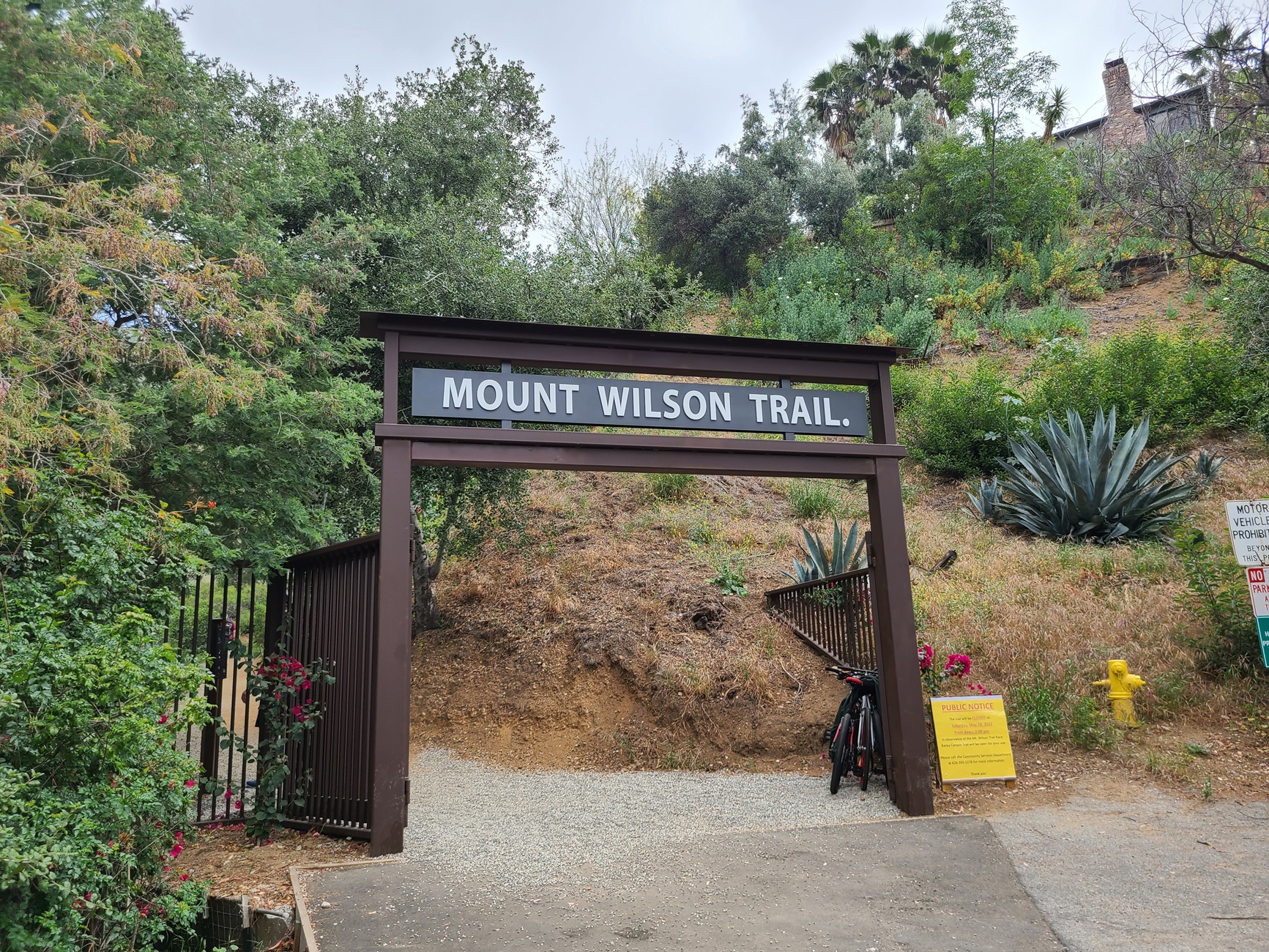
This is a long hike, so get an early start. There is very little shade, so a bit of sunshine will make things really spicy rather quickly. The Mt. Wilson Trail starts at the northern edge of Sierra Madre just to the left of Lizzie’s Trail Inn. It winds around and above some backyards for almost half a mile until the official trail sign. Once you reach the steps, you have crossed a threshold from homes to the mountainside.
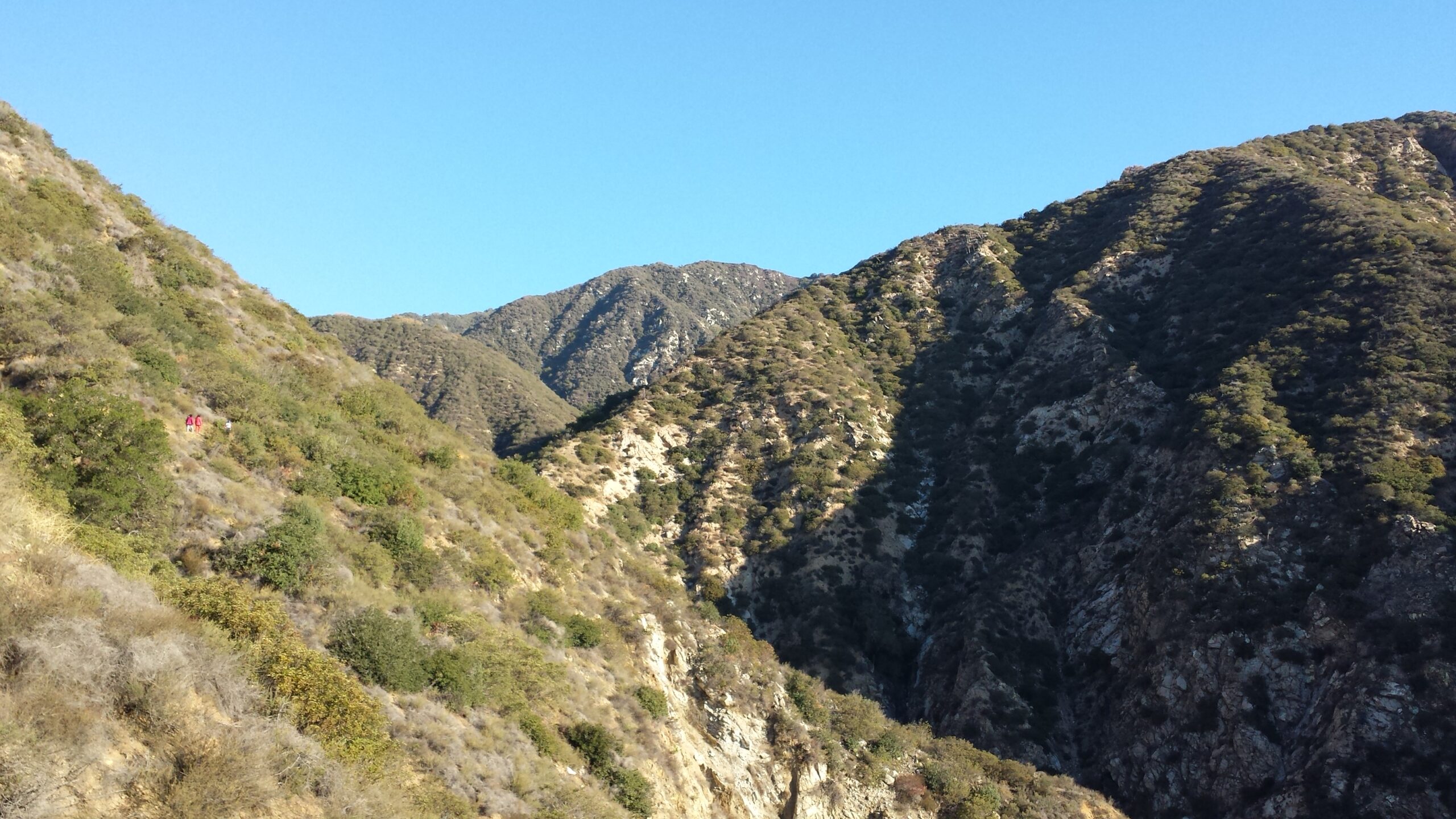
A mile later after the First Water junction, the trail rises steeply through the chaparral. The path is narrow so watch your footing. After 1.1 miles, there is another trail leading up to Jones Peak. Just a bit further, there is a flat clearing on the right, which serves as a helipad.
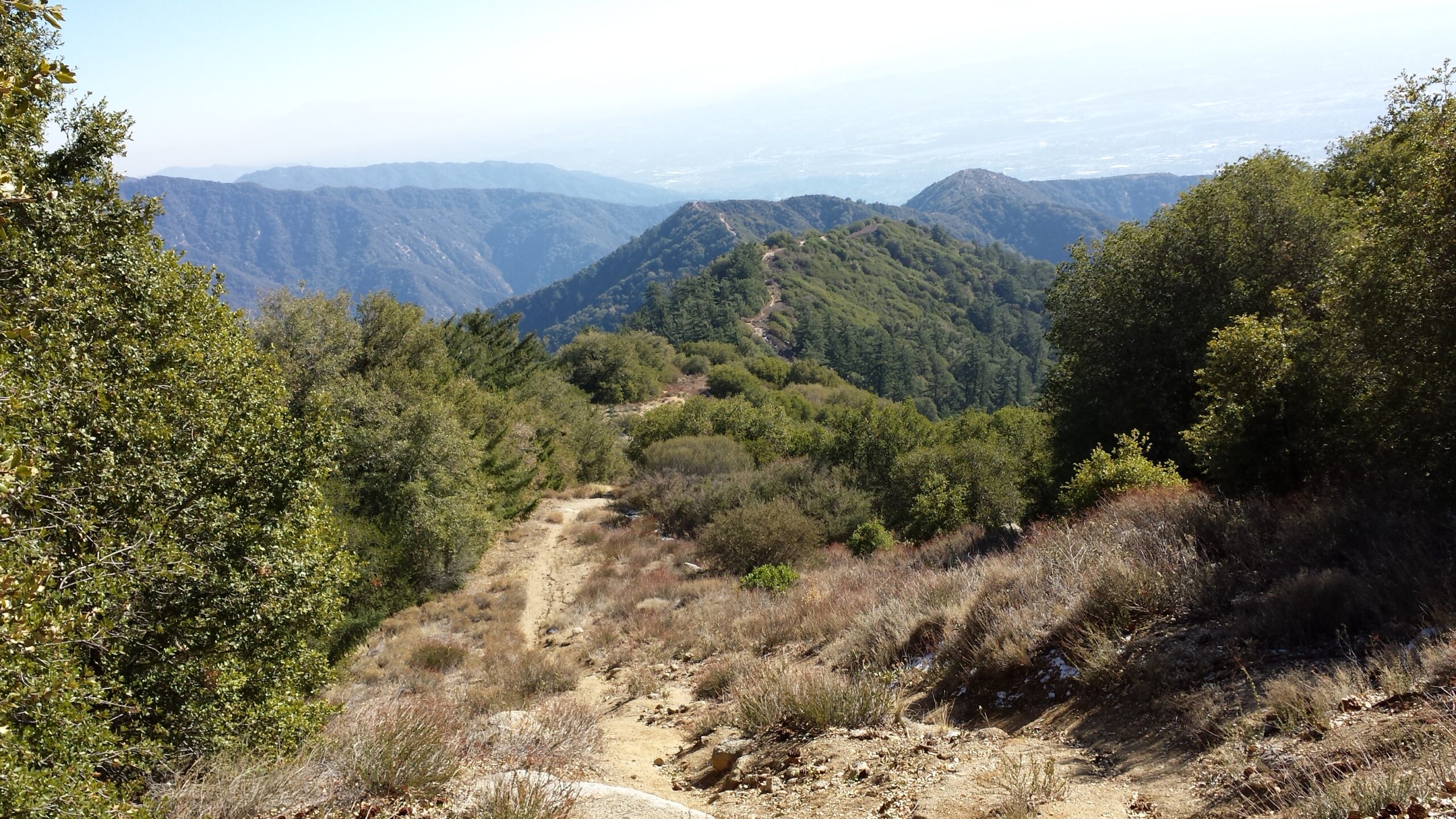
Orchard Camp
At a crossing of one of the drainages, you have to scramble over some wet boulders. The mile before Orchard Camp is in the shade, which is a welcome relief in summer and somewhat chilly in winter. Orchard Camp contains terraced stone remnants. This is the midpoint of the route, and the last place for water. On Memorial Day, Sierra Madre hosts the Mount Wilson Trail Race. The race starts at the center of town and turns around at the trail’s halfway point in Orchard Camp. If you are running the race, it’s all downhill from here. If you are hiking to the top, you’re halfway there!
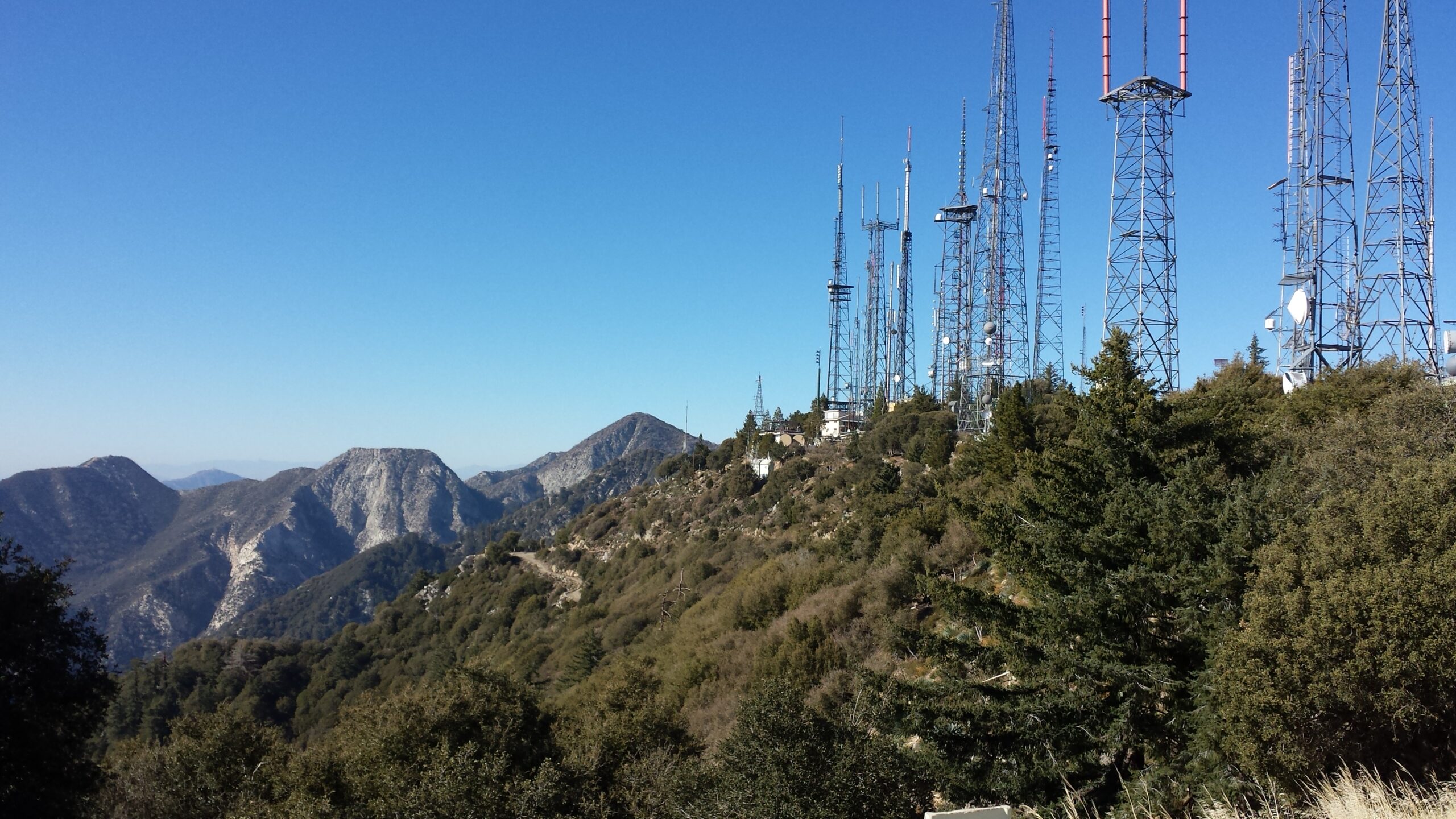
Manzanita Ridge
From the camp until the ridge, the severity of the incline is relentless. After a grueling two-mile climb, you arrive at Manzanita Ridge (and its famous bench), where the Mt. Wilson Trail merges with the Winter Creek Trail. At the Mount Wilson Toll Road just east of Mt. Harvard, turn right onto the Mount Wilson Trail.
Hubble’s Observatory
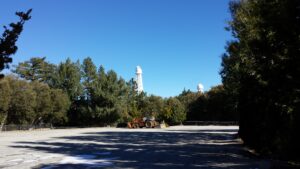
In about 0.6 miles, you will reach the road again. Stay on the trail to the right. The final push traverses a gully. There is a lot to see at the summit. You can tour the Mt. Wilson Observatory or grab a snack at the Cosmic Cafe if it is open.
Factoids
In 1771, the Gabrielino Indians built the first trail to Mt. Wilson and they used it to carry timber from the mountains for use in the construction of the San Gabriel Mission.
In 1864, Benjamin David Wilson upgraded an old Native American footpath into the first modern trail in the San Gabriels. Once upon a time, the Gabrielino people used this path to access the San Gabriel Mountains and beyond to the Mojave Desert. Nowadays, the summit is full of radio and TV antenna towers plus the telescope observatories. You can even drive your car all the way to the top, but where’s the fun in that?
In 1904, George Ellery Hale founded the Mount Wilson Observatory and developed the two largest telescopes of their time. From 1922-1923, Edwin Hubble used the 100-inch Hooker Telescope to prove that there are other galaxies outside the Milky Way. He also collected measurements demonstrating this is an expanding universe, which led to the Big Bang Theory.
Video Tour
Interactive Map
Frequently Asked Questions
| How long does it take to hike Wilson? |
| From Sierra Madre, most hikers complete the Mt. Wilson Trail round trip in 6-10 hours as a strenuous day hike. |
| What is the elevation gain on the Mt. Wilson Trail? |
| The Mt. Wilson Trail gains roughly 5,710 feet over 7.5 miles one-way to the 5,719-foot summit. It is one of the more demanding day hikes in Southern California and a great training hike for Whitney. |
| When is the best time to hike Mt. Wilson? |
| Late fall through late spring (September through May) is the best time to hike the Mt. Wilson Trail. This avoids the extreme heat of summer since there is little shade on the trail. With big storms, there may be snow in winter, which will require microspikes. |
Nearby Peaks
Check out some of the other nearby peaks in the Front Range of the San Gabriel Mountains.
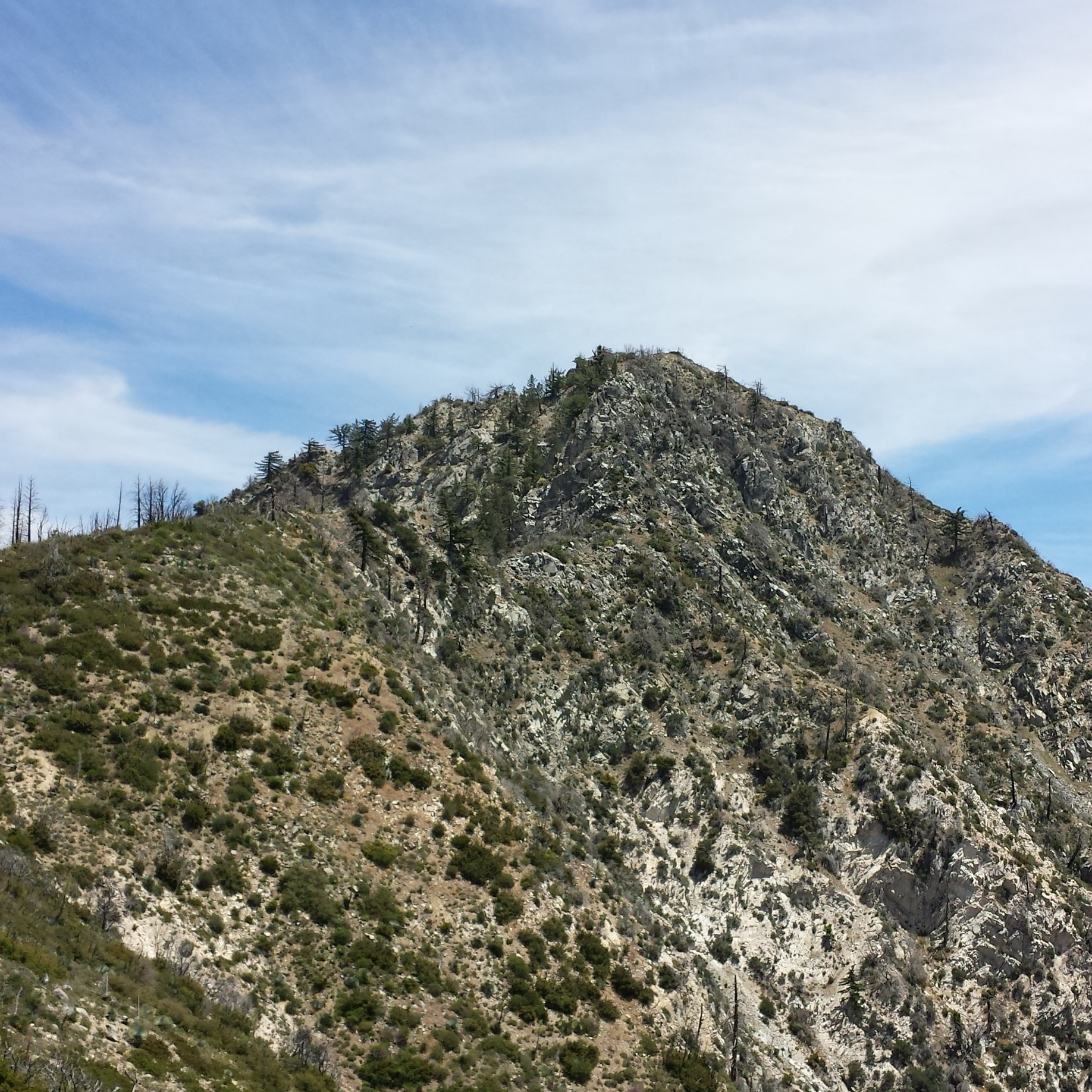
Strawberry Peak (via Colby Canyon)
6.3 miles | 6,164′ | 2,650′ gain
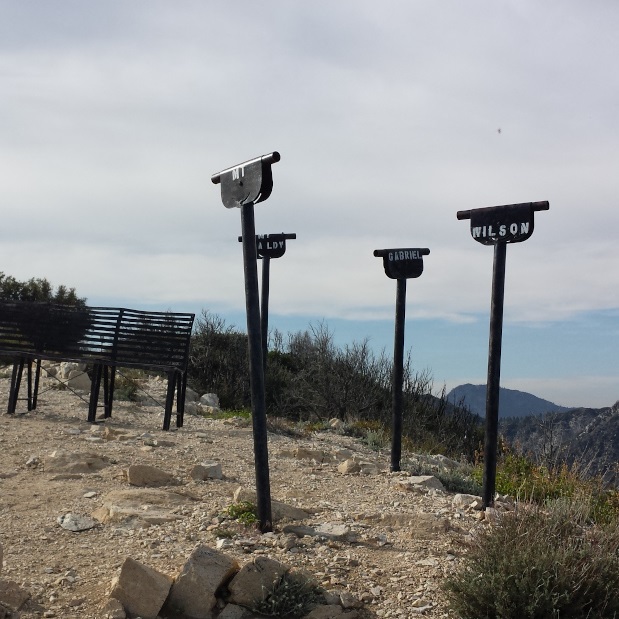
Mt. Lowe (via Eaton Saddle)
3.2 miles | 5,603′ | 494′ gain
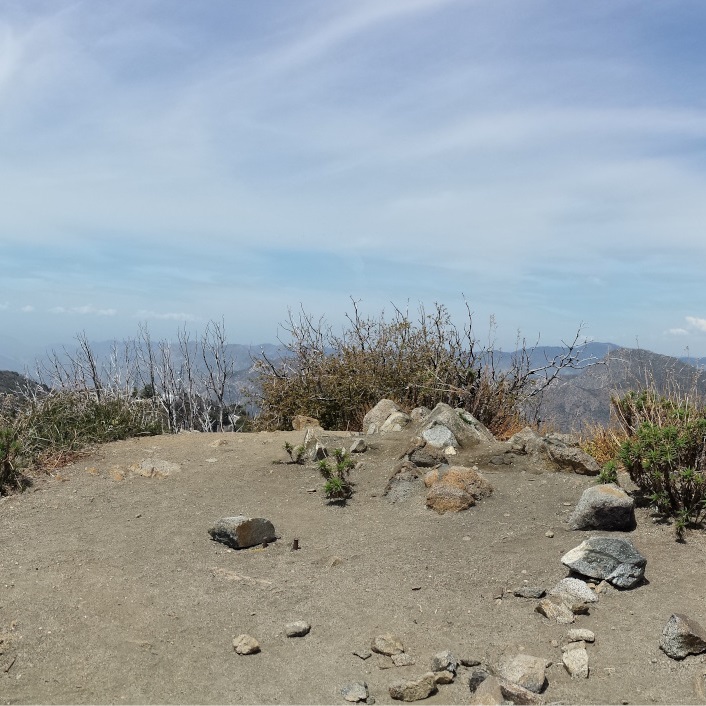
San Gabriel Peak, Mt. Disappointment (via Red Box)
4.34 miles | San Gabriel: 6,161′, Disappointment: 5,963′ | 1,500′ gain