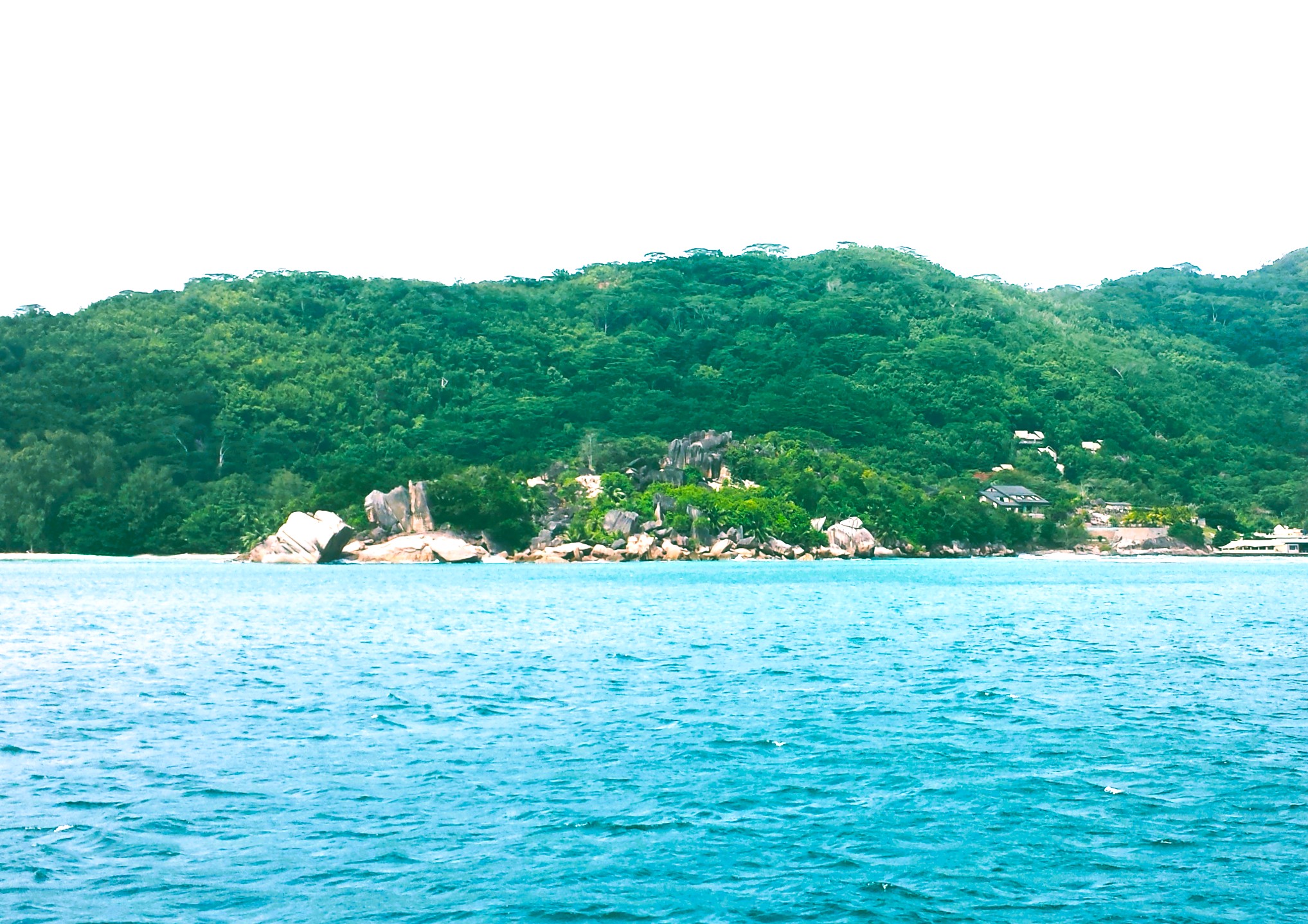
| Location: La Digue, The Seychelles |
Explore: Granite coral reefs, porcupine fish, parrotfish, Napoleon wrasse |
| Objective: SCUBA diving in The Seychelles |
|
Four degrees from the Equator and 1,000 miles from Africa, the Seychelles is home to an assortment of exotic species. In the pristine waters of the Indian Ocean, many tropical sea creatures flourish in this remote marine sanctuary. From the secluded island of La Digue, there are many great dive spots nearby to explore.
| On a Dive Boat from La Digue | Dive Refresher | Dive #1: Ave Maria | Dive #2: White Bank | Plan Your Visit |
On a Dive Boat from La Digue
The owner of the dive boat Twin Spirit, Christophe, is a hit with the mainly French divers. And with good reason, his mélange of teaching ability, temperament, and patience has renewed my rusty diving skills. He provides a briefing of the next dive, adjusts technique when necessary, and reminds you when to take safety stops.
Dive Refresher
After a long hiatus, I need to refresh my diving techniques and review my knowledge.
During the dives, I work on the following areas:
- Equalize air pressure in sinus cavities. As you descend, the pressure in your head becomes painful if you don’t equalize it through your ear canals. The single-handed nose pinch doesn’t always work. Use both hands and squeeze your nostrils to free the pressure.
- Glide through the water using your legs. Resist the urge to paddle with your arms. Your legs should kick in a smooth and straight motion. It enables you move swiftly in three dimensions.
- Breathe smoothly, deeply, and calmly. Yoga helps with scuba breathing in this regard. Breathing through a regulator can be scary. Yoga teaches you how to use breathing to overcome challenging situations. Inhale a long breath and calmly fill your lungs.
Dive #1: Ave Maria
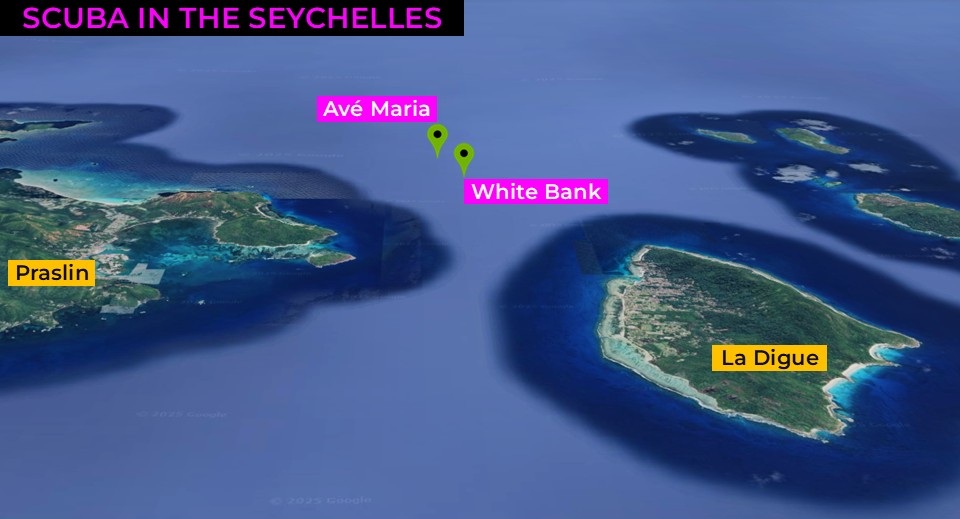
The boat heads straight to a popular dive spot between La Digue and Praslin. Ave Maria is rocky castaway island. You know the kind – a deserted island with just one tree on top. After taking a giant step off the back of the boat, it’s a quick swim down a wall. The coral reefs here have intertwined a bit with giant granite boulders forming underwater canyons. We slowly navigate these narrow passages and examine small caverns.
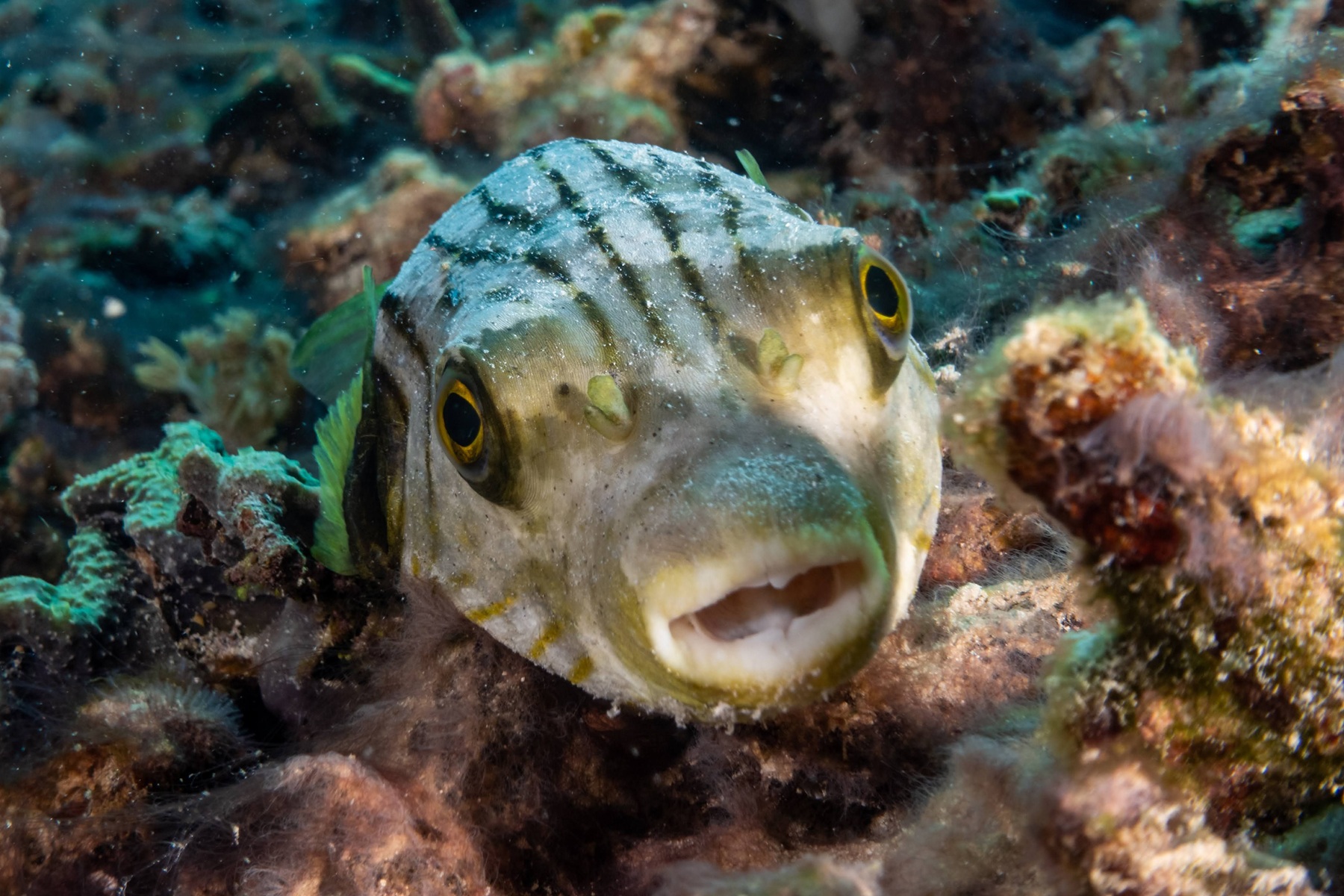
The South Equatorial Current and the East African Coastal Current converge and bring many diverse species to this spot. Delicate coral reefs cover the granite walls and offer safe hiding spots to a little porcupine fish. This big puffy fish has an ugly face and seems to give me a dirty look.
With such great marine biodiversity, you can spot sea turtles and blue tang – little blue fish with yellow triangle tails. The zebra angelfish has bold black and white stripes and a forked tail fin.
Between the dives, there’s a welcome break as I emerge a bit winded from the currents. This surface interval also allows nitrogen levels to return back to normal. A slice of gateau provides some delicious energy for the next one.
Dive #2: White Bank
White Bank is in the same channel between Praslin and La Digue as Ave Maria. White Bank has dark nooks, tunnels, and reefs that are great for underwater spelunking.
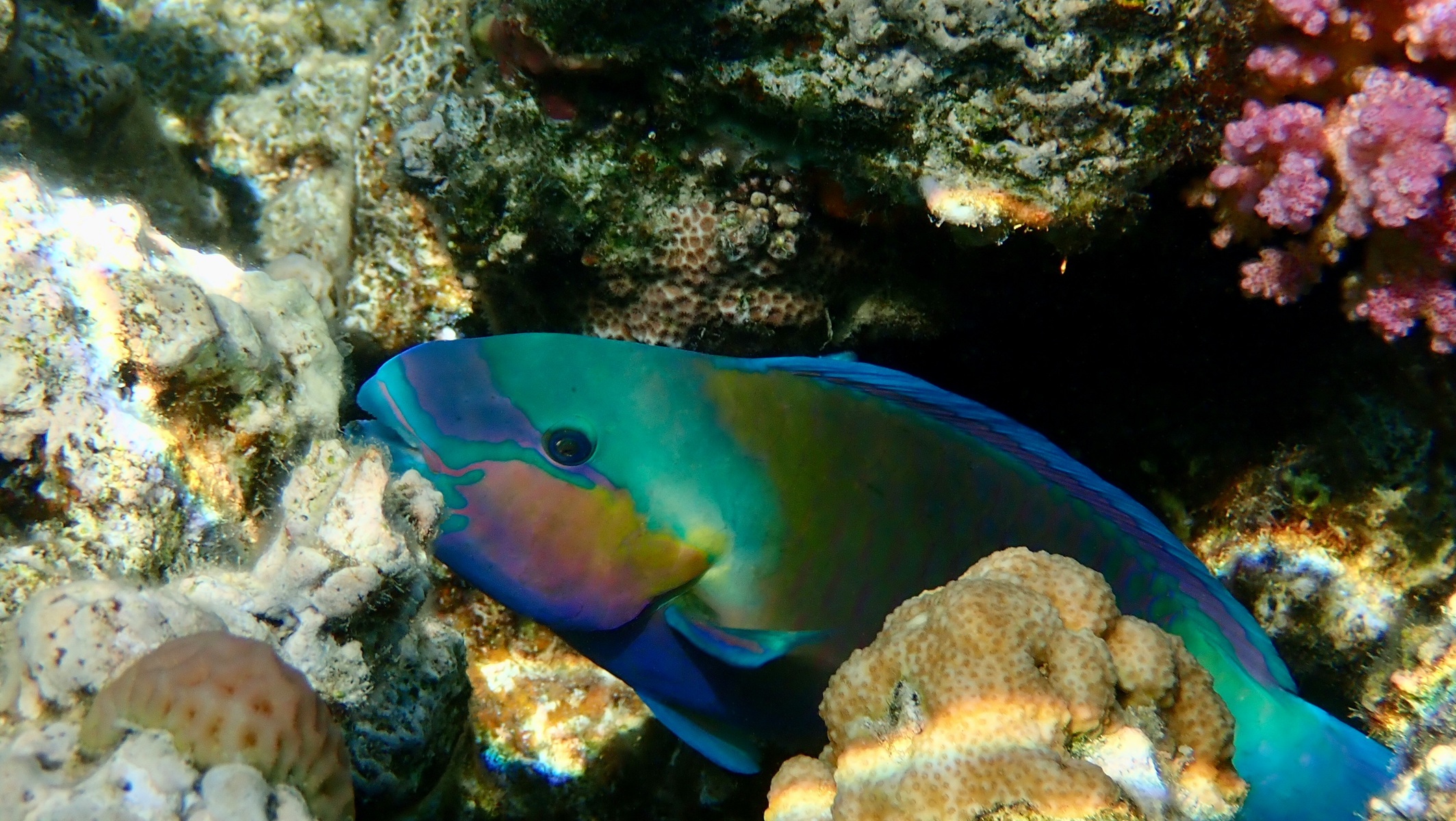
Blue and pink parrotfish use their sharp teeth to nibble at algae along the coral. After swallowing coral, the teeth in their throat grinds it down until it becomes white sand out the other end. In addition, the unique terrain provides nice hiding spots for giant zigzag clams, trumpetfish, and yellow snappers.
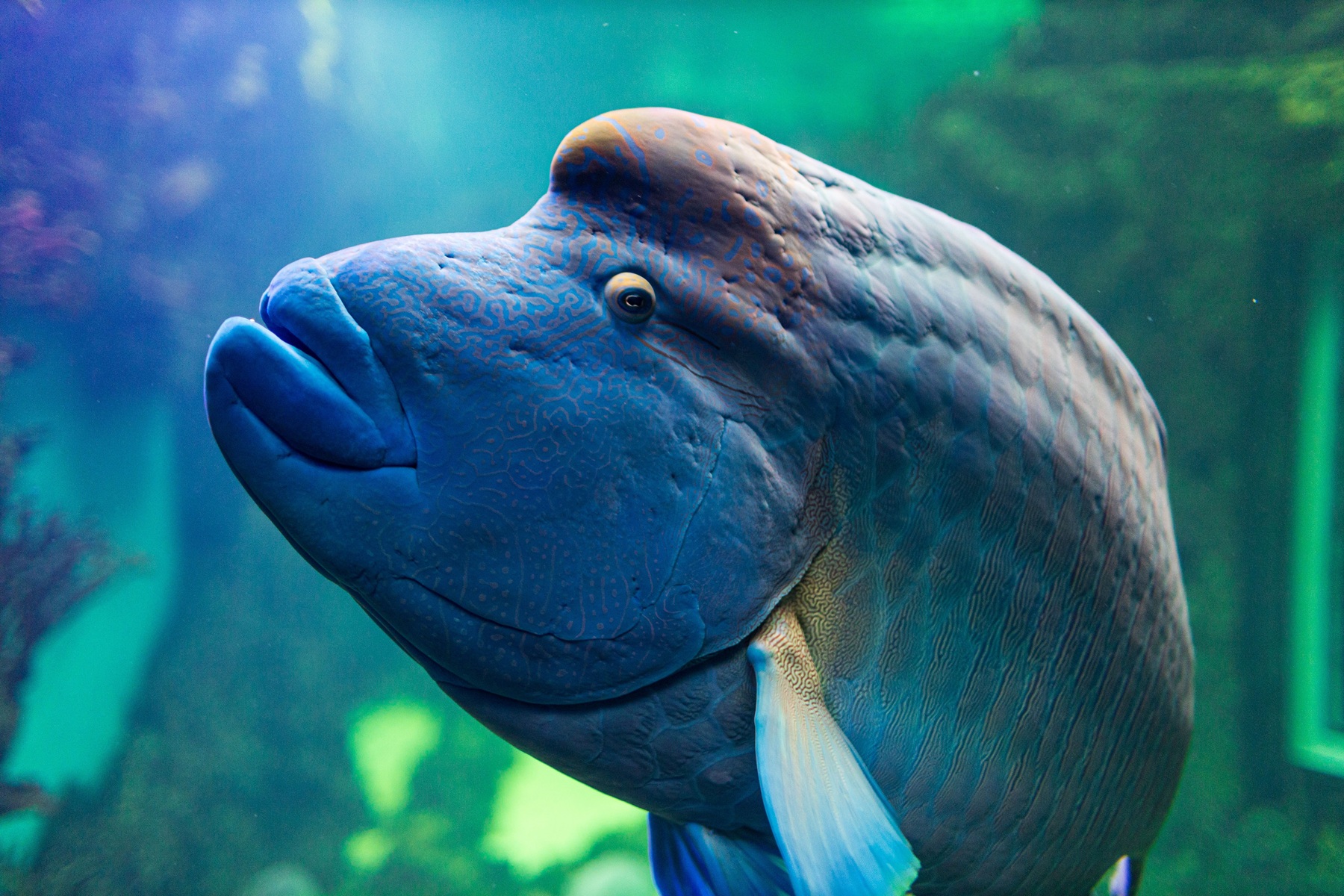
Along the slope of the reef, a Napoleon wrasse makes an appearance. This extremely large fish has an intriguing pattern and color scheme that draws your attention.
On the way back up, remember to ascend vertically and take a safety stop for three minutes at 15 feet.
As the boat heads back to La Digue, I stand on the upper deck. I work on my balance as the boat slams over some choppy waves.
After this refresher, I’m ready to see more of the underwater world again. It’s also worth remembering that being aware of yourself and your gear is more important than capturing the perfect shot. (If you are in the Seychelles from September through November, consider diving with whale sharks or manta rays.)
Plan Your Visit
|
Keep Diving!
If you are looking for other epic diving adventures, check out the following.