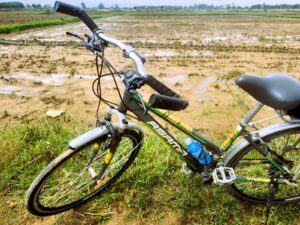
| Objective: Hoi An, Vietnam Distance: 5 miles (point-to-point) Duration: 6 hours 30 minutes Difficulty: Easy |
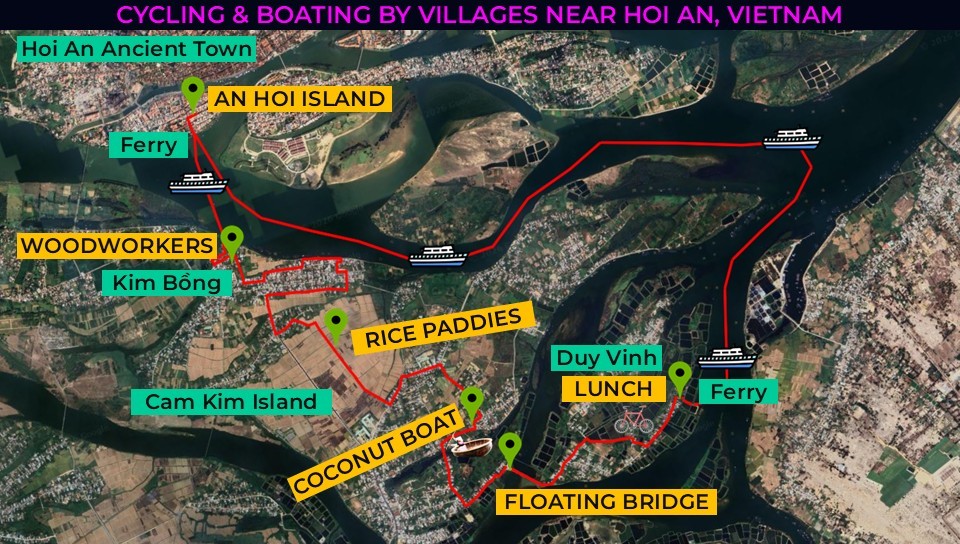
Hoi An’s rhythms may no longer be as unhurried as before, so try exploring the countryside by bicycle. Local guides can show you the way through rural roads, rice paddies, and small villages. At Kim Bồng, watch carpenters ply their trade in their workshops. Cycle though the peaceful rice fields of Cam Kim Island. Learn how weavers in Duy Vinh create colorful grass mats. Sail past half a dozen islands on the Thu Bon River.
Directions to the Meeting Point
| From the Japanese Bridge in Hoi An, head south on Bạch Đằng. Turn left onto Nguyễn Thái Học. Make a right onto Châu Thượng Văn. Cross the Thu Bon River at the Bach Dang Wharf using the An Hoi Bridge. Walk a few blocks and turn right at Ngô Quyền. Meet at the Heaven and Earth Bicycle Tours office in An Hoi Island at 61 Ngô Quyền. |
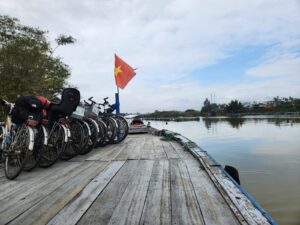
Ferry from One Island to Another – An Hoi to Cam Kim
The meeting point is at the vendor’s office in An Hoi Island, across the river from Hoi An Ancient Town. An Hoi has more homes than the restaurants and shops of touristy Ancient Town. After a quick briefing, we head south on the main street on our 21-speed bikes. A few minutes later, we reach a small dock and load our bikes onto a ferry. The 8-minute ferry ride takes us to Cam Kim Island. The road next to the dock is muddy and sticky.
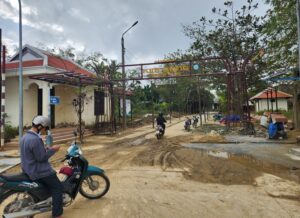
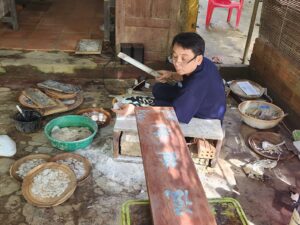
A giant gate welcomes you to the village of Kim Bồng where craftspeople and woodworkers have created artwork for centuries. After a couple blocks, the first stop is at an inlaid wood shop. The craftsman provides a demonstration of the intricate process of applying abalone shells to wood panels. Instead of paint, they use abalone shells are to express the lines and patterns of the designs. They create paper-thin pieces of shell and then carve them in various shapes. Then, they glue shells to matching hollows in the wood.
Rolling Next to Rice Fields
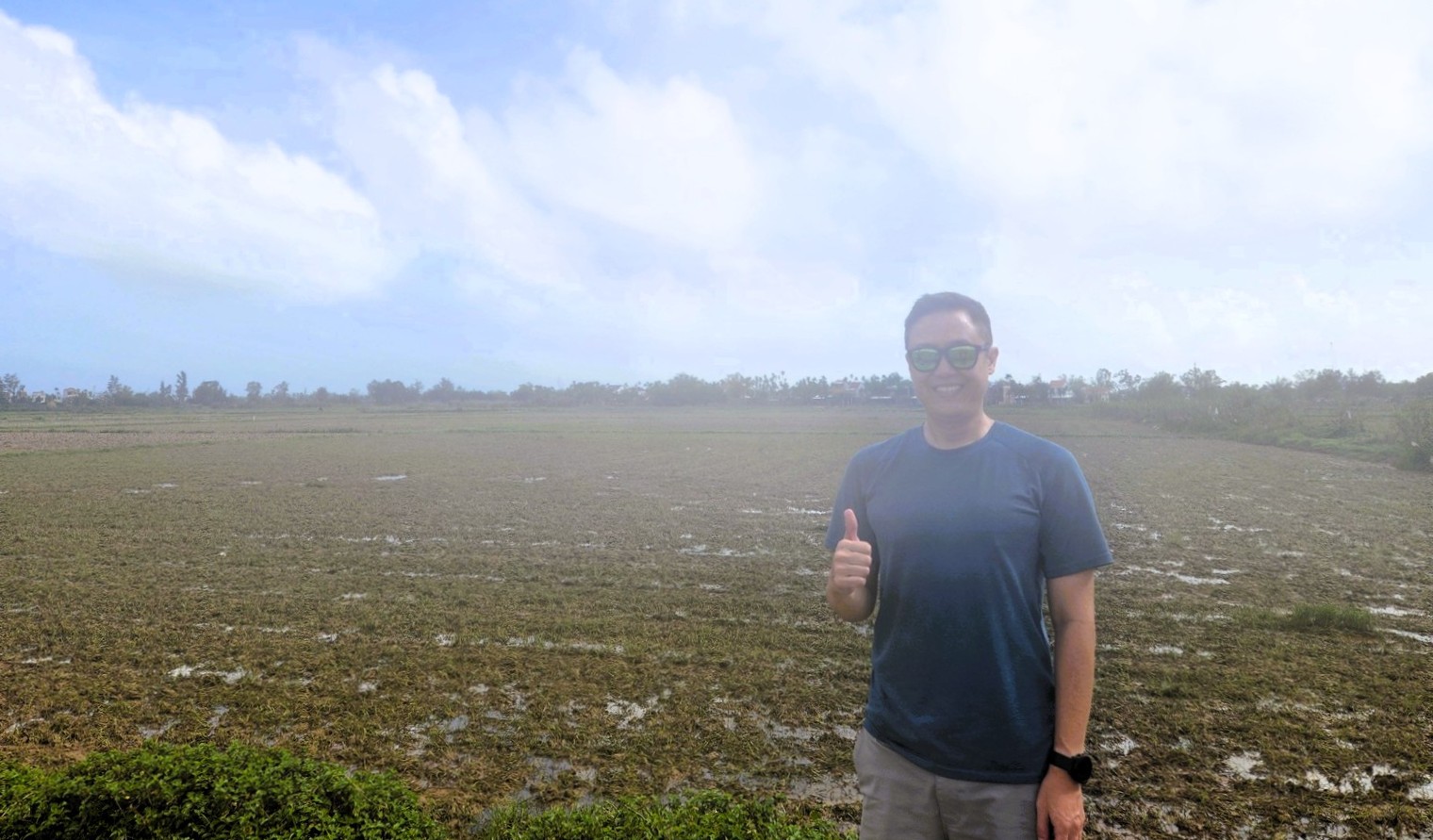
The next couple miles roll along dusty pastoral paths next to the rice fields. The road is raised with fields on both sides. Farmers harvest rice during summer and fall. In December, the fields are rather empty and the growing season hasn’t really started yet. The guides pass out ice cold bottles for a water break. While we stop for selfies, large tractors and harvesters rumble on.
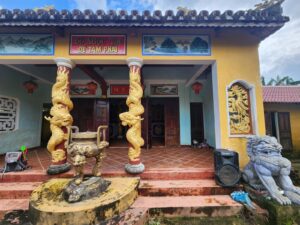
Beyond the fields, it’s a leisurely ride past palm trees and homes. Near the other side of Cam Kim Island, we stop to explore a family temple. A pair of golden dragons climb two columns as a pair of lions stands guard. We learn that the family name is on the sign above the entrance. There are other signs with Chinese, although the Vietnamese language no longer uses Chinese, which has been replaced by Latin letters. There are three doors, the left is for women, right is for men, and center is for special guests. Inside, there is an altar for offerings. On the walls, scrolls display the family trees.
Cuckoo for Coconut Boats
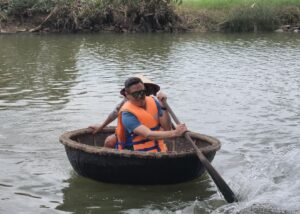
At the next stop, we meet a coconut boat maker and the queen of the basket boats. After a short walk to the river, the queen does a little dance. Then she takes each of us out in the water. She teaches us how to make small figure eight movements to propel the boat forward. If you keep paddling on one side, you will start spinning around. The coconut boat is a bit wobbly, and it’s loads of fun. After this excursion, we stop for a quick lemonade or coffee. On some of the walls, you can see the shockingly high waterline from the recent flooding.
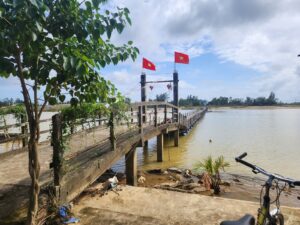
Floating Wooden Bridge
We arrive at an old floating wooden bridge. Due to weather conditions, the bridge isn’t always open, so it’s a treat to find out that we can cross. We head off single-file and leave a gap between riders. It’s about a quarter mile to the next island, and the bridge definitely has a gentle rolling motion. Each wooden plank makes a thudding sound against the tires.
On the last island of this trip, we ride along a rolling muddy path in the village of Duy Vinh. If you don’t pedal hard enough you can easily get stuck. While we wait for the rest of the group to catch up, an elderly lady gets caught in the cratered path. She says something to our group, so I help push the cart through the soggy terrain to the next junction.
Lunch at a Family Home in Duy Vinh
We visit a local home and check out their kitchen, bedrooms, and living area. The courtyard is completely covered in green plants and vegetables. We notice that some of their vases are repurposed French mortar shells. The family presents us with a delicious meal of grilled chicken and rice.
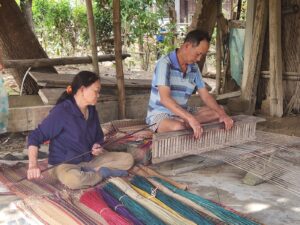
Duy Vinh is a village known for weaving thousands of sedge grass mats. Next door, we watch weavers weave traditional sleeping mats. One weaver works on the loom moving the shuttle back and forth across the colorful threads. Occasionally, another weaver thrusts a stick holding a thread in between the strings. In a split second, the grass thread has been woven above and below various strings to create the desired pattern.
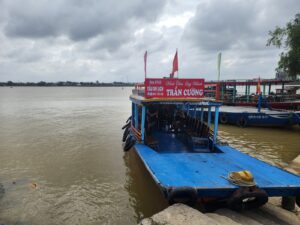
Ferry back to Hoi An
From a short dock on this third island of the day, we take a ferry back to An Hoi Island. This flat boat has a cargo area for the bikes. The seating area has two rows of chairs facing each other. We travel about 4.5 miles on the Thu Bon River, the same waterway where ancient mariners sailed to trade goods.
Hoi An was a global trading center from the 15th to 19th centuries. This commerce abruptly ended in the 19th century due to the emergence of Da Nang’s deep-water port. This sudden decline actually conserved the traditional character of Hoi An’s Ancient Town.
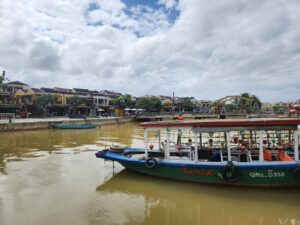
The town has 1,107 well-preserved wood frame buildings clad with brick or wooden walls. You can still see how the streets are laid out parallel to the river. Building storefronts face the road and loading zones once faced the water for moving goods. Forty minutes on the river and we are back at the starting point.
Plan Your Visit
| Vendor: Heaven and Earth Bicycle Tours Address: 61 Ngô Quyền, Phường Minh An, Hội An What to Bring: Sunscreen, hat, and sunglasses Lunch Included: Choose between a fish, meat, or vegetarian meal Start Time: 8:30 a.m. Finish Time: 3:00 p.m. |
Keep Cycling!
If you are looking for other epic cycling adventures, check out the following.